
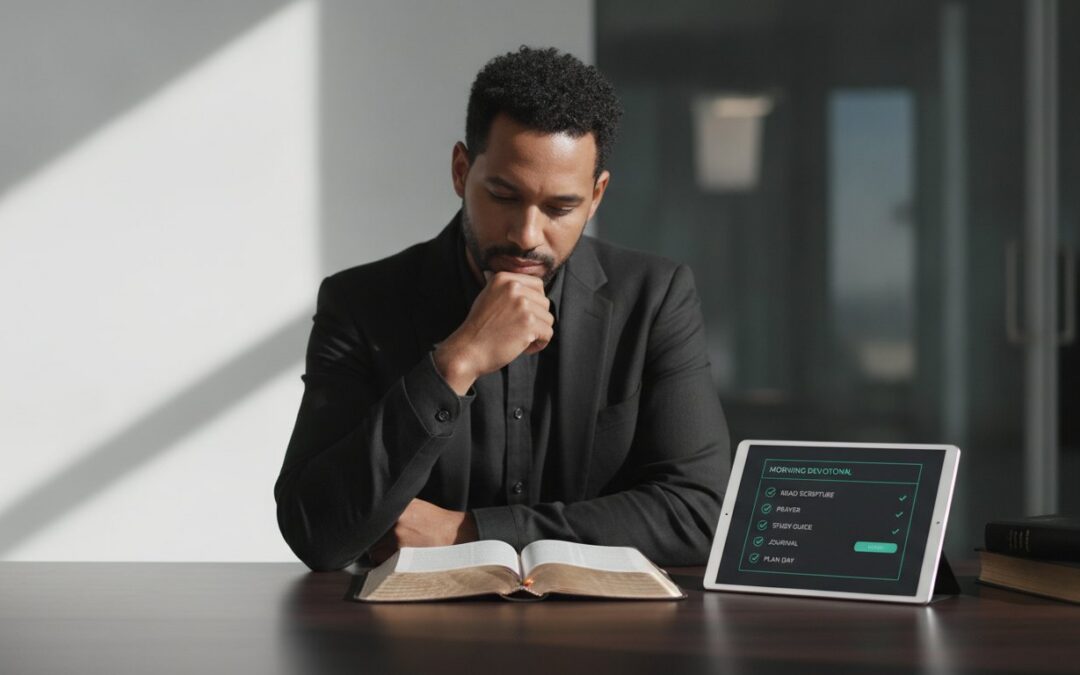
What if the distance between your morning Bible reading and a truly transformed heart isn’t a lack of faith, but a lack of direction? It’s a common struggle to feel spiritually stagnant even when you’re regular in church attendance. You might find yourself overwhelmed by complex theological terms or simply short on time in a crowded schedule. Finding the right biblical teaching resources can feel like searching for a single lamp in a vast forest, yet the desire for a deeper connection with the Creator remains a persistent, holy ache.
You already know that Scripture is meant to be more than a textbook. It’s a source of vitality and a map for the soul’s journey. This guide offers a practical, spiritually rooted framework to help you move from passive reading to transformative scriptural education. You’ll discover a clear plan for daily growth that builds your confidence in explaining biblical truths. We’ll explore how to cultivate a deeper prayer life rooted in the Word, ensuring your study leads to a more vibrant, resilient walk with God.
Key Takeaways
- Shift from passive reading to a transformative process that begins with a reverent “fear of the Lord” as your educational foundation.
- Master the daily checklist of consistency and context to ensure your study time remains productive and scripturally sound.
- Learn to integrate modern biblical teaching resources into your busy schedule, transforming ordinary moments into opportunities for deep spiritual growth.
- Bridge the gap between academic knowledge and lived wisdom by applying scriptural truths with humility and practical intent.
- Establish clear mile-markers for your spiritual journey to move from personal literacy toward a life of service and teaching others.
Understanding the Foundation of Scriptural Education
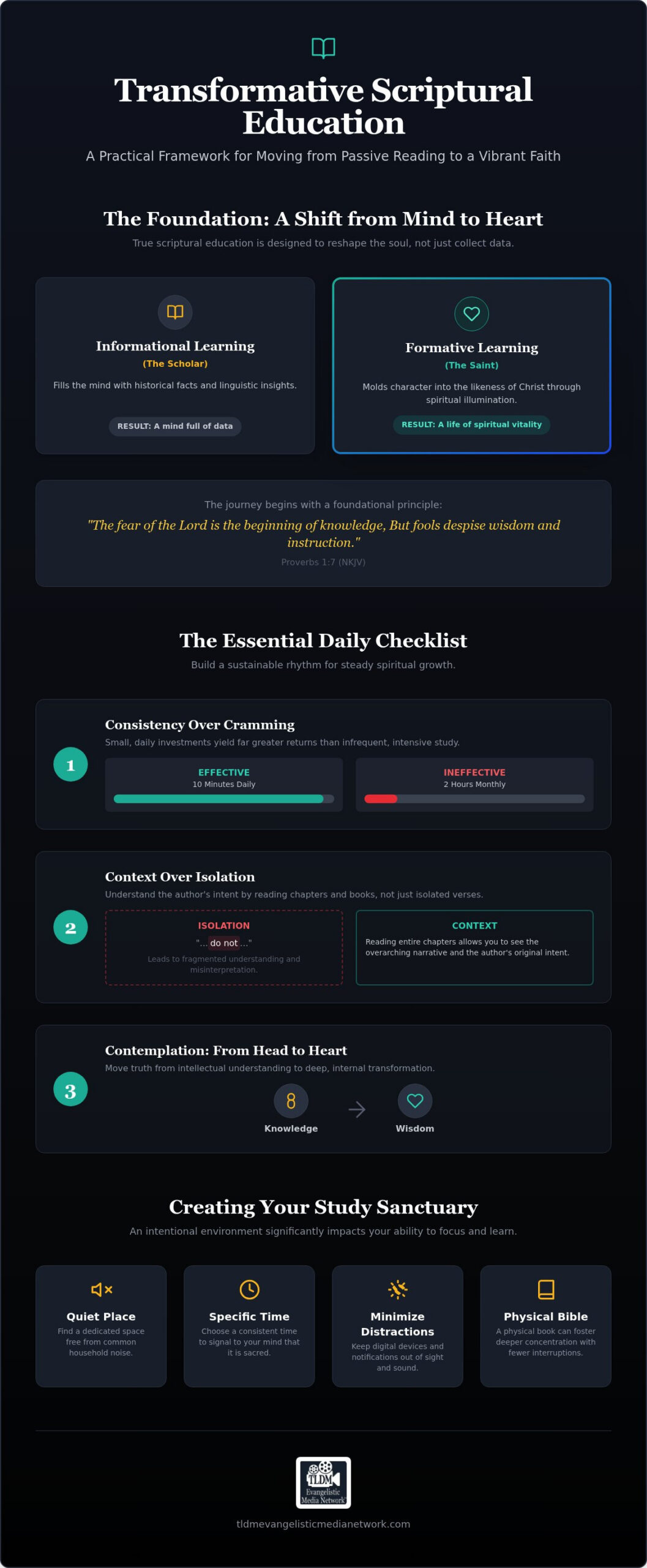
True scriptural education is never a mere exercise in data collection. It’s a transformative process designed to reshape the human heart from the inside out. While many seek out biblical teaching resources to gain historical facts or linguistic insights, the ultimate goal must always be spiritual vitality. Finding high-quality biblical teaching resources is just the first step in a lifelong journey toward maturity. We must distinguish between informational learning, which fills the mind with data, and formative learning, which molds the believer’s character into the likeness of Christ. One produces a scholar; the other produces a saint.
The foundation of this journey is found in the wisdom of Solomon. Proverbs 1:7 (NKJV) tells us, “The fear of the Lord is the beginning of knowledge, But fools despise wisdom and instruction.” This fear isn’t a cowering terror but a profound, holy reverence for the Creator. It’s the starting line for any serious student. While the academic field of biblical studies offers valuable tools for analyzing the text, true education is an invitation to know the Author. You aren’t just studying a book. You’re engaging with the living God.
The Role of the Holy Spirit in Learning
Intellectual effort alone cannot bridge the gap between the printed page and a changed life. Scriptural study requires spiritual illumination. This is the work of the Holy Spirit, who acts as our primary Teacher. He clarifies the deep things of God and moves us from being simple hearers of the Word to being active doers. He breathes life into the text. Before you open your Bible, try saying this brief prayer: “Lord, grant me a spirit of wisdom and revelation. Open my eyes to see the wonders of Your law and give me the strength to walk in Your truth today.”
Scripture as the Ultimate Authority
The concept of Sola Scriptura, or “Scripture alone,” remains the bedrock of a healthy faith. It means the Bible is the final authority for all matters of life and godliness. In a world characterized by shifting cultural values and deep confusion, the Word of God provides a steady anchor. It’s where we find the blueprint for spiritual victory. Building your life on this foundation is essential for a resilient faith. To deepen this connection, you might explore Scriptural Foundations for Prayer, which illustrates how the Word fuels our communication with God. Relying on the Bible ensures that our growth isn’t based on human opinion but on eternal truth.
The Essential Checklist for Daily Scriptural Immersion
Establishing a daily rhythm is the most effective way to ensure your spiritual growth remains steady rather than stagnant. While many believers wait for a large block of free time to dive into study, the reality is that ten minutes of consistent daily immersion is far more effective than two hours of sporadic study once a month. Consistency builds a spiritual muscle memory that allows the Word to remain at the forefront of your mind throughout the day. When you utilize high-quality biblical teaching resources daily, you create a sustainable habit that prevents the “spiritual burnout” often associated with irregular, heavy study sessions.
Context is another vital component of your daily checklist. It’s tempting to rely on isolated “verses of the day,” but this can lead to a fragmented understanding of God’s character. Reading entire chapters or even whole books allows you to see the overarching narrative and the author’s original intent. For those seeking reliable guidance on understanding the Bible, focusing on the broader context helps prevent the common pitfall of projecting personal bias onto the text. You should also practice cross-referencing, which is the discipline of using Scripture to interpret Scripture. This ensures your conclusions align with the totality of God’s revelation.
Finally, move from the head to the heart through contemplation. Don’t rush through your reading just to check a box. Sit with a passage. Reflect on its implications for your life today. This unhurried pace allows the truth to settle deep within your soul, transforming your thoughts and reactions. If you feel your current routine has become dry, incorporating new biblical teaching resources can provide the fresh perspective needed to reignite your passion for the Word.
Setting Up Your Study Sanctuary
Your environment significantly impacts your ability to focus. Choose a specific time and a quiet place where digital distractions are kept at a minimum. While digital apps are convenient for quick references, many find that a physical Bible fosters deeper concentration and fewer interruptions from notifications. Having a dedicated space signals to your mind that this time is sacred. You can find excellent physical study aids and supplemental literature at the TLDM Bookstore to help furnish your personal sanctuary.
Active Note-Taking and Journaling
Writing down your insights is a powerful way to cement biblical truths in your memory. Many students of the Word find success using the Observation, Interpretation, and Application (OIA) method. First, observe exactly what the text says. Second, interpret what it meant to the original audience. Third, determine how you will apply that truth to your life today. Tracking this journey in a study journal provides a beautiful record of your spiritual growth over time. If you are looking for resources to stock your sanctuary, you can explore the variety of paperback titles available to support your daily study.
Moving Beyond Knowledge to Biblical Wisdom
Knowledge is the collection of facts, but wisdom is the skillful application of those truths in the reality of daily life. According to Proverbs 9:10 (NKJV), “The fear of the Lord is the beginning of wisdom, And the knowledge of the Holy One is understanding.” This foundational principle reminds us that our search for biblical teaching resources should never be a pursuit of intellectual status. Instead, it’s a quest for a deeper reverence for God that informs every decision we make. When we approach the Word with this posture, our education becomes a tool for transformation rather than a trophy for our ego.
A common objection to deep study is the fear that it leads to spiritual pride. While it’s true that “knowledge puffs up,” as the Apostle Paul warned, true scriptural education acts as a mirror that reveals our own limitations and God’s infinite grace. Authentic biblical teaching resources don’t just provide answers; they invite us into a posture of humble wonder. This humility is the soil in which the fruit of the Spirit grows. Ultimately, the success of your study isn’t measured by the number of books on your shelf, but by the increase of love, joy, peace, and patience in your daily conduct.
The Connection Between Study and Prayer
Scriptural education serves as the fuel for a vibrant and effective prayer life. When we study the Word, we learn the language of the Father, which allows our prayers to move from vague requests to confident declarations of truth. The Teach Me To Pray series is specifically designed to bridge this gap between academic study and spiritual dialogue. By using the Psalms as a template, you can learn to weave God’s own words into your personal petitions. For more on this practice, you can explore our guide on How to Pray with Scripture. This rhythmic exchange between reading and speaking ensures that your study remains a living conversation.
Applying Scripture to Modern Challenges
In an era of rapid change and cultural shifts, scriptural education provides a reliable compass for ethical and moral decisions. It moves the believer from asking “What does this mean?” to the more urgent question, “What must I do in response?” Wisdom is the ability to see a modern problem through the lens of eternal truth. Whether you’re navigating workplace ethics or family dynamics, the Word offers specific guidance for every trial. To see how these truths apply to the current landscape, read about Biblical Principles for Spiritual Victory. When your study leads to action, you’re no longer just a student; you’re a faithful witness to the power of the Gospel.
Leveraging Modern Media for Spiritual Education
Modern life moves at a relentless pace, often leaving little room for hours of seated study in a library. However, the digital age has provided a unique opportunity to transform ordinary moments into what we call the “commuter’s seminary.” By leveraging high-quality biblical teaching resources through your smartphone, you can redeem time spent in traffic, at the gym, or during your daily chores. This shift represents a move from entertainment-based media to edification-based media. It’s a conscious choice to nourish your soul with eternal truths rather than temporary distractions.
Digital platforms offer a bridge between ancient texts and contemporary life, making scholarly insights accessible to everyone. Podcasts and short-form audio messages provide a conversational format that makes even the most challenging theological topics feel approachable. This method allows you to absorb the weight of the message without feeling overwhelmed by dense jargon. It creates a steady, intentional flow of information that mirrors a reflective study session, even when you’re on the move. This approach doesn’t replace deep, focused immersion; it supplements it by keeping the Word active in your mind throughout the day.
Deep Diving with the Sharing The Word Podcast
The Sharing The Word Podcast is an excellent example of how modern media can serve as a comprehensive educational tool. Led by Dr. Thomas L. Driver, each episode unpacks complex theological themes with academic precision and pastoral warmth. To get the most out of these sessions, practice active listening. Don’t be afraid to pause the audio to look up a referenced verse or jot down a quick insight in your study journal. This interactive approach ensures that the teaching moves from your ears to your understanding, fostering personal transformation.
Short-Form Learning for Busy Believers
Staying connected to truth doesn’t always require a long-form commitment. For those moments when you only have a few minutes between tasks, Take5 Messages serve as a practical tool for a rapid spiritual reset. These messages are designed to be concise yet impactful, delivering a potent dose of Scripture in a manageable five-minute timeframe. By integrating these short-form biblical teaching resources into your routine, you ensure that your mind remains stayed on Him. We encourage you to subscribe to these digital resources to automate your consistency, making it easier to stay committed to your lifelong journey of maturity.
Start your daily recalibration now by exploring the latest episodes of the Sharing The Word Podcast.
Cultivating a Lifelong Journey of Scriptural Maturity
Scriptural maturity is a lifelong journey of becoming, not a destination you reach after a few months of reading. It requires a methodical, intentional approach that mirrors a seasoned student’s dedication. By setting specific mile-markers, such as mastering the historical context of the Pentateuch or finishing a deep study of the Gospels, you create a clear path for your development. This focus prevents the aimlessness that often leads to spiritual stagnation. When you have a plan, your time with the Word becomes a series of meaningful steps toward a more resilient faith.
Every believer eventually encounters a plateau where their usual routines no longer feel as nourishing as they once did. When this happens, it’s often a signal to elevate the quality of your biblical teaching resources. Introducing deeper literature, such as scholarly commentaries or historical biographies of faith, can provide the intellectual challenge needed to reignite your spiritual passion. Your responsibility is to handle the Word of truth accurately. This requires a persistent commitment to excellence in study and a willingness to move beyond the basics of the faith.
Building a Personal Ministry Library
Owning a collection of trusted Christian books and audiobooks is a vital investment in your long-term growth. While digital streaming is convenient, having a permanent library allows you to return to foundational truths whenever you face a new trial. We recommend stocking your shelves with diverse categories, including biblical commentaries, systematic theology, and biographies of faithful men and women. For those who prefer to learn while on the move, the TLDM Audiobook Category offers a wealth of resources for mobile education. These tools ensure that you always have access to sound doctrine, no matter how busy your schedule becomes.
Finding Community in the Word
Growth rarely happens in isolation. It flourishes when you share your scriptural insights with family, friends, or small groups. The TLDM network provides a sense of connection through shared media, allowing believers around the world to study the same truths together. Sharing what you’ve learned helps cement those truths in your own heart while encouraging those around you. We invite you to continue this journey by engaging with the scholarly and pastoral teachings of Dr. Thomas L. Driver. By staying connected to a community of learners, you ensure that your path toward scriptural maturity is supported, consistent, and full of purpose.
Embarking on Your Path to Scriptural Maturity
Transitioning from a passive reader to a dedicated student of the Word requires intentionality and the right tools. You’ve seen how a daily checklist and redeeming your commute through audio media can transform your spiritual life. These biblical teaching resources are not just for intellectual gain; they are for the cultivation of a heart that reflects Christ’s wisdom in every modern challenge. By moving beyond isolated verses to a comprehensive understanding of the text, you prepare yourself for a life of service and leadership.
As a 501(c)(3) not-for-profit ministry, TLDM Evangelistic Media Network is committed to providing resources with absolute integrity. You can rely on the scholarly insights of Dr. Thomas L. Driver, PhD, DMin, whose academic background and pastoral warmth guide our comprehensive audio and print materials. Whether you prefer deep-dive podcasts or physical study aids, we offer resources tailored to every learning style. Deepen your walk today by visiting the TLDM Bookstore for life-changing Christian literature.
Your journey toward scriptural maturity is a noble pursuit that yields eternal rewards. Stay consistent, remain humble, and let the Word of God light your path as you grow into the faithful witness He has called you to be.
Frequently Asked Questions
What is the best way to start scriptural education as a new believer?
Begin your journey by focusing on the Gospels, particularly the Gospel of John, to understand the person and work of Jesus Christ. Establishing a foundation in the New Testament provides immediate context for God’s redemptive plan for humanity. Pair your reading with basic biblical teaching resources that explain fundamental doctrines clearly. This approach prevents early confusion and ensures your study remains focused on the central figure of the Christian faith.
Do I need a Bible degree to understand deep scriptural truths?
How much time each day should I spend on scriptural education?
Ideally, you should aim for fifteen to twenty minutes of focused study each day rather than long, infrequent sessions. Consistency is the key to scriptural maturity because it keeps the Word active in your daily thoughts and decisions. Even a short period of daily immersion builds a strong foundation over time. If you’re short on time, using short-form biblical teaching resources like Take5 Messages can help you maintain your rhythm without overwhelming your busy schedule.
Is it better to read the Bible or listen to scriptural podcasts?
The most effective approach is to combine both reading and listening to ensure a well-rounded scriptural education. Reading encourages deep focus and active note-taking, while listening allows you to redeem time during your commute or daily chores. A balanced approach uses both methods to keep the Word present in different environments. Integrating audio teachings, such as the Sharing The Word Podcast, ensures you receive scholarly insights even when you can’t sit down with a physical book.
What translation of the Bible is best for deep study and education?
The New King James Version (NKJV) is widely considered one of the best translations for deep study due to its scholarly accuracy and formal equivalence. It strikes a balance between linguistic precision and poetic beauty, making it suitable for both academic analysis and personal reflection. Other literal translations like the NASB or ESV are also helpful for cross-referencing. Using a reliable translation ensures your education is built on a trustworthy and reverent linguistic foundation.
How can I stay consistent with my scriptural study when life gets busy?
Staying consistent requires you to prioritize small, manageable blocks of time and automate your study habits through digital subscriptions. When life gets busy, rely on short-form content that fits into the gaps of your day. Setting a specific time and place for study also creates a mental trigger that helps you stay committed. Remember that even a few minutes spent with the Lord is better than neglecting your spiritual nourishment entirely during high-stress seasons.
What is the difference between a devotional and scriptural education?
The primary difference lies in the depth and intent of the study, as devotionals often focus on brief inspiration while education pursues systematic literacy. Education involves studying the historical context, linguistic nuances, and overarching narrative of the Bible. While devotionals are helpful for a quick spiritual lift, education provides the resilient foundation needed for long-term maturity. Both have their place, but education is what truly equips you to explain and defend your faith.
How does scriptural education help with overcoming spiritual stagnation?
Education breaks through stagnation by challenging your current understanding and introducing fresh perspectives from the Word. Stagnation often occurs when your study routine becomes repetitive or surface-level. By engaging with new teaching materials, you invite the Holy Spirit to reveal deeper layers of truth that you may have previously overlooked. This process reignites your curiosity and reminds you that the riches of God’s Word are truly inexhaustible and life-changing. If you find that mental noise and busyness are also disrupting your prayer time alongside your study, explore practical strategies for overcoming distractions during prayer to restore vitality to your spiritual routine.