

URL Slug: what-the-bible-says-about-anxiety
Image Alt Text: A person finding spiritual comfort by reading the Bible to manage anxious thoughts and find peace.
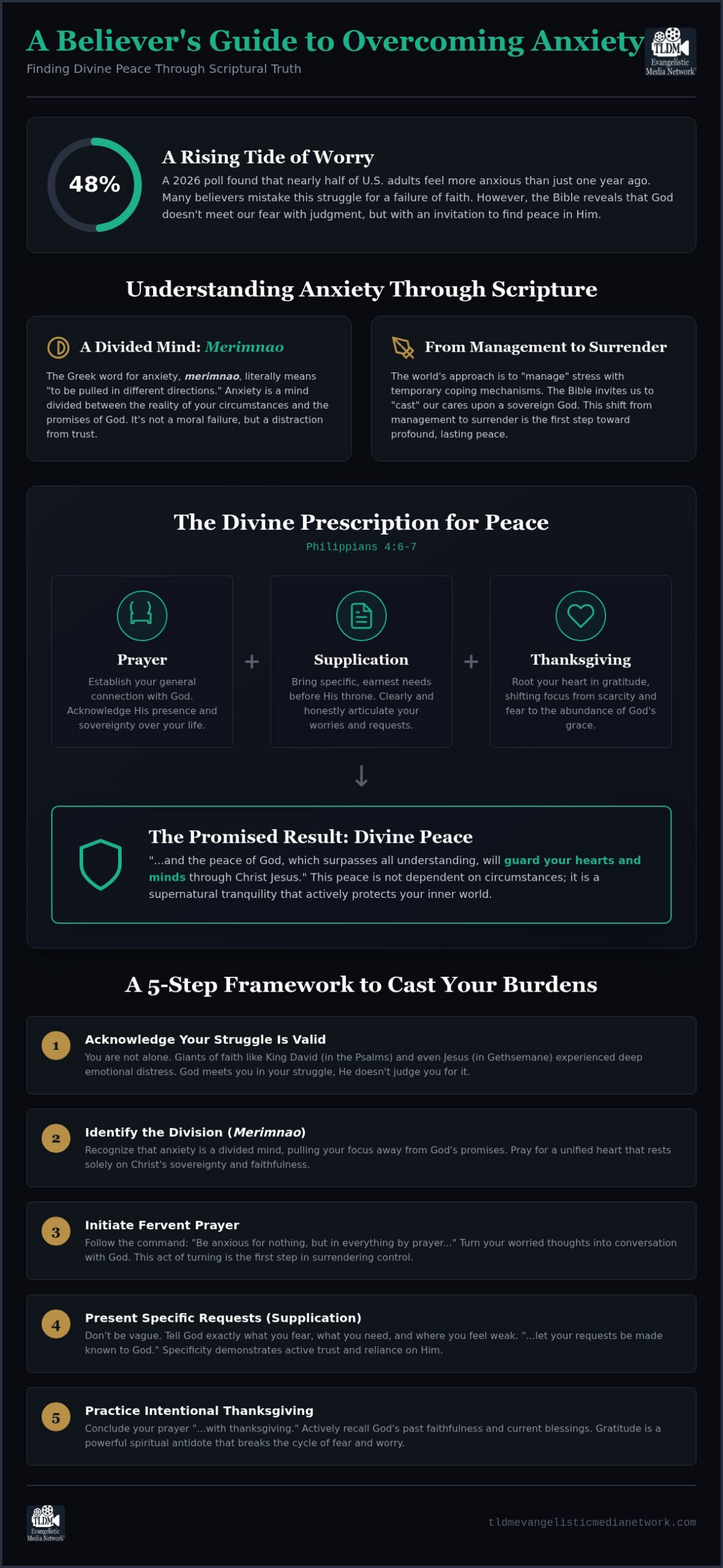
In a 2026 poll by the American Psychiatric Association, 48% of U.S. adults reported feeling more anxious than they did just one year ago. This rising tide of worry often leaves believers feeling a sense of spiritual disconnect, as if their struggle with mental exhaustion is a sign of failing faith. However, exploring what the bible says about anxiety reveals that God doesn’t meet our fears with judgment. Instead, He offers an invitation to intimacy and a path toward spiritual victory. It’s possible to break the cycle of worry by grounding your heart in the steady conviction of His Word.
You likely know the heavy weight of “what-if” loops and the quiet guilt that often follows a restless night. We understand that these burdens feel overwhelming, yet they don’t have to be your permanent reality. This article will help you transform those anxious thoughts into divine peace using timeless scriptural principles and practical prayer strategies. We will explore the theological assurance of God’s constant presence and provide methodical steps for casting your cares upon Him. By the end, you will have the tools to reduce daily stress and reclaim a life of purpose, light, and vitality.
Key Takeaways
- Learn why the Bible defines anxiety as a divided mind rather than a moral failure, providing you with grace and a clear path toward healing.
- Discover what the bible says about anxiety through the three scriptural pillars of prayer, supplication, and thanksgiving found in Philippians 4.
- Master the habit of living for today by seeking God’s kingdom first and trusting His sovereignty for your daily bread.
- Implement a practical five-step framework to actively cast your heavy burdens on the Lord and interrupt persistent loops of worry.
- Find out how to maintain your spiritual victory during high-stress moments with the Sharing The Word Podcast and Take5 Messages.
Understanding Anxiety Through the Lens of Scripture
Many people carry a heavy burden of worry, wondering if their internal struggle indicates a lack of faith. To understand what the bible says about anxiety, we must first look at how Scripture defines this state of being. The Bible doesn’t view anxiety as a moral failure or a hidden sin. Instead, it addresses it as a common human experience that requires divine intervention. While the world often focuses on “managing” stress through temporary coping mechanisms, the biblical approach invites us to “cast” our cares onto a sovereign God. This shift from management to surrender is the first step toward true spiritual victory. It allows us to move beyond survival and toward a life of profound peace.
The Etymology of Merimnao: A Divided Heart
In the Greek New Testament, the word most frequently translated as anxiety is merimnao. This term literally means to be pulled in different directions or to have a divided mind. When we are anxious, our focus is split between the reality of our circumstances and the promises of God. This internal fragmentation distracts us from resting in His sovereignty. Biblical anxiety is a distraction from trust. It pulls our gaze away from the Creator and fixes it upon the creation, leaving us feeling vulnerable and alone. By recognizing this division, we can begin to pray for a unified heart that rests solely on Christ.
Why Scripture Validates Your Emotional Struggle
You don’t have to hide your worry to be a faithful believer. Throughout the historical texts, we see giants of faith wrestling with deep emotional distress. King David frequently poured out his soul in the Psalms, asking God why his heart was disquieted within him. Even Jesus, in the Garden of Gethsemane, experienced such intense agony that His sweat became like great drops of blood. His humanity provides us with profound comfort; He knows what it feels like to face an overwhelming trial. This validation is a core part of what the bible says about anxiety, showing us that God is near to the brokenhearted.
Extensive study into religion and mental health suggests that faith provides a unique framework for emotional resilience. By looking at these ancient examples, we see that God meets us in our distress rather than demanding we solve it first. Dr. Thomas L. Driver often emphasizes this pastoral truth in his teachings, reminding us that our emotions are valid but they don’t have to be our masters. God’s Word acts as a lamp for the anxious heart, illuminating the path toward peace and providing a steady foundation when our minds feel divided. It’s a journey of becoming, where we move from the darkness of worry into the light of His presence.
The Divine Command: Analyzing Philippians 4:6-7
“Be anxious for nothing, but in everything by prayer and supplication, with thanksgiving, let your requests be made known to God; and the peace of God, which surpasses all understanding, will guard your hearts and minds through Christ Jesus” (Philippians 4:6-7, NKJV). This passage serves as the foundational text for anyone seeking to understand what the bible says about anxiety. It provides a rhythmic, methodical process for moving from a state of internal division to one of spiritual victory. The command is built upon three essential pillars. Prayer establishes our general connection with God. Supplication involves bringing specific, earnest needs before His throne. Finally, thanksgiving ensures our hearts remain rooted in gratitude rather than fear.
When we follow this scriptural pattern, we are promised a peace that “surpasses all understanding.” This divine tranquility does not depend on the resolution of our problems or the stability of our circumstances. It is an unhurried, steady conviction that exists beyond human logic. This peace doesn’t just comfort us; it actively works to protect our inner world. By bringing our requests to God with the right heart posture, we invite His presence to settle over our restless thoughts.
The Role of Thanksgiving in Reducing Worry
Gratitude acts as a powerful spiritual and neurological antidote to fear. When we intentionally practice thanksgiving, we shift our focus from the scarcity of our circumstances to the abundance of God’s grace. Scholars examining what role do religion and spirituality play in emotional health have found that such practices can effectively interrupt the cycles of stress that dominate the mind. Remembering past victories builds a reservoir of confidence for current trials. Before you address your worries today, try listing three specific blessings. This simple act grounds your abstract fears in the concrete reality of God’s faithfulness.
What It Means for Peace to Guard Your Heart
The military imagery used in the original Greek for the word “guard” is profound. It describes a garrison of soldiers stationed to protect a city from invasion. In this context, the Holy Spirit acts as a sentry, standing watch over your emotional state and protecting your thoughts from external stressors. He creates a spiritual fortress that keeps worry from breaching the walls of your mind. For a deeper study on how this peace functions in daily life, you might enjoy listening to the Sharing The Word Podcast. This resource offers pastoral guidance on maintaining a quiet confidence even when the world feels chaotic. By engaging in this scriptural dialogue, you invite God to fortify your heart against the loops of worry.
Overcoming Worry by Trusting in God’s Sovereignty
When we examine what the bible says about anxiety, we find that Jesus Christ addressed this struggle with both tenderness and directness. In Matthew 6:25-34, He instructs His followers to “seek first the kingdom of God and His righteousness” (NKJV). This command isn’t a burden but a strategic move toward mental freedom. By prioritizing God’s eternal purposes, our earthly concerns begin to take their proper, smaller place. We often struggle because we view God as a distant observer rather than a faithful Provider. This lack of trust in His character is frequently the root of our restlessness. For a deeper understanding of how to apply these truths, you can explore our guide on Biblical Principles for Spiritual Victory in 2026.
The concept of “daily bread” reminds us that God’s grace is dispensed in twenty-four-hour increments. We aren’t equipped to carry tomorrow’s burdens with today’s strength. By focusing on the present moment, we honor God’s timing and protect our minds from the exhaustion of hypothetical futures. Trusting in His sovereignty means acknowledging that He is already in the future we are so worried about. When we surrender our need for control, we find the peace that only He can provide.
Lessons from the Lilies: God’s Attention to Detail
Jesus used the simplicity of the natural world to illustrate a profound theological truth. He pointed to the lilies of the field and the birds of the air, noting that they neither toil nor spin, yet they are perfectly cared for. This comparison highlights God’s meticulous attention to detail. It’s important to distinguish between our “needs” and our “wants” in the context of divine provision. While we may desire comfort, God promises to provide exactly what is necessary for our spiritual journey. Your Heavenly Father possesses such intimate knowledge of your life that even the very hairs on your head are all numbered.
The Futility of Worry: Adding a Cubit to Your Stature
In Matthew 6:27, Jesus asks a penetrating rhetorical question: “Which of you by worrying can add one cubit to his stature?” (NKJV). Worry is fundamentally futile because it consumes present energy without changing future outcomes. To find peace, we must shift our mental focus from “what if” scenarios to an “even if” faith. This means believing that even if our worst fears come true, God will remain present and sufficient. For those high-stress moments when you need a quick reminder of His control, the Take5 Messages offer short, scripturally-rooted encouragement. By grounding ourselves in the reality of His sovereignty, we can stop worrying about tomorrow and focus on the grace available for today.
Practical Steps to Cast Your Burdens on the Lord
Understanding what the bible says about anxiety is only the beginning; we must also learn how to apply these truths through intentional action. In 1 Peter 5:7, the apostle Peter instructs us to be “casting all your care upon Him, for He cares for you” (NKJV). The word “casting” is an active, forceful verb in the original language. It suggests the deliberate act of throwing a heavy burden off yourself and onto someone else. We don’t merely mention our worries to God. We transfer the weight of them to His capable shoulders. This process requires a conscious decision to stop carrying what we were never meant to hold.
One of the most effective ways to facilitate this transfer is through vocalization. When we speak our fears out loud during private prayer, they lose their abstract power. Vocalizing your specific worries helps you identify exactly what is causing your heart to feel divided. It transforms a vague sense of dread into a clear request for divine intervention. By naming the loop of worry, you prepare your mind to receive the specific peace that only Christ provides. This practice of scriptural dialogue creates a rhythmic flow of trust between the believer and the Father.
A Daily Routine for Scriptural Meditation
To move from mental exhaustion to spiritual victory, you can follow a methodical 5-step framework. This routine helps ground your abstract thoughts in the concrete reality of God’s Word. As you study what the bible says about anxiety, remember that peace is a process of becoming.
- Step 1: Identify the specific fear. Be precise about what is causing your distress.
- Step 2: Find a corresponding promise. Search for a scripture that speaks directly to your situation.
- Step 3: Replace the fear with the promise. Use repetition to anchor the truth in your mind.
- Step 4: Release the outcome to God. Acknowledge that the results are in His sovereign hands.
- Step 5: Rest in His presence. Spend a few moments in quiet reflection, accepting His peace.
Journaling Your Way to a Peaceful Mind
Writing down your prayers provides a tangible record of God’s faithfulness over time. When you journal, you create a history of answered prayers that serves as a shield against future anxiety. You might start with prompts from our Teach Me To Pray series, such as asking God to reveal where your trust is currently divided. This practice deepens your reflection and helps you see patterns of growth in your spiritual journey. For more structured guidance on developing a robust prayer life, you can explore the resources available in the TLDM Bookstore. Our collection of Christian Books offers deep scriptural education to help you sustain a peaceful mind throughout the year.
Sustaining Spiritual Victory with TLDM Resources
Living out what the bible says about anxiety requires more than a single moment of prayer; it demands a consistent diet of truth. While we have explored the theological foundations and practical steps for casting cares, sustaining that victory involves surrounding yourself with reliable spiritual nourishment. TLDM Evangelistic Media Network provides these tools through scholarly yet accessible media. By engaging with these resources, you build a firm foundation that remains steady even when the storms of life intensify. We invite you to join our community as we journey together toward a deeper state of reflection and peace.
Why Audio Messages Help During Anxiety Spikes
During periods of intense stress, sitting down to read long texts can feel like an impossible task. The mind often struggles to focus, making audio-based encouragement a vital alternative for those seeking what the bible says about anxiety in real-time. Hearing the Word of God spoken with pastoral warmth can soothe a restless spirit and provide an immediate sense of calm. Our Sharing The Word Podcast offers deep scriptural education designed to be absorbed during your daily commute or while resting. For those high-pressure, low-time moments, our Take5 Messages provide short, manageable bursts of truth to help you refocus on God’s sovereignty. These audio tools ensure that you have access to biblical wisdom exactly when you need it most.
Deepening Your Study with Christian Literature
Beyond immediate relief, long-term spiritual growth requires a commitment to deeper study. The TLDM Bookstore features a curated selection of paperbacks and audiobooks that expand on the themes of prayer and inner strength. These titles, grounded in rigorous scholarship, bridge the gap between ancient texts and contemporary challenges. You can find specific lessons on scriptural dialogue in our Teach Me To Pray series, which offers a structured path for those seeking to refine their prayer life. Investing time in these resources allows you to move from a state of survival to one of spiritual vitality.
Your journey toward peace is not one you have to walk alone. If you feel that professional therapeutic support would help you navigate these challenges through a biblical lens, you can explore Hourly Professional Counseling Fees at Transformed Therapy. By utilizing these resources, you are equipping yourself with a spiritual garrison that protects your heart and mind. Remember that transforming your anxious thoughts is a process of becoming, and God is faithful to complete the work He has started in you. Stay encouraged, remain consistent in your study, and let the peace of Christ rule in your heart every day.
Reclaiming Your Peace Through Scriptural Dialogue
The journey toward a quiet mind begins when you choose to replace the restless loops of worry with the steady conviction of God’s Word. We have explored how understanding what the bible says about anxiety allows you to move from mental exhaustion to spiritual victory. By practicing intentional thanksgiving and actively casting your burdens on the Lord, you invite a peace that surpasses human logic to guard your heart. Trusting in His sovereignty means you no longer have to carry the weight of tomorrow with today’s strength.
As a non-profit 501(c)(3) ministry, TLDM Evangelistic Media Network is dedicated to helping you sustain this inner strength. Dr. Thomas L. Driver provides scholarly, pastoral guidance through our library of online sermons and Take5 messages. You don’t have to face these trials alone. You can find consistent nourishment for your soul in our community. Listen to the Sharing The Word Podcast for daily encouragement and discover the vitality that comes from a life rooted in Christ. May you rest today in the quiet confidence of His eternal presence.
Frequently Asked Questions
What is the most comforting Bible verse for anxiety?
Philippians 4:6-7 is widely considered the most comforting passage because it provides a clear, actionable promise. It instructs us to be “anxious for nothing” while offering the peace of God as a guard for our hearts. By bringing every request to Him with thanksgiving, we move from a state of worry to one of divine protection. This verse reminds us that we aren’t alone in our struggle.
Is it a sin to feel anxious according to the Bible?
Feeling anxious is not a sin; rather, it is a common human experience that God addresses with compassion. Scripture defines anxiety as a divided mind or being pulled in different directions. Jesus and David both expressed deep emotional distress, showing that even the most faithful can struggle. God doesn’t condemn you for your feelings but instead invites you to bring them into His presence for healing and peace.
How do I cast my cares on God when I still feel worried?
Casting your cares is a deliberate, repetitive act of the will rather than a one-time emotional event. When you still feel worried, you must continue to vocalize those specific fears to God and replace them with His promises. It’s helpful to remember that “casting” is an active verb. You are throwing the weight of your burden onto His capable shoulders and choosing to trust His character as a faithful Provider.
What does Jesus say about worrying about the future?
Jesus explicitly instructs His followers not to worry about tomorrow, for tomorrow will worry about its own things. In Matthew 6:34, He reminds us that each day has enough trouble of its own. By focusing on the present moment and seeking His kingdom first, we protect our minds from the exhaustion of hypothetical scenarios. This teaching encourages us to rely on the “daily bread” of His grace for our immediate needs.
Can prayer really change the way I feel about my problems?
Prayer is a powerful spiritual tool that shifts your focus from the size of your problems to the magnitude of God’s power. While it may not always change your external circumstances immediately, it changes your internal state by inviting the Holy Spirit to guard your heart. This scriptural dialogue allows you to experience a peace that surpasses understanding. It fosters a sense of steady conviction and quiet confidence in God’s plan.
How can I find peace when my circumstances do not change?
Biblical peace is not the absence of trouble but the presence of a Person. You can find peace by grounding your identity in Christ rather than your situation. When you understand what the bible says about anxiety, you realize that God’s sovereignty remains constant regardless of your surroundings. By intentionally dwelling on His promises and practicing gratitude, you can maintain an inner tranquility that is independent of your external world.
What are some short Bible verses I can memorize for panic attacks?
Memorizing short, punchy verses can help you ground your mind during a panic attack. Consider “Whenever I am afraid, I will trust in You” (Psalm 56:3) or “For God has not given us a spirit of fear” (2 Timothy 1:7). Another powerful truth is “I will never leave you nor forsake you” (Hebrews 13:5). These brief reminders of God’s presence act as a spiritual anchor when your thoughts feel chaotic and overwhelming.
How does the Sharing The Word Podcast help with spiritual anxiety?
The Sharing The Word Podcast helps alleviate spiritual anxiety by providing a daily source of biblical truth through an audio format. When mental exhaustion makes reading difficult, hearing the Word spoken with pastoral warmth can soothe a restless mind. Dr. Thomas L. Driver uses his scholarly expertise to unpack complex theological concepts in an accessible way. This consistent nourishment helps you build a firm foundation and sustain spiritual victory over time.