

SEO-friendly URL slug: /christian-devotional-books-daily-spiritual-growth/
Image alt text: Christian devotional book open beside a Bible and journal
What if the best devotional isn’t the most popular one, but the one that keeps drawing you back to Scripture? With so many Christian devotional books to choose from, it can be hard to know where to begin, especially when you want more than a few encouraging words. The right fit can give your Bible reading, reflection, and prayer a structure you can return to.
Choosing well starts with your season of faith and the kind of guidance you need. Some books offer brief reflections, while others focus on prayer or provide a closer companion to Bible study. This guide compares those approaches and explains how to assess Scripture use, reading format, and daily commitment. Use the questions and comparison points below to find a resource for personal growth or a thoughtful gift. The goal is to choose a Scripture-centered next step that feels sustainable and helps you put biblical teaching into practice.
Key Takeaways
- Christian devotional books can guide Scripture reading, reflection, prayer, and application, but they work best alongside Bible reading in context.
- Compare devotional options by their Scripture focus, theme, reading style, format, and reflection activities to find an approach that suits your needs.
- Use sample pages, chapter structure, author background, and cited passages to assess whether a devotional offers meaningful biblical engagement.
- Choose a practical goal and a format that fits your schedule, then begin with a routine you can sustain.
- Explore TLDM’s current Christian books and Scripture-based resources, including its instructional prayer series, as possible next steps for learning.
What Christian Devotional Books Can Offer Your Daily Walk with God
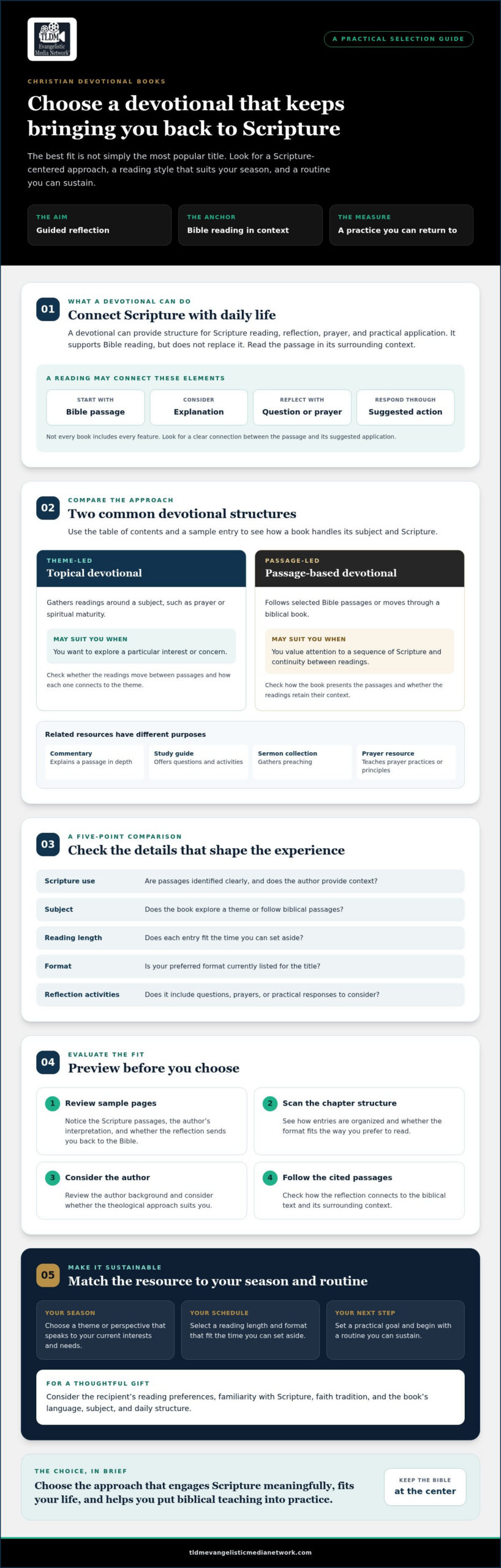
A Christian devotional is a guided resource that helps readers engage with Scripture through reflection, prayer, or practical application. It may focus on a daily passage, a spiritual theme, or a particular season of life. Devotionals can provide structure for regular reflection, but they should support Bible reading, not replace it. Read the biblical passage in its surrounding context so a brief explanation does not become your only encounter with the text.
Devotionals also serve a different purpose from related Christian resources. A commentary explains a biblical passage in depth, while a study guide typically offers questions and activities for examining Scripture. A sermon collection gathers preaching, and a prayer instruction resource teaches practices or principles of prayer. Devotional writing often connects these ideas with everyday reflection. For broader historical context, see this overview of Christian devotional literature.
How a devotional reading typically connects Scripture and daily life
A reading may include a Bible passage, an explanation, a reflection question, a prayer, or a suggested action. For example, after reading a passage about patience, a devotional might ask you to consider how that teaching could shape a conversation or decision. Not every book includes all these features, and authors differ in their theological approach and how closely they engage with the passage.
Before choosing, review the table of contents and sample pages. Note which Scripture passages appear, how the author interprets them, and whether the reflection encourages you to return to the Bible. Look for a clear connection between the passage and the application. That helps you reflect without treating a short reading as a substitute for deeper study.
Who may benefit from using a Christian devotional book
A devotional may help if you’re beginning a regular Bible-reading habit or returning to one after a break. A defined reading structure can make it easier to pause, reflect, and pray, especially when you’re unsure how to begin. Readers in a particular season may value a theme that speaks to their current interests, while experienced Christians may appreciate a fresh perspective or a more reflective rhythm.
For gift-givers, consider the recipient’s reading preferences, familiarity with Scripture, and faith tradition. Check whether the book’s language, subject, and daily structure are likely to suit the person. A thoughtful match is more useful than choosing a title only for its topic or appearance.
Compare Christian Devotional Books by Scripture, Theme, and Reading Style
A useful comparison looks beyond a title or appealing theme. Check how each book handles Scripture, what subject it explores, how much reading it asks of you, which formats are listed, and whether it includes prompts for prayer or reflection. These details can help you choose a resource that fits both your interests and your routine.
| What to compare | Questions to ask |
|---|---|
| Scripture use | Does the author identify passages clearly and provide context? |
| Subject | Does the book focus on a theme or follow biblical passages? |
| Reading length | Does each entry fit the time you can set aside? |
| Format | Is your preferred format currently listed for this title? |
| Reflection activities | Are there questions, prayers, or practical responses to consider? |
A topical devotional gathers readings around a subject, such as prayer or spiritual maturity. A passage-based devotional follows selected Bible passages or moves through a biblical book. The first can help you explore a particular concern; the second keeps attention on a sequence of Scripture. To compare them, look at the contents and a sample entry. A topical title may move between passages, while a passage-based book may offer more continuity from one reading to the next.
Which devotional theme fits your current season of faith?
Let a genuine interest guide your choice. You might look for readings on prayer, hope, spiritual maturity, or daily Christian living. Choose a theme you expect to return to, rather than selecting a book only because its subject is popular. A devotional can encourage reflection, but no theme or title guarantees a particular spiritual outcome.
For broader Christian reading, explore the TLDM Christian books page and check current listings. Compare the listed subject and approach with what you hope to read and reflect on.
How to assess Scripture depth and reading format
Look for clearly identified Bible references and enough context to understand how the author connects a passage to the reflection. Check whether the reading points you back to the full passage or relies mainly on a short quotation. If prayer is your main interest, consider whether a prayer-focused resource better fits that goal — you may also find it helpful to review Christian prayer books that deepen your spiritual life alongside devotional options. Print or audio may shape how easily a book fits your schedule, but confirm that your preferred format is listed for the specific title.
How to Tell Whether a Christian Devotional Book Is a Good Fit
A devotional can sound moving and still leave you wondering how its message grows from Scripture. Before choosing, look past an encouraging tone and examine how the author uses the biblical text. A thoughtful resource makes its references easy to identify and gives readers a way to consider the passage, not just the writer’s response to it.
As you review a reading, separate its parts: the biblical passage, any historical or cultural background, the author’s interpretation, and personal reflection or application. These elements can work together, but they are not interchangeable. Historical background offers context; interpretation explains what the author believes a passage means; reflection considers how its teaching may speak to daily life. Noticing these distinctions helps you evaluate a book without treating every comment as Scripture.
Questions to ask before choosing a devotional
- Is Scripture central? Can you identify the passages discussed and read them in your Bible?
- Does the explanation fit you? Consider whether the writing assumes Bible knowledge you have, or explains ideas at a level you find useful.
- Is the translation clear? Check which Bible translation the book quotes or references, then compare the passages in a translation you use for study.
- Does the author’s perspective suit your needs? Review the author’s background and stated theological perspective, especially if you’re seeking a particular tradition or approach.
- Does the structure invite reflection? Prompts and prayers can help you respond, but be cautious of unsupported promises about guaranteed outcomes.
Sample pages and chapter structure can reveal whether a book offers substantial engagement or mainly brief inspiration. If the author makes a theological claim, read the cited passage in context and consider whether the interpretation accounts for the surrounding verses. You do not have to agree with every reflection to benefit from careful reading, but you should be able to distinguish the author’s view from the biblical text.
Recognizing a devotional’s limits without dismissing its value
Christian devotional books are designed to guide reflection, not replace Scripture, sustained study, or trusted pastoral care. A devotional can offer a helpful entry point into a passage, yet a short reading may not address every question about its meaning or application. Treat it as a companion to the Bible, not the final authority on a difficult theological issue.
Assess a title fairly. Do not judge its accuracy from a summary or a single appealing line. Review the contents, cited passages, author information, and translation details, then decide whether its approach supports the kind of Scripture-centered reading you want.
Choose a Christian Devotional Book You Can Use Consistently
A good choice is one you can return to with attention, not one that adds pressure to an already full schedule. Use a simple process: name what you want from the reading, compare themes, review a sample, then choose a format and routine that fit your life. Christian devotional books can support a regular practice when their structure feels realistic and their Scripture focus meets your needs.
A simple process for selecting and beginning a devotional
Start by naming your goal. Are you looking for closer engagement with Scripture, prayer prompts, encouragement, or a particular theme? Compare books that address that need, then review the available description, contents, and sample pages before choosing. Check the reading length and format too, so the resource suits the time and way you prefer to read.
Next, choose a cue that already fits your day. You might read after breakfast, during a quiet part of your lunch break, or alongside another established routine. Begin with a manageable amount of reading, then adjust if it feels rushed or difficult to sustain. Regular attention matters more than following an ambitious schedule that does not fit your real life.
How to keep reflection grounded in Scripture
Read the devotional’s cited Bible passage in context before considering the author’s reflection. Notice what comes before and after the verses, and ask how the interpretation relates to the passage. A devotional guide interprets or applies Scripture for reflection, but it does not replace Scripture itself.
After reading, record a brief response: a passage to revisit, a question to explore, or a practical action to consider. Keep personal impressions distinct from the biblical text, and return to Scripture when you’re unsure whether an idea follows from the passage. This simple habit can turn reading into thoughtful engagement rather than passive consumption.
If prayer is part of your goal, allow time to respond to the passage in prayer, using the devotional prompt if it offers one. For additional reading, explore Christian books in TLDM’s online bookstore and check current listings for a resource that fits your interests.
Explore TLDM’s Christian Books and Scripture-Based Learning Resources
Once you know what you want from a devotional, check current listings before settling on a title. TLDM Evangelistic Media Network offers Christian books through its online bookstore, along with online sermons and digital Bible teaching. These resources can support continued learning, but they serve different purposes. Review each book listing on its own merits, including its author, Scripture references, translation, format, and current availability.
This distinction matters when you compare Christian devotional books with other faith resources. Sermons and teaching can offer biblical instruction, while a devotional typically guides a reader through Scripture and reflection. A podcast, sermon, or instructional resource may not have the same format or content as a devotional book. Confirm the details of each resource before deciding which one fits your reading and learning needs.
When a Scripture-based prayer resource may complement devotional reading
If you want to develop your understanding of prayer alongside devotional reading, TLDM’s Teach Me To Pray: Lessons From Scripture is an instructional prayer series. It is a related learning resource, not a devotional book. Consider it separately if you are seeking Scripture-based prayer instruction, without assuming particular lesson contents, formats, or outcomes.
You might pair a devotional with other forms of Bible teaching as part of a broader learning practice, while keeping their roles clear. Read Scripture directly, use a devotional for guided reflection, and turn to instructional resources when you want to learn about a specific aspect of Christian life. TLDM also offers the Sharing The Word Podcast, Take5 Messages, and online sermons as digital Christian media resources.
Find a relevant next step through the ministry
Before choosing a book, check its current listing for title details, format, and availability. Then consider whether its Scripture use, theme, and reading style match the goal you identified. The TLDM online bookstore is a place to explore currently listed Christian books. Availability and product details can change, so verify them on the listing before making a choice.
Choose a resource that encourages thoughtful engagement with Scripture and fits the practice you can sustain. Explore the available books and teaching resources, or continue your reflection with a passage from the Bible that speaks to your present season.
Take a Scripture-Centered Next Step
The right Christian devotional books can help you make room for Scripture, reflection, and prayer in a way that fits your season of faith. As you choose, look for clear biblical references, an approach that suits your interests, and a reading format you can use consistently. Let the devotional guide your reflection while returning to the Bible to read each passage in context.
TLDM offers Christian books through its website, along with other Scripture-based learning resources. Teach Me To Pray: Lessons From Scripture is an instructional prayer series, a separate resource for readers seeking guidance in prayer. Check current bookstore listings for available titles and details, then choose a next step that supports thoughtful engagement with God’s Word.
Explore Christian books in the TLDM bookstore and continue building a steady practice of Scripture reading and reflection. You can also explore the Sharing The Word Podcast, Take5 Messages, and online sermons for digital Christian media. Choose a resource that fits the way you want to learn and return to Scripture.
Frequently Asked Questions
Is a Christian devotional book the same as a Bible study?
No. A devotional commonly guides reflection, prayer, or practical application, while a Bible study may focus more directly on observing a passage, interpreting its meaning, and learning through a structured plan. The boundaries can overlap, and formats vary by title. Review the table of contents and sample pages to see what a book offers. Keep the Bible itself central, then choose the resource that best fits your purpose.
How do I choose a Christian devotional book for my current season of faith?
Start by naming a genuine need or interest, such as prayer, hope, or a deeper understanding of Scripture. Then compare themes, Scripture use, author background, reading style, and format. Review sample pages and read the passages the author cites to see how the reflection engages with the text. A suitable choice is one you can use thoughtfully and consistently, not one that promises a guaranteed spiritual result.
Can a devotional book replace reading the Bible?
No. A devotional is a guide or companion, not a replacement for Scripture. Read each referenced passage in context, including the verses around it, and compare the author’s reflection with the biblical text. Devotionals can support a regular rhythm of reflection and prayer, but Scripture remains the foundation for Christian teaching and personal study. Use the book to help you engage with the Bible, not instead of it.
What should I look for in a Scripture-centered devotional?
Look for clearly identified Bible passages and enough context to understand how the author connects them to the reflection. Check whether the writer distinguishes biblical teaching from interpretation and personal application. Review a sample and consider the author’s background and theological perspective. When a book makes a theological claim, examine the cited passage carefully. Treat a statement as a Bible quotation only when it is accurately quoted and clearly identified as such.
Are there Christian devotional books for beginners?
Yes. Readers new to devotional practice can look for accessible language, clear explanations, identified Scripture passages, and a structure that feels easy to follow. Sample a reading before choosing, then begin with a routine that fits your schedule. Avoid assuming a title is right without reviewing its contents. For guided prayer instruction, TLDM offers Teach Me To Pray: Lessons From Scripture, an instructional series distinct from a devotional book.
How can I use a devotional book consistently without feeling overwhelmed?
Choose a realistic cue, such as reading after breakfast or during another regular pause in your day. Keep the practice manageable by focusing on one passage or reflection question at a time, then note a thought or response if helpful. Consistency does not require an elaborate routine. If the reading feels burdensome, consider whether the book’s length, structure, or subject fits your current schedule and spiritual goals.
Where can I find Christian devotional books online?
Browse a ministry bookstore or a reputable bookseller, then confirm current availability, format, author, and contents before purchasing. TLDM Evangelistic Media Network offers Christian books through its website, but specific devotional titles or stock should not be assumed. Use the criteria in this guide to assess whether a listing suits your needs: check its Scripture references, sample pages, reading style, and author information before deciding.