

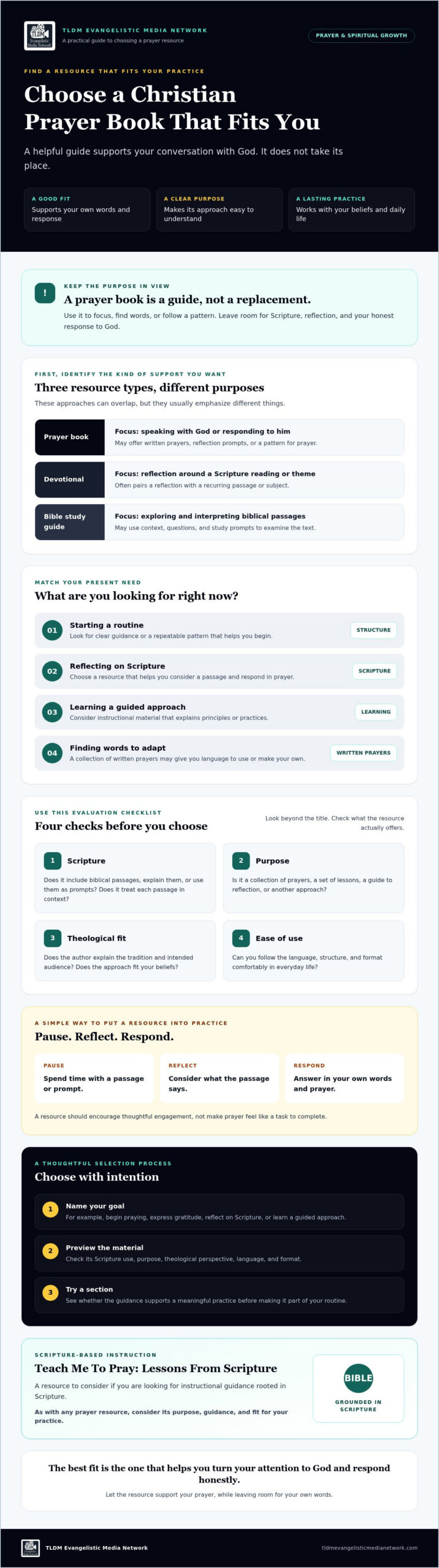
The most helpful Christian prayer books aren’t necessarily the ones with the most polished words. They’re the ones that help you turn your attention to God and respond honestly. If you’re unsure what your spiritual life needs, it can be hard to know whether a structured guide will help or feel restrictive. A good book supports your conversation with God; it doesn’t take its place.
The right resource might offer biblical direction, practical prompts, or a pattern you can return to while leaving room for your own response. This guide explains how to match a prayer book to your needs, assess its use of Scripture, and decide whether its format will work for your daily life. You’ll also learn how different resources support prayer, including Scripture-focused instruction, so you can choose a guide that encourages a thoughtful, sustainable practice.
Key Takeaways
- Use a prayer book to support your personal conversation with God, not replace it.
- Check how clearly a resource uses Scripture, explains its purpose, and fits your theological tradition and daily life.
- Match the approach to your current need, whether you’re starting a routine, reflecting on Scripture, or looking for guided learning.
- Choose Christian prayer books by naming your goal, previewing the material, and trying a section before adopting a regular practice.
- Explore TLDM’s Teach Me To Pray: Lessons From Scripture if you’re looking for instructional guidance rooted in Scripture.
What Christian Prayer Books Can Offer Your Prayer Life
You may want a steadier prayer routine, a new way to focus, or somewhere to begin when the words don’t come easily. Christian prayer books can provide structure for these moments through written prayers, reflection prompts, or practices drawn from Scripture and Christian tradition.
A Christian prayer book guides or supports prayer, helping readers speak with God or respond to him without replacing Scripture, reflection, or their own words. Some books provide prayers to read or adapt; others offer questions or a pattern to follow. Their purpose, theological tradition, level of guidance, and format can vary, so a resource that suits one reader may not suit another.
How prayer books differ from devotionals and Bible study guides
These resources can overlap, but they usually serve different purposes. A prayer book focuses on speaking with God or responding to him. A devotional often pairs a reflection with a recurring Scripture reading or theme. A Bible study guide primarily helps readers interpret and explore biblical passages through context, questions, and study prompts.
Some prayer books use a liturgical structure, arranging prayers for regular worship or seasons of the church year. The Book of Common Prayer is a notable example with a long history of revisions and use in Anglican traditions. Other resources are less formal and center on personal reflection or guided prayer.
What to consider before choosing a prayer resource
Start with your present need, not the title or format. Decide what you hope to practice or understand: beginning to pray, expressing gratitude, reflecting on Scripture, or learning a guided approach. Then consider how much structure feels supportive. A set form may help you focus, while open-ended prompts may leave more room for your own words.
- Scripture: Does the resource include biblical passages? Does it present them in context?
- Purpose: Is it designed for written prayers, reflection, instruction, or another approach?
- Tradition: Does its theology and style align with your Christian tradition, or are differences explained clearly?
- Usability: Can you follow the language and format comfortably in your everyday life?
A prayer book should encourage thoughtful engagement rather than make prayer feel like a task to complete. You might pause over a passage, reflect on what it says, and respond in your own words. As you compare resources, focus on clarity, biblical grounding, and fit.
How to Evaluate Biblical Grounding, Guidance, and Format
A useful prayer resource makes its purpose clear and gives you guidance you can put into practice. A suitable resource connects its stated purpose with clear, usable guidance. When comparing Christian prayer books, look beyond the title or description. Check how the book handles Scripture, what kind of support it offers, and whether its approach fits your beliefs and daily life.
- Scripture use: Does the book quote biblical passages, explain them, or offer them as prompts for prayer?
- Clarity of purpose: Is it a collection of prayers, a set of lessons, or a guide to reflection?
- Theological fit: Does the author explain the Christian tradition and intended audience?
- Ease of use: Can you follow the language, structure, and format without losing focus?
Questions to ask about Scripture and theological perspective
Notice how a book presents each passage. Does it provide context and help you consider what the text says, or use a verse mainly as a brief prompt? A Scripture-centered resource should treat the Bible with care rather than assign a passage a meaning detached from its context. For a broader theological frame, readers can explore this essay on the doctrine of prayer.
Review the author’s stated tradition and intended audience, too. Christian traditions may differ in worship practices and language for prayer, so a book can be biblically serious while reflecting a particular perspective. Knowing that perspective helps you decide whether its guidance is a good fit.
Choosing between guided prayers, lessons, and reflections
Different approaches suit different needs. Guided prayers provide words you can use or adapt. Scripture-led reflection invites you to read a passage, consider its meaning, and respond in prayer. Teaching-oriented resources explain principles or practices, while prayer collections gather written prayers around themes or occasions.
TLDM Evangelistic Media Network offers Teach Me To Pray: Lessons From Scripture as an instructional resource for readers seeking guided learning. Consider whether lessons are the support you want instead of assuming every prayer resource takes the same approach.
Print and digital formats are both common options, but the formats available vary by resource. Check the current product details before choosing. To compare Christian books offered by TLDM against your criteria, browse its online Christian bookstore.
Which Christian Prayer Book Fits Your Situation?
The most helpful resource depends on what you want to practice now. Use this comparison to narrow your options, then check the book’s biblical grounding and approach. A guide can offer words or structure, but it shouldn’t replace your attention, reflection, and response to God.
| Reader need | Resource approach | Questions to check |
|---|---|---|
| Starting to pray | Guided prayers or simple prompts | Is the language welcoming and easy to adapt? Does it leave room for your own words? |
| Deeper Scripture reflection | Passage-based prompts for prayer | Does the resource provide context and help you respond to the passage thoughtfully? |
| Building an established routine | A structured prayer pattern or collection of prayers | Does the structure suit your tradition and schedule without making prayer feel like a task? |
| Learning how to pray | Instructional lessons or teaching-oriented guidance | Does the resource explain its approach clearly and connect it to Scripture? |
For beginners seeking structure or words for prayer
If you’re unsure what to say, guided prayers can offer a starting point. Look for clear, welcoming language that you can make your own. If the wording is hard to understand or feels disconnected from your experience, another approach may suit you better. Read a prayer, pause over a phrase that stands out, and continue in your own words.
Start with one prayer or section and notice whether it helps you focus. You don’t need to finish a book or establish a perfect routine before prayer can be meaningful.
For readers seeking Scripture-centered or deeper prayer
A Scripture-led resource can help you slow down with a biblical passage, consider its meaning, and bring your response to God. Prayer instruction and academic Bible study serve different purposes, but can complement each other: one may guide your prayer practice while the other develops your understanding of the text.
If you want guided learning, TLDM Evangelistic Media Network offers Teach Me To Pray: Lessons From Scripture. You can also look for a guide to praying with Scripture to explore this approach further. Whichever resource you choose, let it direct your attention toward Scripture and personal engagement, not just completing the next page.
If fasting is part of how you want to pray, you can also explore fasting and prayer books and compare how each one uses Scripture and the kind of guidance it offers.
How to Choose and Use a Prayer Book Consistently
Choose a prayer book by starting with your purpose, reviewing the resource, and trying a small portion. That process keeps your choice connected to your actual needs instead of turning it into a search for a perfect routine.
Name your need, check Scripture and tradition, preview the approach, choose a usable format, and try one section before making it part of your routine. This sequence can help you compare Christian prayer books and choose thoughtfully.
A five-step process for selecting a prayer book
- Name your purpose. Are you learning about prayer, looking for reflection prompts, or seeking help getting started?
- Check its grounding. Review how it uses Scripture, explains its theological perspective, and identifies its intended audience.
- Preview the approach. Look at a sample or contents page, if available, to see how the material is organized and whether the guidance is clear.
- Choose a workable format. Consider whether print or digital reading better suits where and how you plan to reflect. Confirm format availability with the seller or publisher.
- Try a small portion. Read one section or use one practice before deciding whether the resource belongs in your regular rhythm.
Suggested wording can help you begin, but you can pause and respond in your own words, too. Adapt a prompt thoughtfully while respecting the resource’s purpose and any biblical passage it draws from. The goal is engaged prayer, not simply finishing a page.
Build a sustainable practice without pressure
Choose a realistic time and place where you can give prayer your attention. You might read a short passage or prompt, sit with what stands out, and then pray in your own words. If your routine is interrupted, return to it when you can. Consistency can grow gradually, and no book can promise a particular spiritual outcome.
If you’re deciding between prayer-focused guidance and a devotional, consider what each resource is designed to help you practice. Devotionals often pair reflection with a recurring reading or theme, while prayer books focus more directly on prayer. Choose the approach that fits your present aim.
Once you know what you need, explore TLDM’s Christian books and resources with these selection steps in mind.
Explore Scripture-Based Prayer Resources from TLDM
Once you know the kind of guidance you’re looking for, compare resources by their purpose and biblical focus. TLDM Evangelistic Media Network offers Christian books and prayer instruction, including Teach Me To Pray: Lessons From Scripture, an instructional series for readers seeking structured learning about prayer and Scripture.
When Scripture-based instruction may be a helpful next step
Instruction may be helpful if you want to learn about prayer rather than rely only on written prayers or prompts. As you consider a resource, use the same questions from this guide: Is its purpose clear? Does its stated focus fit what you hope to learn? Is it a suitable next step for your current needs?
TLDM describes Teach Me To Pray: Lessons From Scripture as an instructional series. To assess whether it fits, review the available description and details. Readers seeking broader guidance can also explore a guide to praying with Scripture from a source they trust.
Browse Christian books and continue learning
TLDM provides Christian media alongside its books and prayer instruction. If you’re considering Christian prayer books, first decide whether you want guided learning, a collection of prayers, or another kind of resource. Then review current descriptions and availability before choosing a specific book.
Your choice doesn’t have to be final. Begin with the resource that best fits your present aim, then reflect on whether its approach is useful in practice. Explore the TLDM Christian bookstore to review its Christian books and choose a next step that supports your learning and prayer life.
Take Your Next Step Toward a Steadier Prayer Life
The best Christian prayer books are those that meet your present needs, treat Scripture with care, and offer guidance you can use. Identify what you hope to learn or practice, check the resource’s theological perspective, and try a section before making it part of your routine. Let the book support your prayer, not replace your reflection and response to God.
Prayer grows through attentive practice, not pressure to follow a perfect schedule. A small, thoughtful beginning can help you discover what kind of guidance serves you well. TLDM offers Christian books and Scripture-focused educational resources, including the instructional series Teach Me To Pray: Lessons From Scripture.
Explore TLDM’s Christian resources and consider which next step fits your season of learning. May the resource you choose help you approach prayer with greater clarity and care.
Frequently Asked Questions
What is a Christian prayer book?
A Christian prayer book supports prayer through written prayers, prompts, reflections, or a structured pattern. It isn’t the Bible, which contains Scripture, and it differs from a devotional, which often pairs a recurring reading with reflection. Some prayer books draw on Scripture or church traditions, while others offer more open-ended guidance. Their purpose and level of structure vary.
How do I choose a Christian prayer book?
Match the book’s approach to your needs and beliefs. First consider what you want to practice, such as beginning to pray, reflecting on Scripture, or following a regular pattern. Then check how the resource uses biblical passages, its theological perspective, and its intended audience. Finally, preview the language and format. A clear, usable guide that fits your tradition is more likely to support your practice.
Can a prayer book help me pray if I am a beginner?
Yes. A prayer book can give beginners a starting point through suggested words, questions, or simple prompts. You might read a guided prayer, pause to consider which words express your thoughts, and add a personal response. Choose language you understand and a manageable section. You don’t need to follow every prompt exactly or establish a perfect routine right away.
Do Christian prayer books replace the Bible?
No. A Christian prayer book can support prayer, but it doesn’t replace the Bible or reading and reflecting on Scripture. Some prayer resources include biblical passages or prompts for responding to them. Use a guide alongside your Bible, check passages in context, and bring your own thoughts and words to prayer. Treat the book as an aid, not as Scripture itself.
What is the difference between a prayer book and a devotional?
A prayer book generally focuses on speaking with God or responding to him through written prayers, prompts, or a prayer pattern. A devotional often pairs a reflection with a recurring Scripture reading or theme. The purposes can overlap: a devotional may include a prayer, and a prayer book may offer reflection on Scripture. Before choosing, consider whether you want help forming a prayer or guidance for regular reading and reflection.
Are all Christian prayer books written from the same tradition?
No. Christian prayer books can reflect different theological perspectives, worship practices, and ways of structuring prayer. Some follow a formal liturgical pattern, while others offer personal prompts or less structured guidance. Check the author’s stated tradition and intended audience, and consider whether the language and practices fit your beliefs. If the resource’s perspective isn’t clear, review its introduction or publisher description before relying on it.
How can I use a prayer book consistently?
Choose a realistic time and place for prayer, then begin with one section or practice rather than trying to use the entire book at once. Read a prompt, reflect on it, and continue in your own words. Keep the routine flexible so an interruption doesn’t make you feel you’ve failed. Consistency can develop gradually. If the approach stops serving your needs, adjust how you use the resource.