

Finding peace in a chaotic world doesn’t mean making every problem disappear. Uncertainty, grief, and daily pressures can remain real, even as faith helps you meet them with steadier hope. The Bible doesn’t promise a life without trouble; it points to God’s presence in the middle of it.
If spiritual advice has ever sounded like a call to simply “stay positive,” your struggle deserves more care than that. Feeling anxious or unsettled doesn’t mean you’ve failed at faith. Scripture makes room for honest prayer and invites us to bring our concerns to God.
This guide explores what biblical peace means and how to seek it through simple, sustainable practices. You’ll find ways to pause and pray in stressful moments, reflect on Scripture without adding a demanding routine, and return to hope when circumstances remain uncertain. The goal isn’t to force calm, but to take one faithful step at a time.
Key Takeaways
- Biblical peace doesn’t require a trouble-free life; it grows through trust in God amid uncertainty and hardship.
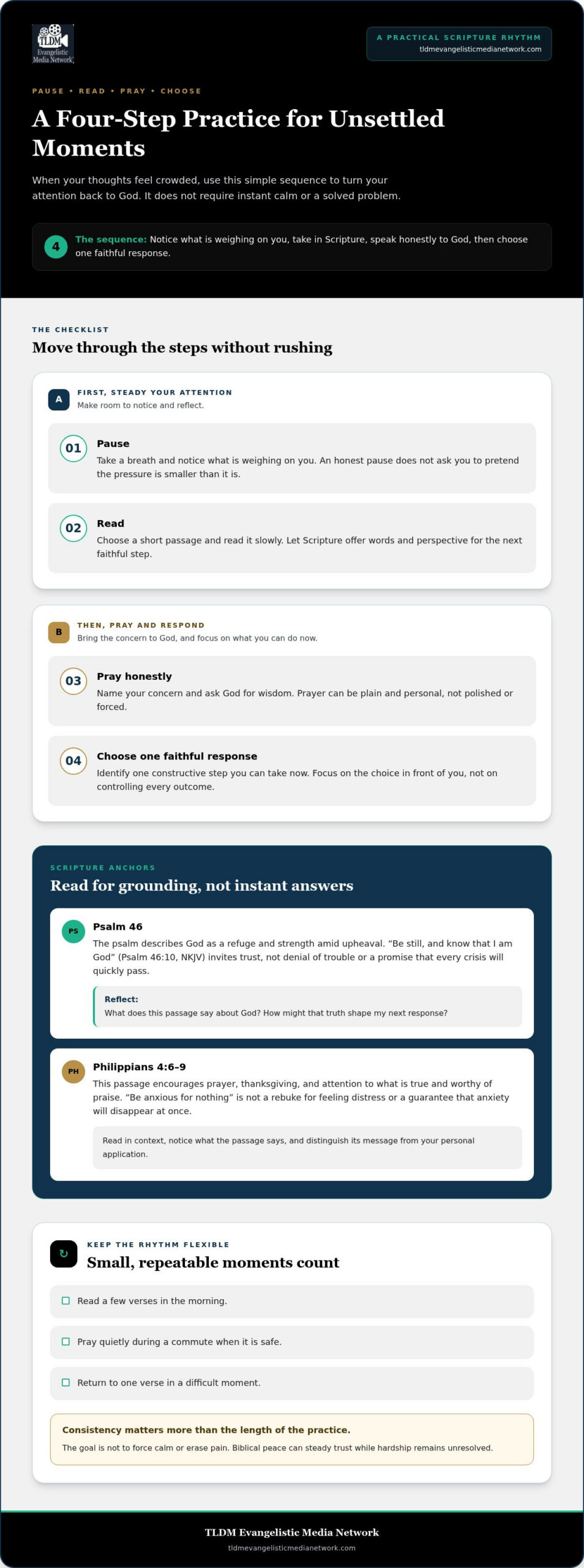
- Use a simple four-step practice during stressful moments: pause, read Scripture, pray honestly, and choose one faithful response.
- Reflect on Psalm 46 and Philippians 4:6-9 without expecting prayer to erase pain or bring instant relief.
- Build a flexible rhythm with Scripture, rest, thoughtful boundaries, and brief reflection rather than adding a rigid routine.
- Finding peace in a chaotic world can begin with one small practice that helps you return to Scripture and hope.
What Does Finding Peace in a Chaotic World Mean Biblically?
Uncertainty can unsettle plans, and grief can make ordinary tasks feel heavy. Conflict may strain relationships, while constant demands leave little room to think. These experiences should not be minimized, and feeling troubled doesn’t mean you lack faith.
Biblical peace is the steadying trust and wholeness found in relationship with God, even when hardship remains unresolved. It is not a guarantee of comfort, control, or freedom from painful emotions. The broader definition of inner peace includes ideas and practices found across cultures. The biblical understanding is rooted in trust in God and a life shaped by that relationship.
Scripture holds peace together with trouble, lament, endurance, and hope. The Psalms give voice to fear and sorrow rather than asking people to hide them. Jesus tells His disciples, “In the world you will have tribulation; but be of good cheer, I have overcome the world” (John 16:33, NKJV). That promise does not deny tribulation. It offers hope in its presence.
How is biblical peace different from a calm situation?
A calm situation depends on circumstances going smoothly. Biblical peace can take root before a problem is solved because its foundation is God’s presence and faithfulness, not perfect conditions.
In John 14:27, Jesus tells His disciples, “Peace I leave with you, My peace I give to you; not as the world gives do I give to you” (NKJV). He speaks as He prepares them for His departure, not as someone promising that their lives will be easy. His words offer a different ground for trust. Faith doesn’t erase sadness, fear, or the need to face a difficult situation; it gives a person somewhere to turn while facing it.
Why does chaos challenge a person’s sense of peace?
When demands pile up and the future feels uncertain, attention can narrow toward whatever seems most urgent or threatening. A difficult conversation, a family concern, or an unresolved decision may fill the mind, leaving little space to reflect. This response is human, not proof of spiritual failure.
Finding peace in a chaotic world can begin with an honest pause, not a demand to feel calm. Name one pressure you’re carrying, then bring it plainly to God in prayer. You don’t have to pretend it’s smaller than it is. Scripture offers spiritual grounding, while other forms of support and care may also have a place.
How Can Scripture and Prayer Steady You During Turbulent Times?
A short practice can help you turn toward God when your thoughts feel crowded. It doesn’t need to remove every distraction or produce instant relief. Let Scripture give you words and perspective for the next faithful step.
Try a simple four-step practice
Pause, read, pray honestly, and choose one faithful response. These steps make finding peace in a chaotic world more manageable by turning your attention back to God and the choice in front of you.
- Pause: Take a breath and notice what is weighing on you.
- Read: Choose a short passage and read it slowly.
- Pray honestly: Name your concern and ask God for wisdom.
- Choose: Identify one constructive, faithful response you can take now.
Psalm 46 describes God as a refuge and strength amid upheaval. Its call to “Be still, and know that I am God” (Psalm 46:10, NKJV) invites trust in God’s sovereignty, not denial of trouble or a promise that every crisis will quickly pass. After reading the psalm, ask, “What does this passage say about God?” Then consider, “How might that truth shape my next response?”
Pray plainly, then reflect without rushing
Philippians 4:6-9 encourages prayer, thanksgiving, and attention to what is true and worthy of praise. Paul’s words, “Be anxious for nothing,” are part of an instruction to bring requests to God, not a rebuke for feeling distress or a guarantee that anxiety will disappear at once. Read the passage in context, notice what it says, and distinguish its message from your personal application.
When you feel overwhelmed, try a simple prayer: “God, I’m carrying ____. Please give me wisdom for what I can do, and help me entrust what I can’t control to You.” Read a short passage, sit with its meaning, and put your concern into your own words as you pray.
Keep the practice flexible. Read a few verses in the morning, pray quietly during a commute when it’s safe, or return to one verse in a difficult moment. Harvard Medical School also outlines practical steps for finding calm, offering another perspective on responding to stress. For continued biblical reflection, explore the Sharing The Word Podcast. Consistency matters more than the length of the practice.
What Gets in the Way of Peace, and What Does Scripture Actually Teach?
Expectations about peace can make hardship feel even heavier. If peace seems to require a calm life or constant confidence, ordinary distress may look like spiritual failure. Scripture offers a more honest picture: trust in God can coexist with fear, unanswered questions, and problems still unfolding.
Biblical nuance: Scripture gives people language for fear and lament. Psalm 13 begins, “How long, O LORD? Will You forget me forever?” (Psalm 13:1, NKJV).
Practical response: Tell God what you’re feeling instead of judging yourself for feeling it.
Biblical nuance: Scripture encourages hope and faithful action without promising a specific outcome or timeline.
Practical response: Choose one step within your reach, such as asking someone you trust for help.
Biblical nuance: Biblical peace is not denial, control, or constant happiness. It is trust in God that can remain present alongside changing emotions and difficult circumstances.
Practical response: Name what you can influence, and release what you cannot determine.
Does trusting God mean you should never feel afraid or distressed?
No. The Psalms include cries for help, and Psalm 56:3 connects fear with trust: “Whenever I am afraid, I will trust in You” (NKJV). The verse acknowledges fear rather than treating it as evidence of weak faith. Biblical teaching offers a foundation for hope, while applying a passage to a particular situation can require reflection and wisdom.
If distress feels difficult to carry alone, seeking support from someone you trust or from a qualified professional can be a wise step. For practical guidance and non-clinical peer encouragement while navigating personal trials, resources like acontagioussmile.com can provide helpful community. Prayer and Scripture can accompany that support; they don’t require you to manage every burden by yourself.
Can peace coexist with problems that have not been resolved?
Yes. Finding peace in a chaotic world doesn’t mean knowing how every situation will end. Christian hope rests in God’s character, not in a guarantee that events will unfold as we wish. A faithful response might be setting a needed boundary, asking for practical help, or taking time to consider a decision before acting.
For a wider reflection on how people seek steadiness during crisis, the Greater Good Science Center at UC Berkeley explores the neuroscience of peace. This perspective can complement, but doesn’t replace, the distinct biblical invitation to trust God. As you reflect on Scripture, consider which small, faithful response is possible in your circumstances.
How Do You Build Peaceful Habits When Life Still Feels Unsettled?
A steady rhythm can help you return to Scripture and wise choices without turning faith into another demanding task. Keep it flexible. The aim is not to feel calm on command, but to make room for prayer, reflection, and care for yourself and others amid ordinary responsibilities.
- Begin with Scripture: Read a short passage or write a brief prayer before the day’s demands take over.
- Pause under pressure: Step away from a screen or task when you can, take a breath, and ask what response would be wise and kind.
- Reflect at day’s end: Consider what weighed on you, where you received help, and what you want to bring to God in prayer.
Small boundaries can protect this rhythm. Choose when and how often to check the news, make space for rest where possible, and give relationships your attention instead of dividing it among constant alerts. Adapt these practices to your health, work, caregiving, and other responsibilities. Habits can support reflection and faithfulness, but they don’t guarantee a particular emotional state.
What small practices can help you return to a steady focus?
Choose one manageable starting point: a few verses, a written prayer you can revisit, or a quiet moment before responding to a difficult message. Ask yourself, “What might help me respond with patience, wisdom, and care for others right now?” Finding peace in a chaotic world can involve returning to that question as circumstances shift, rather than following a rigid schedule.
How can you respond when worry returns?
A difficult day doesn’t erase your effort or mean you’ve failed. Begin again with a simple reset: pause, breathe, name the concern, and choose the next wise action. Separate what you can address now, such as making a call or asking for help, from what you can’t control, such as another person’s decision or the final outcome.
If distress feels persistent or difficult to manage, consider reaching out to someone you trust or a qualified professional. Spiritual habits can accompany supportive care; you don’t have to carry everything alone. For continued Scripture-centered reflection, explore the Sharing The Word Podcast.
How Can Christian Teaching Support Your Search for Peace?
Peace does not ask you to deny grief, uncertainty, or the pressures still waiting for you. Scripture and prayer can help shape a faithful response, one honest moment and one wise choice at a time. Finding peace in a chaotic world is a continuing practice of returning to God, not a test you pass by feeling calm every day.
Biblical teaching can accompany you as you read Scripture and consider how its message speaks to your life. A podcast may fit into a quiet moment at home, a walk, or a commute when listening is safe and suitable. Treat what you hear as an invitation to think more deeply, then return to Scripture and reflect carefully. Listening alone cannot promise relief or resolve difficult circumstances.
The Sharing The Word Podcast offers one way to continue engaging with Christian teaching. Listen at a pace that suits your routine, pausing to consider what you hear and how it connects with the biblical text. Keep your circumstances in view as you reflect. A teaching can prompt thought, but your next step may still be a conversation, a boundary, a practical decision, or another honest prayer.
What is a realistic next step after reading?
Choose one passage and one practice to try today. You might read a few verses from a Psalm and write a short prayer naming what feels unsettled. Or pause during a demanding moment, take a breath, and ask what response would reflect patience and wisdom.
Revisit that practice when you need it, without expecting the same feelings or results each time. Some days may bring clarity; other days may call for endurance, help from someone you trust, or more time. Your circumstances matter, and spiritual growth need not follow a perfect schedule.
Take the next step gently. Continue learning through Scripture-centered teaching while bringing your questions, emotions, and hopes honestly before God. For further reflection, explore the Sharing The Word Podcast.
Take One Steady Step Toward Hope
Biblical peace doesn’t depend on a life without hardship. It grows as you bring real concerns to God, return to Scripture, and choose a wise next step, even when circumstances remain uncertain. A brief rhythm of reading, prayer, and reflection can help you keep turning toward hope without demanding that you feel calm every moment.
Finding peace in a chaotic world is not a single achievement. It’s a practice of trust you can return to in the middle of an unsettled day. Choose one passage and one small practice to carry with you, and give yourself room to return to them when you need to.
For continued biblical reflection, TLDM Evangelistic Media Network offers the Sharing The Word Podcast, online sermons, and Teach Me To Pray: Lessons From Scripture. The network is a not-for-profit 501(c)(3) organization. Explore the Sharing The Word Podcast and take one gentle step toward continued learning and hope.
Frequently Asked Questions
Is it possible to find peace when life is still chaotic?
Yes, you can experience peace while problems remain unresolved. Biblical peace doesn’t mean controlling every outcome or feeling calm all the time. It means turning toward God for trust and guidance as you face what’s happening. Name one concern in prayer, then consider one wise step you can take today. Finding peace in a chaotic world is often a continuing practice, not a quick fix.
What does the Bible say about peace during difficult times?
The Bible presents peace alongside hardship, lament, and hope. Jesus acknowledges that His followers will face trouble in John 16:33, while offering hope grounded in Him. Psalm 46 portrays God as a refuge amid upheaval, and Philippians 4:6-9 encourages prayer and thoughtful attention to what is good. These passages don’t promise that every difficulty will quickly end. They offer direction for trusting God and choosing a faithful response.
How can I pray when I feel overwhelmed?
Start with plain words. Name what’s weighing on you, ask God for wisdom, and entrust what you can’t control to Him. For example: “God, I’m worried about this decision. Help me see the next wise step, and hold what I can’t resolve.” You don’t need to hide distress or find perfect words. A short, honest prayer can be a meaningful beginning, whether you pray silently or write it down.
Can Christians feel anxious and still have faith?
Yes. Feeling anxious or distressed doesn’t automatically mean your faith is weak. Scripture includes people who express fear, grief, and urgent need while continuing to seek God. Faith is not a requirement to suppress emotions or pretend everything is fine. Prayer and Scripture may support you, and you can also seek help from trusted people or a qualified professional if distress persists or becomes difficult to manage.
What Bible verse can help when the world feels uncertain?
Psalm 46:1-2 can offer a starting point for reflection because it describes God as a refuge and strength when trouble comes. Read the verses slowly, then notice what they say about God before deciding how to apply them to your situation. The passage doesn’t promise that uncertainty will disappear. It invites you to consider where you can seek help and place your trust amid instability.
What daily habits can help me feel more grounded?
Choose a flexible rhythm rather than a demanding routine. You might read a few verses in the morning, pause to pray when pressure rises, and reflect at day’s end on what you’re carrying. Setting limits around news or screen time, making room for rest, and giving someone your full attention can also support a steadier day. Adapt these practices to your responsibilities, and begin again when worry returns.