

What if the most encouraging message you hear today doesn’t simply lift your mood, but helps you return to Scripture with fresh hope? Finding uplifting christian audio messages can be challenging when general positivity sounds inspiring yet leaves biblical teaching in the background. Christian audio can offer more than a passing boost when it handles Scripture with care and connects faith to everyday life.
You may want thoughtful teaching during a quiet moment or a brief message that fits into a busy day. Either can serve you well when the format matches your attention and the encouragement points back to God’s Word. The key is to listen with discernment, not simply press play.
In this guide, you’ll learn how to recognize Scripture-rooted encouragement, choose an audio format that suits your day, and reflect on what you hear. TLDM Evangelistic Media Network’s Sharing The Word Podcast and Take5 Messages offer audio resources for engaging with Christian teaching. As you listen, consider one question: What truth from Scripture can shape the way I respond today?
Key Takeaways
- Look for uplifting christian audio messages that treat Scripture in context, rather than building encouragement on isolated references.
- Choose a podcast, brief message, or sermon-style recording based on your available attention and need for depth.
- Listen with purpose: notice a biblical idea, revisit the passage, and consider how to put its truth into practice.
- Explore TLDM’s Sharing The Word Podcast and Take5 Messages for audio Christian teaching and encouragement.
Why Seek Uplifting Christian Audio Messages in Everyday Life?
Some days call for hope. On others, you may need a wider perspective or a quiet moment to turn your attention toward God. Spoken Christian teaching can fit into ordinary routines, such as preparing for the day or taking a reflective pause, and offer encouragement shaped by faith rather than by circumstance alone.
Uplifting Christian audio messages are spoken content that encourages faith through Christian teaching, often by explaining or applying biblical ideas. Their purpose isn’t simply to make a listener feel better for a moment. Meaningful encouragement points toward God, treats Scripture with care, and invites a response grounded in Christian belief and practice.
Emotional support and personal experience can also have a place. A speaker may share a testimony or speak compassionately about hardship, and listeners may find comfort in that honesty. Motivational content alone, however, can inspire confidence or perseverance without engaging Christian teaching. Biblical encouragement connects hope with the character, promises, wisdom, or instruction found in Scripture, rather than presenting optimism as the whole answer.
What makes a Christian audio message uplifting?
An uplifting message offers hope while respecting the passage it draws from. It considers what Scripture communicates in context instead of using a familiar phrase as a guarantee that circumstances will quickly change. Comfort can include a reminder of God’s presence, a call to patience, or wisdom for the next faithful step. Listeners may respond differently depending on what they’re facing and the questions they bring.
Christian audio can also include music, though a song and a spoken teaching serve different purposes. Gospel music represents a distinct musical tradition with its own history and cultural influence. A spoken message, by contrast, communicates through explanation, reflection, or application. Both may encourage faith, but it helps to recognize which kind of content you’re hearing.
Who may benefit from listening?
Listeners at many stages of faith may find audio useful. A new believer might appreciate an accessible introduction to a Christian idea, while someone who has followed Christ for years may welcome a prompt to reflect more deeply. No particular level of biblical knowledge is required to begin listening, though curiosity and a willingness to consider the teaching can enrich the experience.
Audio may accompany a familiar routine or offer a point of focus during a season of uncertainty. Use it alongside personal Bible reading, prayer, or study when those practices fit your needs. Listening can introduce an idea or raise a question, but it doesn’t replace your own discernment. Pause when something is unclear, consider how the speaker supports an interpretation, and return to Scripture to explore the teaching for yourself.
How Scripture-Grounded Audio Encouragement Connects Biblical Truth With Daily Life
Christian teaching can bring biblical themes into everyday questions, but applying Scripture well takes more than pairing a hopeful thought with a verse. A message should help listeners understand what a passage says, how it fits its wider setting, and where personal reflection begins. That care allows encouragement to offer perspective without asking a biblical text to promise something it doesn’t say.
Context matters because it helps listeners apply Scripture faithfully rather than treating a verse as a promise detached from its original meaning. The Psalms, for example, include praise, trust, and honest expressions of sorrow. A teaching on a psalm of lament can acknowledge grief while exploring how the writer brings pain before God. In Matthew’s Gospel, Jesus’ teaching belongs within the account of his ministry and the people he addressed. The surrounding passage can clarify what a teaching asked of its first hearers and how Christians might reflect on it today.
How to recognize biblical grounding in an audio message
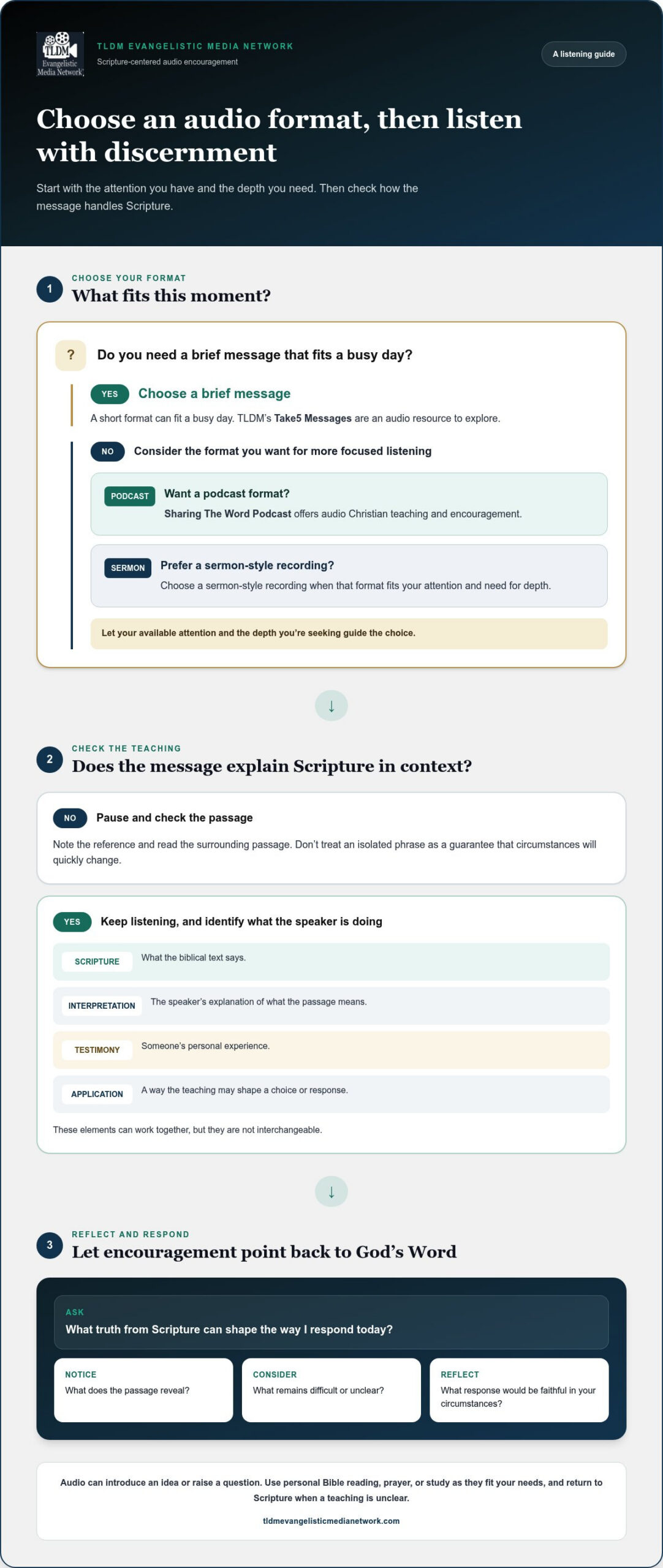
Listen for more than a reference to a chapter or verse. Does the speaker explain the passage, or move quickly from a short phrase to a broad claim? Responsible teaching distinguishes between describing the biblical text, offering an interpretation, sharing a testimony, and suggesting a personal application.
These elements can work together, but they aren’t interchangeable. A Scripture reference identifies a passage; an interpretation explains what it means; a testimony describes someone’s experience; and an application considers how the teaching may shape a choice or response. One audio message can prompt useful questions, but it can’t stand in for reading Scripture more broadly. If a claim feels unclear, note the reference and read the surrounding passage for yourself.
Encouragement that makes room for honest struggle
Biblical hope doesn’t require a listener to deny grief, uncertainty, or hardship. The Psalms make room for sorrow as well as praise, reminding readers that honest struggle can be part of faithful reflection. A thoughtful message can offer comfort through themes such as trust, endurance, compassion, and prayer without promising immediate relief or a particular outcome.
Research should also be read with care. A study discussed by the Harvard T.H. Chan School of Public Health examined links between religious upbringing and well-being in early adulthood. It does not establish that listening to audio messages causes those outcomes, but it offers a wider research context for considering faith and well-being.
Let encouragement invite reflection, not pressure. Ask what the passage reveals, what remains difficult, and what response would be faithful in your circumstances. For teaching that brings biblical ideas into practical focus, explore the Sharing The Word Podcast as an audio resource for continued reflection.
Choosing Christian Audio Messages: Podcasts, Brief Messages, or Sermons
The right format depends on what you hope to receive and how much attention you can give in the moment. You might want an ongoing program to follow, a focused message to consider during a routine, or a sermon that allows you to sit with a teaching in greater depth. Match the format to your listening goal, then consider whether its biblical content invites reflection.
Format alone doesn’t determine theological depth or usefulness. While many listeners turn to channels like Ella Podcasts for episodic listening and conversations, faith-focused audio serves a different purpose. A podcast can offer careful teaching, a brief message can raise a meaningful question, and sermons can vary in focus. Listen for clear engagement with Scripture and ideas you can thoughtfully revisit.
| Format | Likely listening need | Reflection opportunity |
|---|---|---|
| Podcast | An ongoing spoken program or a continuing connection with Christian teaching | Consider how an idea relates to previous listening or personal study |
| Brief audio message | A focused point of encouragement that fits a smaller window of attention | Pause on one idea and decide what you want to explore further |
| Sermon-style recording | A fuller teaching experience when you can listen with sustained focus | Review the passage, main point, and possible application |
When a Christian podcast may fit your listening goal
A podcast suits listeners who want an ongoing spoken program. Returning to a series can help you keep engaging with Christian teaching over time, while each listening session can stand on its own. TLDM’s Sharing The Word Podcast is a resource to consider if you’re looking for a continuing audio program.
As you listen, note a question or biblical idea you want to carry forward. You don’t need to remember every point. A brief note can help you connect what you hear with later reflection or personal study.
When brief messages or sermons may suit the moment
A brief message may work well when you want a focused thought without committing to a longer listening session. TLDM’s Take5 Messages offer another audio option. A brief format can fit into a busy day, though the value still depends on the care and substance of the teaching.
A sermon-style recording may better serve a listener ready to follow a fuller explanation. Set aside a quieter moment if you want to consider the teaching and its biblical basis without dividing your attention. TLDM also provides online sermons for listeners seeking sermon-based Christian teaching.
Before choosing, ask yourself: Am I looking for a continuing program, a single point to reflect on, or a more developed teaching? That simple question can help you select uplifting Christian audio messages suited to your day without assuming that one format is always best.
How to Listen to Christian Audio With Discernment
Listening with purpose can help uplifting Christian audio messages become a starting point for thoughtful engagement rather than background sound you quickly forget. You don’t need a complicated routine. Choose a need, give the message your attention, and make room to consider its biblical idea before deciding how it might shape your response.
A simple listening-and-reflection routine
Before pressing play, name what you hope to consider. You might be seeking perspective on a decision, encouragement through a demanding day, or a reminder to be more attentive to others. Keep the goal open-ended. Listening isn’t a test, and you don’t need to force a particular feeling or conclusion.
- Choose a focus. Name a question, concern, or Christian quality you want to reflect on, such as patience or gratitude.
- Listen attentively. Notice the main idea and how the speaker connects it to Scripture. If you’re distracted, pause and return when you can give the message more attention.
- Write down one idea. Note the key point and the Scripture passage connected to it. A short phrase or question is enough.
- Reflect and respond. Read the passage in context, then choose a realistic next step. You might practice patience in one conversation or express gratitude to someone who helped you.
Close with a question you can carry into the day: What would it look like to put this idea into practice in one situation? A small, considered response is more useful than setting an unrealistic goal.
How to respond when a message raises questions
Questions are a natural part of careful listening. If a teaching feels unclear or makes a claim you want to understand, return to the cited passage and read the surrounding verses. Consider the passage’s subject and flow, not only the summary in the audio. This gives you a better basis for weighing the speaker’s explanation.
It can help to separate three things in your notes: what the biblical text says, how the speaker interprets it, and how you’re considering applying it. These may connect, but they aren’t identical. Your response deserves reflection, while an interpretation should be considered in light of Scripture.
Christians may reach different conclusions about some passages. Approach those differences with humility and a willingness to learn, rather than assuming that every question signals a lack of faith. If you need time, pause before drawing a firm conclusion. Return to the passage, compare the speaker’s explanation with the text, and continue reflecting without pressure.
Keep the practice flexible. Listening every day doesn’t guarantee spiritual growth, and a missed session isn’t a failure. Choose a rhythm that supports attentive engagement, then explore the Sharing The Word Podcast as a resource for continued listening and reflection.
Find Scripture-Centered Encouragement Through TLDM Audio Resources
TLDM Evangelistic Media Network shares Christian media and literature to support engagement with biblical teaching. Its digital media includes the Sharing The Word Podcast, Take5 Messages, and online sermons. Each offers a way to hear Christian teaching, while personal Scripture reading and reflection help listeners consider what they hear.
For someone seeking uplifting Christian audio messages, the best starting point may depend on the listening experience they want. An ongoing podcast, a brief message, and a sermon-style recording each create a different opportunity to consider Christian teaching. You don’t need to choose one format for every moment. Start with the option that fits your interest, then take time to reflect.
Explore the Sharing The Word Podcast and Take5 Messages
Sharing The Word Podcast is TLDM’s primary service and offers listeners an ongoing spoken program centered on Christian teaching. If you’re drawn to continuing engagement with audio, begin there and listen with a question or passage in mind. The podcast can be a starting point for hearing biblical teaching and carrying an idea into further reflection.
Prefer a focused message? Take5 Messages provide another audio option. Choose the format that fits your interest and attention in the moment, without assuming that one is automatically more meaningful than the other. After listening, note one idea you want to explore in Scripture.
Continue learning through sermons and Scripture
Online sermons offer another way to engage with Christian teaching. They can provide a fuller teaching experience, while a podcast or brief message may better suit another listening moment. Whatever you choose, treat the audio as a companion to Scripture, not a substitute for reading the passage and considering its context for yourself.
A sermon recording is a form of digital teaching. It differs in format from gathering for worship or receiving personal pastoral care, which serve distinct roles in Christian life. Listening can encourage reflection, but it doesn’t answer every spiritual question or replace your own discernment. If a teaching leads you to a question, return to the passage and take time to consider what it says.
Let the next step be simple: listen with attention, keep a note of a biblical idea, and consider how it might shape an ordinary choice. TLDM’s podcast, Take5 Messages, and online sermons provide ways to engage with Christian teaching through audio. Explore the Sharing The Word Podcast as you continue reflecting on Scripture and its place in daily life.
Carry Biblical Encouragement Into the Days Ahead
Let what you hear become part of a faith that keeps unfolding. Understanding doesn’t always arrive all at once, and growth may look like returning to a difficult question with greater patience or meeting another person with renewed compassion. Give yourself space to keep learning without expecting every day to feel different.
As you continue exploring uplifting christian audio messages, consider how the truths that stay with you might shape your perspective over time. Some insights may offer comfort; others may challenge an assumption or invite you to see someone’s needs more clearly. Let those moments encourage a steady, thoughtful walk of faith.
Explore TLDM’s Christian audio resources and choose an audio message to listen to with care. May the hope you find help you move forward with grace, courage, and trust.
Frequently Asked Questions
What are uplifting Christian audio messages?
Uplifting Christian audio messages are spoken content intended to encourage faith, with biblical teaching helping shape the message’s perspective. They can include teaching or reflection on a spiritual question, but “uplifting” describes an aim, not a guarantee of how you’ll feel afterward. Consider the subject and approach before choosing a recording, and remember that encouragement doesn’t mean every difficulty will quickly disappear.
Where can I listen to Christian audio messages online?
Christian audio is available through ministry websites and podcast listening apps, depending on the publisher. Search by a biblical book, theme, or question to narrow your options, and use the publisher’s own page to find related material. TLDM Evangelistic Media Network shares digital Christian media, including the Sharing The Word Podcast and Take5 Messages.
Can Christian audio messages help me grow in faith?
Listening may encourage you to give sustained attention to a part of your faith that you’ve left unexplored. For instance, a message might prompt you to learn more about a biblical figure or revisit a question that has stayed with you. You can track that interest in a reading journal or bring it into a thoughtful conversation. Audio can support learning, but growth isn’t automatic or measured by how often you listen.
How do I know if a Christian audio message is biblically grounded?
Notice whether the speaker explains who a passage addresses and what kind of writing it is, such as poetry, a letter, or a narrative. Those details can help prevent a poetic image or instruction to a particular audience from being treated as a direct promise to every listener. If the message leaves you unsure, consult a study Bible or trusted reference alongside the passage and take time to weigh the explanation.
Are Christian podcasts and sermons the same thing?
Not necessarily. “Podcast” describes a way a program is presented, while “sermon” describes a kind of teaching message. A podcast may contain sermons, conversations, or other spoken material, and a sermon may appear as an episode in a podcast series. If you’re choosing what to hear, look at the description of the specific recording rather than relying on its label alone.
What should I do after listening to an uplifting Christian message?
If a message stirs a strong emotion or raises a serious question, give yourself time before making a major decision based on that response. Save the title or jot down the question so you can revisit it with a clear mind. You might also discuss it with a trusted person who knows your circumstances. A thoughtful pause can help you distinguish a lasting insight from a reaction to the moment.
Can I listen to Christian audio messages when I have limited time?
Yes. Choose a recording that fits the attention you can offer, and consider pausing if your focus is divided. Save the title or note where you stopped so you can return later, rather than rushing through the message just to finish it. A brief, attentive listening moment may be more satisfying than playing audio while handling several demanding tasks at once.