
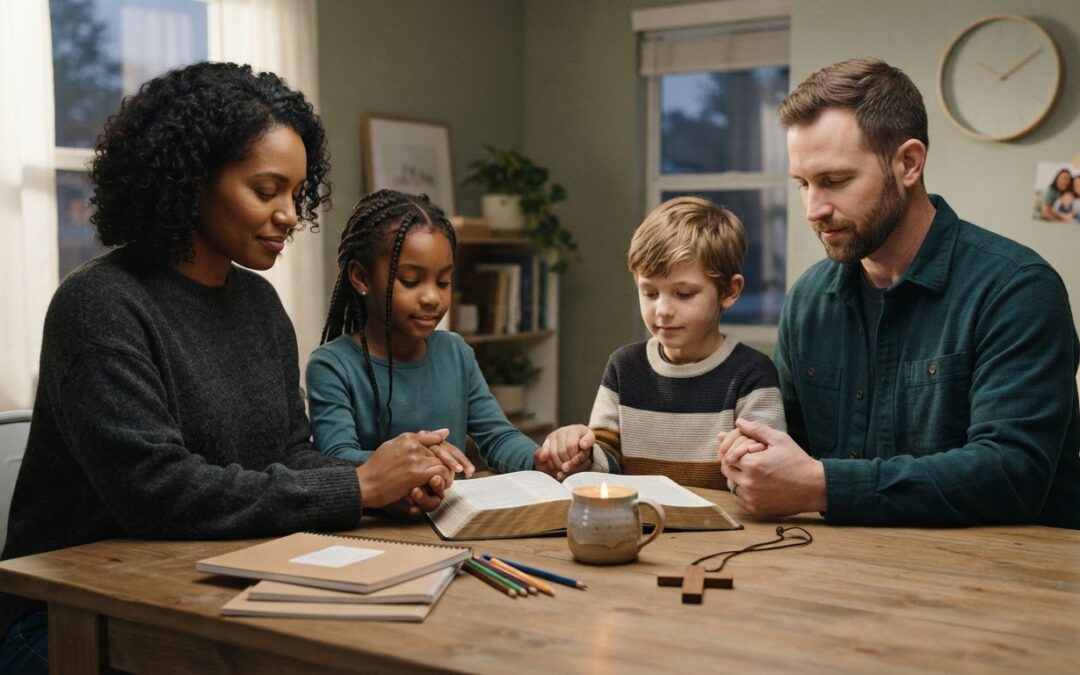
A simple, steady routine is a practical way to learn how to lead family devotions: start with 5 to 10 minutes, read a short Bible passage, share a few thoughts, and pray together. Choose a time your family can return to regularly, even if that means beginning once a week. Keep the rhythm manageable.
It’s natural to want family devotions to feel meaningful and to wonder how to hold children’s attention or make Scripture memorable. You don’t need an elaborate lesson to begin. A brief reading, a thoughtful question, and a simple prayer can give your family a shared moment to listen, learn, and grow in faith.
This guide will help you build a routine that fits family life, choose activities suited to your children’s ages, and use repetition to help Scripture and prayer take root. You’ll also find ways to keep the practice flexible, so a busy evening or distracted child doesn’t have to become a reason to give up. Start simply and let the rhythm grow with your family.
Key Takeaways
- Use brief, repeated Scripture readings and simple prayer to help children carry Bible truths into everyday life.
- Ask questions about what a passage says, what it means, and how your family can live it out.
- Choose stories, movement, drawing, or visuals that fit your children’s ages and attention.
- Keep the rhythm flexible and prayerful, returning to it without expecting every devotion to go perfectly.
- Set a realistic time and schedule your family can sustain, then adjust as your household’s needs change.
Use repetition to help children remember Scripture and prayers
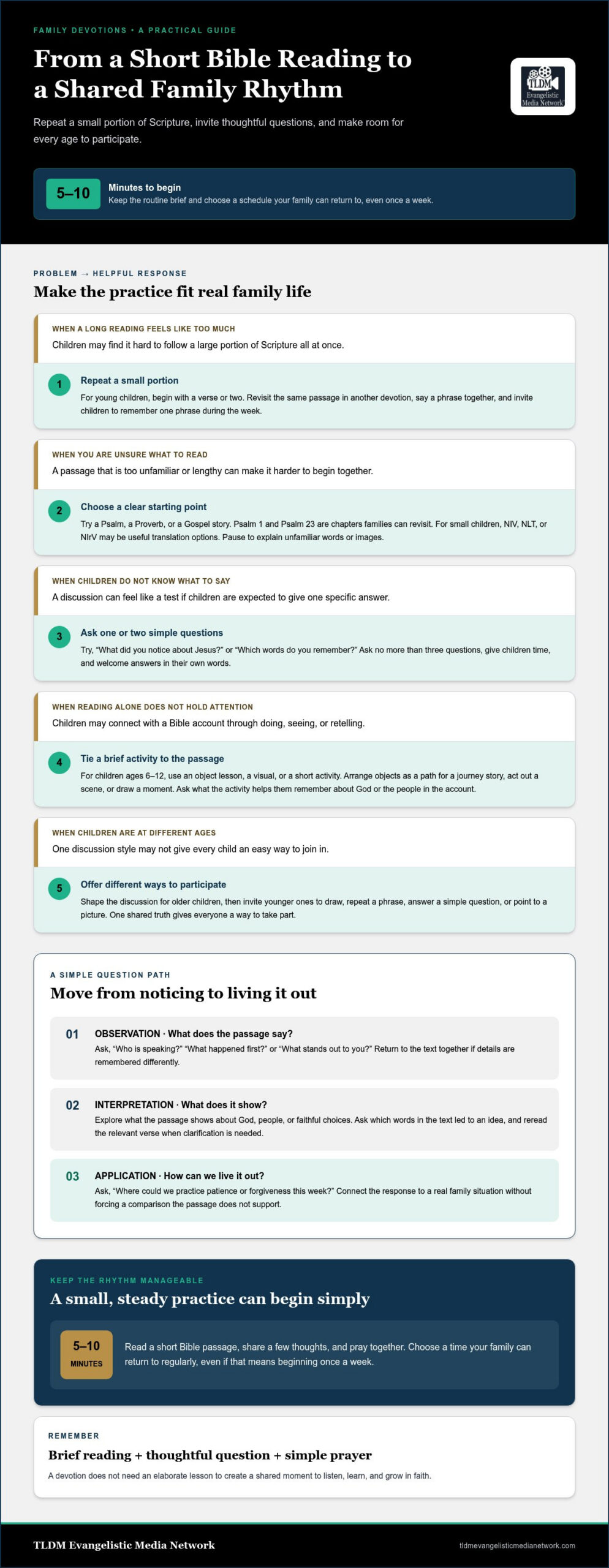
Choose a short passage your family can revisit, such as a Psalm, a Proverb, or a Gospel story. For young children, read a verse or two, then repeat the same words in later devotions so they can hear, discuss, and remember them.
- Repeat a small portion of Scripture. Begin with a verse or two for young children, then read the same passage again during another devotion. Second Timothy 3:15 speaks of Timothy knowing the Scriptures from childhood, a reminder that children can encounter God’s Word early. You might return to a verse from Psalm 23, say it aloud together, and invite children to recall one phrase during the week.
- Choose a passage that fits your family’s attention and understanding. A Psalm, a Proverb, or a Gospel story gives you a clear starting point. Psalm 1 and Psalm 23 can also provide chapters to revisit and learn over time. If your family is reading with small children, NIV, NLT, or NIrV translations may be useful options. Read a few lines aloud, then pause to explain an unfamiliar word or image.
- Invite children to notice and ask. After reading, ask one or two clear questions, no more than three. Try, “What did you notice about Jesus?” or “Which words do you remember?” Give children room to answer in their own words, and welcome questions about the passage. Their observations can guide the next reading, while a simple response helps them connect Scripture with what they already understand.
- Make the passage active for children ages six through 12. Use an object lesson, a visual, or a brief activity that connects to the Bible account. For a story about a journey, invite children to arrange simple objects as a path, then retell what happened. They can also act out a scene or draw a moment from the story. Keep the activity tied to the passage, and ask what it helps them remember about God or the people in the account.
- Include different ages without losing the older children. In a mixed-age family, shape the discussion for the older children, then invite younger ones to participate through a drawing, repeated phrase, or simple question. For example, older children can explain a lesson from Psalm 23 while a younger sibling points to a picture of a shepherd. Repeating one key truth gives everyone a way to take part and remember the same Scripture.
Ask observation, interpretation, and application questions
Use questions to guide your family from noticing a passage to understanding its meaning and putting its wisdom into practice. During Bible study at home, encourage each person to contribute, then listen before offering an explanation.
-
Ask Observation Questions
Begin with what the passage actually says. Ask, “Who is speaking?” “What happened first?” or “Which words describe the person’s response?” These questions help children notice details before jumping to conclusions. After reading a Gospel story, for example, invite each family member to name one action Jesus takes. Listen to the answers, then return to the text together if someone remembers a detail differently.
Ask open-ended questions that welcome different observations, such as, “What stands out to you?” Don’t expect every child to answer quickly or in the same way. A younger child might point to an illustration, while an older one notices a repeated phrase. Give each response room, and avoid turning the discussion into a test with one answer parents already expect.
-
Explore Interpretation and Application
After identifying what happens in the passage, ask what it shows about God, people, or faithful choices. For a story about forgiveness, ask, “Why might forgiveness matter here?” Then move toward application: “Where could we practice patience or forgiveness this week?” Connect the answer to a real family situation without forcing a comparison the passage doesn’t support.
Keep the conversation grounded in the text. If a child offers an idea, ask which words led them to it. Parents can clarify a misunderstanding by rereading the relevant verse and explaining its context. These steps help children distinguish what Scripture says from personal guesses, then consider a thoughtful response in everyday life.
-
Encourage Curiosity Through Questions and Art
Invite children to bring one question about the passage, then explore it together. Ask them to draw a scene, a character’s expression, or an image representing the passage’s main idea. A drawing of a storm, for example, can open a discussion about what people in the story saw and felt. Use the artwork to invite observations, not to judge artistic skill.
-
Take a Nature Walk and Notice Creation
Take a walk outdoors to connect careful observation with the biblical teaching that God is Creator. Ask children what they notice about a leaf, bird, or changing sky, then invite them to consider what those details reveal about the natural world. A walk can prompt curiosity and gratitude. Keep the discussion focused on what your family observes and the Scripture you’re exploring.
-
Ask, Then Listen
Choose a few specific questions instead of filling every quiet moment with explanations. After asking, “What surprised you in this passage?” give each child time to think. Listening helps parents understand what children heard, what they wonder about, and where they may need a clearer explanation. Close by naming one idea the family wants to remember or practice.
Maintain consistent, prayerful family discipleship over time
A family can begin with five minutes nightly or choose one day or three days each week, depending on its schedule. Welcome reluctant children with a short reading, a choice of how to participate, and prayer without pressure.
-
Find a Consistent, Flexible Time
Choose a regular point in the day, such as after dinner or before bedtime, when family members can gather. A predictable cue helps everyone know what to expect, but keep the plan flexible when work, school, or ministry changes the evening. Mark 2:27 reminds readers that a practice should serve people, not become a rigid burden.
If an evening becomes difficult, move the devotion to another natural opening rather than abandoning it. Families can start once a week or aim for three days weekly, depending on their schedule. Choose a rhythm your household can return to with prayerful attention.
-
Build a Regular Habit
Set a modest goal and make the steps familiar: gather, read Scripture, share a thought, and pray. Five minutes of family devotions nightly can be more sustainable than thirty minutes done sporadically. Another workable pattern is a 10-to-15-minute devotional with Bible reading, discussion, and prayer across many days.
Use a shared calendar or simple reminder to protect the chosen time. Let family members take turns opening in prayer or naming a request. These small responsibilities help everyone participate, while a repeated structure keeps preparation manageable for parents.
-
Continue Through Unengaging Sessions
When a devotion feels flat, keep the next gathering simple instead of expecting immediate enthusiasm. Read a short Gospel passage, ask one clear question, and pray for a family member. The purpose is to keep turning toward Christ and Scripture, not to make every session feel unusually moving.
Notice what may be making participation difficult. A late hour, a long discussion, or a passage that needs more explanation can affect attention. Adjust the timing or reading, then return to the routine. Galatians 6:9 encourages believers not to grow weary in doing good, because they will reap in due time.
-
Welcome Reluctant Participants
Offer children a small choice, such as selecting the passage, reading a verse, or sharing a prayer request. A child who doesn’t want to speak can listen, draw, or help turn pages. Keep the invitation warm, and avoid using questions or prayer as a test of faith.
Explain the plan before beginning: “We’ll read, share one thought, and pray.” Then keep that promise. If a child declines a role, continue calmly and leave room for participation another night. A welcoming family practice gives each member space to engage without making the gospel feel like a performance.
Choosing devotion activities by age
Match the activity to children’s ages, attention, and reading ability, then choose a convenient time you can repeat. When choosing family devotional books or Bible study resources, keep Scripture as the foundation and look for materials that help your household understand and discuss it.
- Use picture stories with children under three. A Bible picture storybook can help a toddler follow a simple account while illustrations hold their attention. Read together while interest lasts, point to a person or action on the page, and describe what is happening in clear language. Present Bible stories as true events, and choose illustrations that represent the account accurately. The goal is a gentle introduction to the story, not a long teaching session.
- Give children ages four to six an active way to respond. Invite them to move, act out a Bible story, or draw a scene after hearing it. For example, after reading about a journey, children can walk the path described or sketch the setting. Keep the activity connected to the account, then ask what the characters did or learned. A simple discussion helps young children connect participation with the story’s meaning.
- Offer children ages six through 12 a more involved activity. Object lessons, visuals, and hands-on tasks can help hold attention while making an idea easier to discuss. Let children help arrange objects that represent a passage, then ask how each one relates to the teaching. Older children can also help read a chapter or explain what they noticed. Give them room to think, rather than turning every activity into a quiz.
- Adapt one devotion for children at different stages. Set the main discussion at a level older children can engage with, then give younger children a simple role, such as pointing to a picture or repeating a short phrase. This lets siblings share family devotional time without requiring identical responses. Parents can also invite an older child to help explain a story, while ensuring the explanation stays faithful to the passage.
- Choose a convenient, repeatable time for the activity. Fit the devotion around a natural family routine, such as a meal or bedtime, and consider when children are most ready to listen. A quiet activity may suit a calmer moment; movement may work better when children need to be active. Keep the timing flexible when schedules shift, but return to the same familiar cue when possible. Repeatability helps the activity become part of family life.
- Select resources that support Scripture reading. Choose material that explains the Bible clearly and gives your family something meaningful to discuss. TLDM Evangelistic Media Network’s Christian books and Teach Me To Pray: Lessons From Scripture can support biblical reading and learning about prayer. Use resources to support your family’s engagement with Scripture, not to replace reading and discussing the passage together.
Choose resources that keep Scripture central and suit your children’s ages, attention spans, and reading abilities. Look for materials that help your family engage with a Bible account and discuss its meaning together.
Building a regular family devotion routine
Make family devotions easier to sustain by preparing for common obstacles before they disrupt your plans. A routine works best when it supports family life instead of competing with it.
-
Establish a Regular Routine
Decide how your family will choose readings and handle interruptions, then keep those plans simple. A note card with the next passage and one question can prevent last-minute uncertainty. Store it with the family Bible so anyone can help prepare. If an evening is disrupted, pick up with the next reading instead of treating the missed passage as unfinished work.
Give the routine a clear beginning and ending. For example, open by naming the passage, then close by asking what the family wants to remember. A familiar sequence helps everyone settle in without requiring parents to invent a new format each time. Adjust the steps when they no longer serve your household.
-
Decide How Long Devotions Last
Let the passage and your family’s attention determine when to stop, rather than stretching the gathering to meet a fixed target. A story children grasp quickly may need little discussion; a difficult idea may call for slower reading and more explanation. End when the family has engaged meaningfully, even if you haven’t discussed every possible question.
Notice practical cues such as repeated interruptions, tired responses, or a child losing the thread of the reading. These signals can help you shorten the next gathering or choose a more focused passage. A thoughtful ending matters more than finishing a preset amount of material.
- Prepare for predictable disruptions. Identify what commonly derails your family, such as late meals, homework, or a changing work schedule. Keep a simple alternative in mind, like sharing a Scripture thought during a car ride or at breakfast. This isn’t a replacement for every planned gathering; it gives your family a way to stay attentive to faith when the usual setting disappears.
- Choose a thread that connects gatherings. Rather than choosing unrelated readings each time, follow one Bible book, character, or theme for a while. Write down where the family stopped and what question remains. At the next gathering, that note provides a natural starting point and helps children see how one passage relates to another.
- Review the routine together. After your family has followed the pattern for a while, ask what helps everyone take part and what feels difficult. A child may explain that the room is distracting, or a parent may notice that preparation takes too much effort. Make one practical adjustment, then see whether it helps. Shared reflection keeps the routine responsive instead of fixed by habit alone.
- Keep the purpose in view. Family devotions are part of nurturing faith, not a performance to complete perfectly. If a discussion becomes tense or a reading raises a hard question, acknowledge it honestly and return to Scripture with care. A pastor or church community may support your family’s spiritual growth, while everyday conversations at home also offer opportunities to reflect on Christian lessons.
TLDM Evangelistic Media Network: Sharing The Word Podcast
TLDM Evangelistic Media Network offers the Sharing The Word Podcast as a way to continue engaging with Christian teaching beyond family devotion time. Families looking for additional biblical reflection can also explore Take5 Messages, Online Sermons, and Teach Me To Pray: Lessons From Scripture. These resources can complement your family’s reading and prayer, especially when you want to deepen your understanding of Scripture or find guidance for prayer together.
Choose a resource that fits your family’s current interests, then bring a question or lesson from it into a later discussion. Explore TLDM Evangelistic Media Network’s Christian media and learning resources online.
Let the next gathering grow from this one
Your family’s devotional life doesn’t need to follow a perfect script. Let each gathering plant a small seed of faith, and allow questions, prayer, and everyday conversations to shape what comes next. As you consider how to lead family devotions, focus on making space for your household to seek God together, even as your children and routines change.
When you want further encouragement for your family’s spiritual growth, TLDM Evangelistic Media Network offers resources for Christian learning and prayer. Explore them at a pace that fits your household, with Scripture at the heart of your shared practice.
Contact TLDM Evangelistic Media Network to continue exploring ways to nourish your family’s faith. Begin again with hope, and keep making room for God’s Word in your home.
Frequently Asked Questions
How do you start leading family devotions at home?
To begin leading family devotions at home, explain why you want to make space for Scripture together. Invite each person to name one hope or concern about the new practice, such as wanting to understand a Bible story or feeling unsure about praying aloud. This conversation can reveal what support your family needs. Agree that questions are welcome, and revisit the plan after trying it for a while.
What is a simple family devotional routine for beginners?
Give each gathering a clear ending: ask everyone to name one thought they want to carry into the next day. Keep a short note of questions the family couldn’t answer, then revisit them during a later discussion or while reading the passage again. This creates continuity without requiring a workbook or elaborate preparation, and shows children that thoughtful Bible study can include honest questions.
How can you adapt family devotions for different ages?
Adapt participation to each child’s comfort, not just their age. One child may enjoy speaking, while another prefers listening or sharing a thought privately afterward. Invite everyone to respond in a different way, then make space for each contribution without comparing answers. This is especially helpful when siblings differ in confidence, reading ability, or willingness to discuss personal questions.
What are engaging family devotion activities for children?
Turn a lesson about serving others into a family action, such as writing an encouraging note or helping with a household task. Before choosing an activity, ask what action fits the passage rather than adding an unrelated craft. Afterward, talk about what the family noticed while putting the lesson into practice. This connects Bible teaching with lived faith and gives children a concrete way to respond.
How can you keep family devotions consistent when schedules are busy?
Keep a short list of passages or themes ready for weeks when planning time disappears. A family member can choose one, so preparation doesn’t depend on a parent finding a new reading each time. If a scheduled gathering is displaced, avoid adding extra sessions to “catch up.” Return to the next opportunity, and let regular family conversations keep faith present between gatherings.