

URL slug: christian-books-for-spiritual-growth
Image alt text: Reader reflecting on a Christian book beside an open Bible
What if the best Christian book for your next step isn’t the most popular one, but the one that helps you engage more closely with Scripture? With so many recommendations and brief descriptions, choosing christian books for spiritual growth can feel like guesswork. Start with your season of faith and the area where you hope to grow.
You may be looking for a deeper prayer life, a steadier understanding of the Bible, or wisdom for a challenge you’re facing. A book can support your growth, but it doesn’t take the place of Scripture. Consider the author’s approach, how carefully the book handles biblical passages, and whether its applications follow from the text.
This guide will help you identify a focus, assess a book’s Scripture-centered approach, and choose a resource that suits your needs. You’ll also find practical ways to turn reading into prayerful reflection and faithful action, one step at a time.
Key Takeaways
- Use Christian books for spiritual growth as supporting resources, with Scripture as your foundation.
- Check whether an author explains Bible passages in context and distinguishes biblical teaching from personal interpretation.
- Choose a book based on a specific area of growth and your season of faith, not popularity or pressure.
- Make reading purposeful by reflecting on the main idea, comparing it with Scripture, and considering a practical response.
- Explore TLDM’s Christian books and digital teaching as complementary resources for continued learning.
What Christian Books for Spiritual Growth Can Help You Cultivate
Christian books can help you explore biblical themes, consider faithful practices, and connect what you learn with everyday choices. They are supporting resources, not replacements for Scripture. The Bible remains the foundation for weighing a book’s explanations and applications.
A Scripture-centered spiritual-growth book helps readers understand and reflect on biblical teaching, while distinguishing the text of Scripture from the author’s explanation and application. That distinction matters. A writer may offer historical background, explain a passage, or suggest how its principles might shape a present-day decision. These contributions can be helpful, but readers should be able to tell what the biblical text says and where the author is interpreting it.
What does spiritual growth mean in a Christian reading life?
Spiritual growth involves growing in your understanding of Scripture, developing Christian character, and learning to follow Christ in daily life. James 1:22 connects hearing God’s word with putting it into practice. Proverbs 2:1-5 describes seeking wisdom and understanding, reminding readers that growth involves attentive pursuit, not simply collecting information.
Books can prompt reflection, but reading alone does not form a complete Christian life. Scripture, prayer, and Christian community remain essential companions. For a broader overview of Christian spiritual formation, readers can explore how the term describes growth in faith and Christlike character.
Which areas of Christian growth can books address?
Start with the area that feels most relevant to your faith and daily life. A focused choice can be more useful than a long reading list chosen only because it is popular.
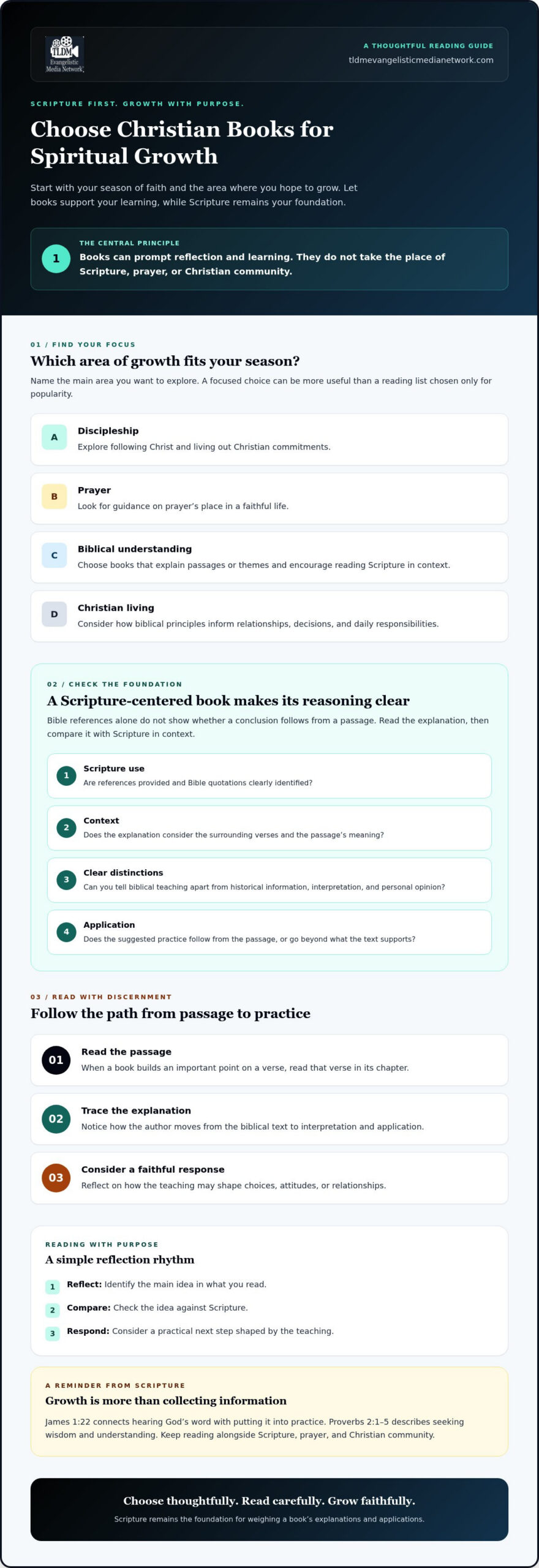
- Discipleship: Consider resources that explore following Christ and living out Christian commitments.
- Prayer: Look for guidance on prayer’s place in a faithful life. For a focused topic, explore Christian prayer books to deepen your spiritual life.
- Biblical understanding: Choose books that explain passages or themes while encouraging you to read Scripture in context.
- Christian living: Explore how biblical principles inform relationships, decisions, and daily responsibilities.
These subjects overlap, but naming your main area of interest gives you a clearer starting point. As you read, distinguish biblical teaching from historical information and the author’s interpretation or personal application. This habit can help you consider a book’s insights thoughtfully and with discernment. If you want structured daily engagement with Scripture, exploring Christian devotional books for daily spiritual growth may offer a helpful complement to your reading plan.
How to Tell Whether a Christian Growth Book Is Grounded in Scripture
A Christian book may include Bible verses and still draw conclusions the cited passages don’t support. To evaluate christian books for spiritual growth, look beyond the number of references. Consider how the author explains and applies them.
Check a Christian book’s claims against Scripture in context, rather than accepting them simply because the book includes Bible verses. This doesn’t require advanced theological training. It calls for careful reading and a willingness to compare the author’s reasoning with the biblical text.
- Scripture use: Does the author provide references and identify Bible quotations clearly?
- Context: Does the explanation account for the surrounding verses and the passage’s meaning?
- Clear distinctions: Can you tell biblical teaching from historical information, theological interpretation, and personal opinion?
- Application: Does the suggested practice follow from the passage, or go beyond what the text supports?
Does the author handle biblical passages in context?
When a book builds an important point on a verse, read that verse in its chapter and notice how the author explains it. Ask whether the passage addresses the subject the author discusses and whether the explanation considers the surrounding verses. If the book quotes Scripture, check that it identifies the translation and gives a reference.
Does the book connect teaching with faithful daily practice?
Sound application helps readers consider how biblical teaching may shape choices, attitudes, or relationships. Look for a clear path from passage to interpretation to practical suggestion. A personal story or historical detail may clarify an idea, but it isn’t itself biblical authority. If the author’s background would help you understand their perspective, you can review Dr. Thomas L. Driver’s author biography.
As you read, keep these categories distinct:
- Biblical teaching: What the passage says in context.
- Historical information: Claims about the people, setting, or events, which should be supported with clear sourcing.
- Theological interpretation: The author’s explanation of what the passage means.
- Personal application: A proposed way to live in light of that explanation.
If a conclusion feels unclear, pause and reread the passage before adopting the suggested application. Discernment isn’t a rejection of Christian authors. It’s a way to read carefully, learn with humility, and let Scripture guide your judgment.
How to Choose Christian Books for Spiritual Growth That Fit Your Needs
A useful book starts with a real need, not a trending list or a sense that you should read what everyone else recommends. These steps can help you narrow your options and choose a resource you’re more likely to read thoughtfully.
- 1. Name a growth need. Identify a question or area of Christian life you want to explore. You might want to understand a Bible theme more clearly, strengthen your prayer habits, or consider how faith shapes a decision.
- 2. Select a subject. Let that need guide your search. Broad topics include discipleship, prayer, biblical understanding, and Christian living. If prayer is your focus, exploring top Christian prayer books can help you explore the subject more directly.
- 3. Assess Scripture use. Review the description or available sample material. Look for clear biblical references and an approach that encourages reading passages in context, rather than relying only on isolated verses or the author’s conclusions.
- 4. Check the reading fit. Consider whether the language feels accessible and whether the chapter length suits the time and attention you can give. A book that matches your experience and reading pace may be easier to return to consistently.
- 5. Choose a format. Decide whether print or audio better fits how you prefer to read and reflect. Check which formats are available for the specific title before deciding.
Which subject should you begin with?
Make the choice personal and specific. Instead of searching for a book about “growth” in general, ask what you hope to understand, practice, or consider in this season of faith. Curiosity can be a good starting point, but it doesn’t have to become a reading assignment. Popularity may help you discover a title, but it can’t tell you whether the subject fits your present need.
How can you assess reading style and format?
Read the publisher or bookseller description, and review a sample when one is available. Notice the intended audience, the amount of explanation, and whether the style invites careful reflection. TLDM’s Christian bookstore is one place to browse books currently listed. Check each title’s details for available formats.
How to Read Christian Books for Spiritual Growth With Purpose
Reading with purpose means slowing down to consider what a book says, how it uses Scripture, and what response its teaching invites. A simple routine can help you move from reading to reflection without confusing the author’s commentary with the biblical text.
- Read a short portion. Choose a section you can give your attention to, rather than rushing through several chapters.
- Note the main idea. Summarize the author’s point in your own words.
- Check the Scripture. Read the cited passage and its surrounding verses. Note what the text says separately from the author’s explanation.
- Reflect prayerfully. Consider what the passage and the author’s discussion bring to mind, while recognizing that your personal response is not itself biblical teaching.
- Choose a practical response. Identify one thoughtful next step, without expecting a particular result or timeline.
What questions can guide reflective reading?
Use questions that help you examine both the author’s reasoning and your own response:
- What is the author saying, and which Bible passages support the point?
- What does the passage communicate in its context?
- Which parts of my notes record Scripture, and which record the author’s interpretation or my reflection?
- Is there one practical response I want to consider?
If a claim seems confusing or stronger than the cited passage supports, pause. Reread the passage in context and revisit the author’s explanation before deciding what you think. Prayer can make space for honest reflection, but keep personal impressions distinct from what the biblical text explicitly teaches.
How can audio and other media support a reading plan?
Some readers find listening helpful alongside print reading, especially when they want another way to engage with Christian teaching. TLDM’s Sharing The Word Podcast is a separate teaching resource, not a substitute for Scripture or a companion to any particular book. Readers exploring spiritual victory can also consider biblical principles for spiritual victory as a related topic.
Let the format serve your attention, not dictate your pace. You might read a passage from a book, check the cited Bible text, and then listen to teaching as a separate opportunity to consider the subject. For another teaching resource, listen to the Sharing The Word Podcast.
Purposeful reading doesn’t require elaborate notes. A few clear lines that distinguish the author’s idea, the biblical passage, your reflection, and a possible response can help you return to what matters as you continue reading christian books for spiritual growth.
Where to Find Christian Books and Continue Your Spiritual Growth
Choosing a helpful book begins with a clear growth need, continues with a thoughtful review of how it uses Scripture, and includes an honest check of whether its style and format fit your life. You don’t need a long reading list. Choose one Scripture-centered next step, then make room to read, reflect, and return to the Bible itself.
How can readers explore TLDM’s Christian literature?
TLDM Evangelistic Media Network offers Christian books alongside digital Christian teaching and online sermons. Its bookstore is the place to review the books currently offered. Titles and availability can change, so read each listing for current details rather than assuming a particular subject, title, or format is included.
Explore Christian books in the TLDM bookstore as one option in your search. As you browse, keep your original question in view. Check whether a book addresses that area, fits your experience, and gives you enough information to consider how it handles Scripture.
What can readers do after choosing a book?
Set a realistic reading rhythm that leaves time to think. You might read a short section, look up its biblical references, and write down one question or possible response. If you miss a day or need to pause over a difficult passage, return when you can. The goal isn’t to finish quickly, but to engage carefully while keeping Scripture central.
TLDM also offers Teach Me To Pray: Lessons From Scripture, along with other digital teaching and online sermons. These are complementary resources for continued learning, not replacements for personal Bible study or Christian community. Consider them if they serve the subject you’re exploring.
Christian books for spiritual growth can offer helpful guidance, but no single book guarantees spiritual maturity. Let Scripture remain your foundation, weigh an author’s ideas thoughtfully, and take one faithful step at a time. If you’d like to continue exploring, review TLDM’s current Christian literature and media at your own pace.
Take Your Next Step in Faithful Reading
Choosing christian books for spiritual growth begins with a meaningful need, continues with careful attention to how a book uses Scripture, and becomes more purposeful when you pause to reflect on what you learn. Let the Bible remain your foundation, and choose a reading rhythm that gives you room to think and pray.
TLDM Evangelistic Media Network is a not-for-profit 501(c)(3) organization offering Christian books alongside podcasts, Take5 Messages, and online sermons. These resources can support continued learning as you seek to grow in understanding and faithful living.
Choose one Scripture-centered next step, whether that means exploring a book or setting aside time to reflect on a passage. Explore TLDM’s Christian media and literature to see what resources are currently offered. May your reading encourage deeper engagement with Scripture and a steady walk of faith.
Frequently Asked Questions
What are the best Christian books for spiritual growth?
The best choice is a book that addresses a meaningful area of growth and handles Scripture carefully. Consider whether you want to learn about discipleship, prayer, biblical understanding, or Christian living, then review the book’s description and a sample if available. There isn’t one title that fits every reader or season. Choose based on your needs, faith experience, and reading preferences rather than popularity alone.
How do I know if a Christian book is biblically accurate?
Compare the author’s claims with the Bible passages they cite, reading each passage in its surrounding context. Check whether the book identifies quotations and sources clearly and distinguishes Scripture from historical background, interpretation, and personal application. Ask whether the proposed application follows from the passage or adds a claim the text doesn’t support. If a point remains unclear, pause and study the passage before accepting the author’s conclusion.
Can reading Christian books help you grow spiritually?
Christian books can support spiritual growth by helping you explore biblical themes, reflect on your beliefs, and consider how faith informs daily life. Their value depends in part on how thoughtfully you read and evaluate their teaching. A book can prompt questions or suggest practices, but reading alone doesn’t guarantee maturity. Keep Scripture central, and let reflection and faithful practice shape how you respond to what you read.
What should a new Christian read for spiritual growth?
A new Christian can begin with the Bible itself, perhaps by reading one Gospel to become familiar with the life and teaching of Jesus. A clear, Scripture-centered guide on discipleship or basic Christian beliefs may offer helpful context alongside Bible reading. Choose a resource with accessible language and references you can check. If possible, discuss questions with trusted Christians and keep the biblical text, not a companion book, as your foundation.
How should I choose a Christian book for my current season of faith?
Start by naming a question or area you want to explore, such as prayer, understanding Scripture, or living out your faith in a particular part of life. Then look for a book that fits your experience and reading style. Review its description and available sample material, and assess how it uses the Bible. You don’t need to follow a popular list. Choose a resource that serves your present need.
Are Christian books a substitute for reading the Bible?
No. Christian books may explain, discuss, or apply biblical teaching, but they don’t replace reading Scripture directly. Authors offer interpretation, and readers should compare their conclusions with the passages in context. Use a book as a supporting resource: look up its references, distinguish commentary from the biblical text, and return to Scripture when a claim is unclear. Prayer and Christian community also remain important parts of a life of faith.
Should I choose a Christian book in print or audio?
Choose the format that best supports your attention and reflection. Print may make it easier to mark passages or revisit a section, while audio may suit you if listening fits your routine. Availability varies by title, so check the listing before deciding rather than assuming both formats exist. Whichever you choose, make time to check cited Bible passages and reflect on the author’s ideas instead of treating the format as the main goal. If you prefer a structured daily format, reviewing top Christian devotional books for daily spiritual growth may help you find a resource that fits your routine.