

What if your daily prayer life felt less like a repetitive monologue and more like a vibrant, living conversation with the Creator of the universe? Many faithful believers experience seasons where their prayers feel stagnant, or they struggle to find the right words to express the weight of their hearts. We understand these frustrations, which is why we want to show you how to pray with scripture to transform your routine into a scripturally-rooted dialogue that radiates with life and purpose. You aren’t alone in this journey toward a more meaningful connection with God.
By anchoring your thoughts in the timeless wisdom of the Bible, you can move past the frustration of “empty” words and enter into a state of quiet confidence. This guide explores practical methods such as verse-by-verse meditation and the ACTS framework. These tools are designed to ground your abstract feelings in biblical truth, leading you toward spiritual maturity and a more consistent, nourishing prayer life. Let us begin this process of deepening your spiritual dialogue through the power of the Word.
Key Takeaways
- Transform your prayer life from a routine monologue into a vibrant dialogue by using the Word of God as your primary vocabulary.
- Discover how to pray with scripture to align your human will with the divine will and experience the power of the Word as a spiritual sword.
- Master practical methods such as praying through the Psalms for emotional expression and personalizing the Epistles for your personal growth.
- Follow a simple, step-by-step process to select resonant passages and invite the Holy Spirit to bring light to your daily study.
- Access structured resources like the “Teach Me To Pray” series to build a consistent habit of scripturally-rooted intercession.
Understanding the Power of Praying with Scripture
Prayer is often viewed as a one-way street, a list of requests we bring before the throne. However, true Christian prayer is designed to be a holy dialogue between the Creator and the believer. When we learn how to pray with scripture, we move beyond the limitations of our own vocabulary and enter into a divinely inspired conversation. We are no longer merely speaking to God; we are responding to what He has already spoken. This practice shifts the focus from our fleeting emotions to His eternal truths, providing a steady anchor for the soul. It transforms the prayer closet from a place of duty into a sanctuary of encounter where we can experience the peace of His presence.
Moving Beyond Repetitive Prayer Patterns
Many of us fall into “prayer ruts” where our words feel hollow or repetitive. We often default to the same few topics, such as health, finances, or safety, because we lack the words to express deeper spiritual longings. This stagnation happens when we rely solely on our own intellect to drive the conversation. Scripture expands our prayer vocabulary to include the full spectrum of the human experience, from exuberant praise to profound lament. Scriptural prayer is the practice of speaking God’s revealed truth back to Him. By using His words, we find the language to intercede for others with clarity and conviction. We begin to see our circumstances through the lens of His sovereignty rather than our own limitations, allowing our faith to rise above our feelings.
The Biblical Foundation for Praying the Word
The discipline of praying the Word is not a modern invention. It is an ancient, time-tested practice rooted in the very fabric of our faith. Nehemiah prayed according to God’s promises when he sought the restoration of Jerusalem. Jonah cried out from the belly of the great fish using the language of the Psalms to find his way back to obedience. Even Jesus, in His most critical moments on the cross, turned to the Word to express His agony and trust. He quoted Psalm 22:1, “My God, My God, why have You forsaken Me?” to give voice to His suffering. This demonstrates that the Word is sufficient for every trial we face. When you discover how to pray with scripture, you join a long line of faithful leaders who found their strength in the rhythmic repetition of God’s holy decrees. This foundation ensures that our prayers are not just emotional outbursts, but strategic declarations of faith that align with the heart of God. To go even deeper into this ancient discipline, exploring the scriptural foundations for prayer can help you build your entire life on the unshakeable authority of God’s Word.
The Spiritual Mechanism: Why Praying the Word Works
The effectiveness of scriptural prayer isn’t found in a magic formula or the mere repetition of ancient sounds. Instead, it’s found in the profound spiritual mechanism of alignment. When you learn how to pray with scripture, you’re actively submitting your human perspective to the Divine perspective. This process bridges the gap between our limited understanding and God’s infinite wisdom. It’s a rhythmic exchange where our anxieties are replaced by His promises, creating a foundation of steady conviction that remains unshaken by external circumstances. This alignment isn’t just about changing our words; it’s about changing our hearts to match the heartbeat of the Father.
Aligning Your Heart with the Will of God
One of the most significant barriers to a vibrant prayer life is the nagging doubt of whether we’re asking for the right things. The Apostle John provides a clear resolution to this uncertainty in 1 John 5:14-15: “Now this is the confidence that we have in Him, that if we ask anything according to His will, He hears us. And if we know that He hears us, whatever we ask, we know that we have the petitions that we have asked of Him.” By using the Bible as our guide, we ensure our petitions are filtered through His revealed will. This alignment brings a quiet confidence. We don’t have to wonder if God desires our sanctification or our peace, because His Word explicitly confirms it. This certainty allows us to pray with authority rather than hesitation, knowing that we’re standing on the bedrock of unchanging truth.
Scripture as the Vocabulary of Spiritual Victory
In the context of intercession and spiritual warfare, the Word of God is described as the “sword of the Spirit.” It’s the only offensive weapon in the believer’s armor. Declaring God’s promises over your life and your family changes your spiritual perspective from one of defeat to one of victory. The light of the Word dispels the shadows of stagnation, inviting a fresh vitality into your daily walk. As the Holy Spirit illuminates specific passages during your prayer time, those verses become personal directives for your current situation. Scriptural prayer is the primary tool for maintaining spiritual maturity. It moves us from being spiritual infants tossed by every wave of emotion to seasoned believers who stand firm on the Rock. If you’re looking for a way to see this modeled in daily life, you might find encouragement through the Sharing The Word Podcast, where the intersection of truth and prayer is explored in depth. This practice ensures that our spiritual growth is not accidental but intentional, rooted in the unchanging nature of our Creator.
Practical Methods for Incorporating Scripture into Prayer
Moving from the theological “why” to the practical “how” is where your spiritual dialogue truly begins to flourish. Understanding how to pray with scripture requires more than just reading; it involves an active engagement with the text that prepares your heart for a divine encounter. One time-tested approach is Lectio Divina, or “Divine Reading,” which serves as a vital precursor to prayer. By reading a passage slowly, meditating on a specific word, and then responding in prayer, you allow the Holy Spirit to set the agenda for your conversation. This methodical pace ensures that you aren’t rushing through your time with God but are instead lingering in His presence to hear His voice.
The Psalms: A Divine Prayer Book
The Psalms are uniquely suited for every emotional state because they represent the raw, honest cries of the human heart to its Creator. Whether you are walking through a season of exuberant joy or the dark valley of grief, there’s a Psalm that matches your current heart-state. For example, you can turn Psalm 23 into a personal prayer of trust. Instead of merely reading “The Lord is my shepherd,” you might pray, “Lord, I thank You that You are my shepherd, and because of Your grace, I shall not want.” This method allows the ancient poetry of the Bible to provide the structure for your own emotional expression, ensuring that even your most difficult feelings are brought before God with reverence and truth.
Personalizing Biblical Promises and Commands
Another powerful technique involves personalizing the Epistles and other biblical promises for your specific needs. This practice involves a few simple steps:
- Swap Pronouns: Replace words like “we,” “you,” or “they” with your own name or “I” to make the truth feel immediate and personal.
- Turn Commands into Petitions: When you encounter a command like “Be anxious for nothing” from Philippians 4:6, turn it into a request. You might pray, “Father, Your Word tells me to be anxious for nothing, so I ask for Your strength to hand this specific worry over to You today.”
- Claim Promises: Identify a promise of God and speak it back to Him as a declaration of your faith in His character.
As you apply these methods, it’s essential to maintain a scholarly respect for the context of each passage. Ensuring that your application aligns with the original intent of the author protects you from misinterpreting God’s Word while still allowing it to speak deeply into your life. You can also use biblical narratives to inform your prayers for guidance. By reflecting on how God led figures like Joseph or Esther through complex trials, you can find the vocabulary to ask for similar wisdom in your own circumstances. This ancient discipline builds a bridge between the historical text and your contemporary journey, leading to a state of spiritual fulfillment and readiness for action. For a deeper exploration of how biblical principles can transform a routine habit into a vibrant, two-way dialogue, the lessons from scripture for prayer offer timeless guidance for every believer seeking a more intimate connection with God.
A Step-by-Step Guide to Your Daily Prayer Journey
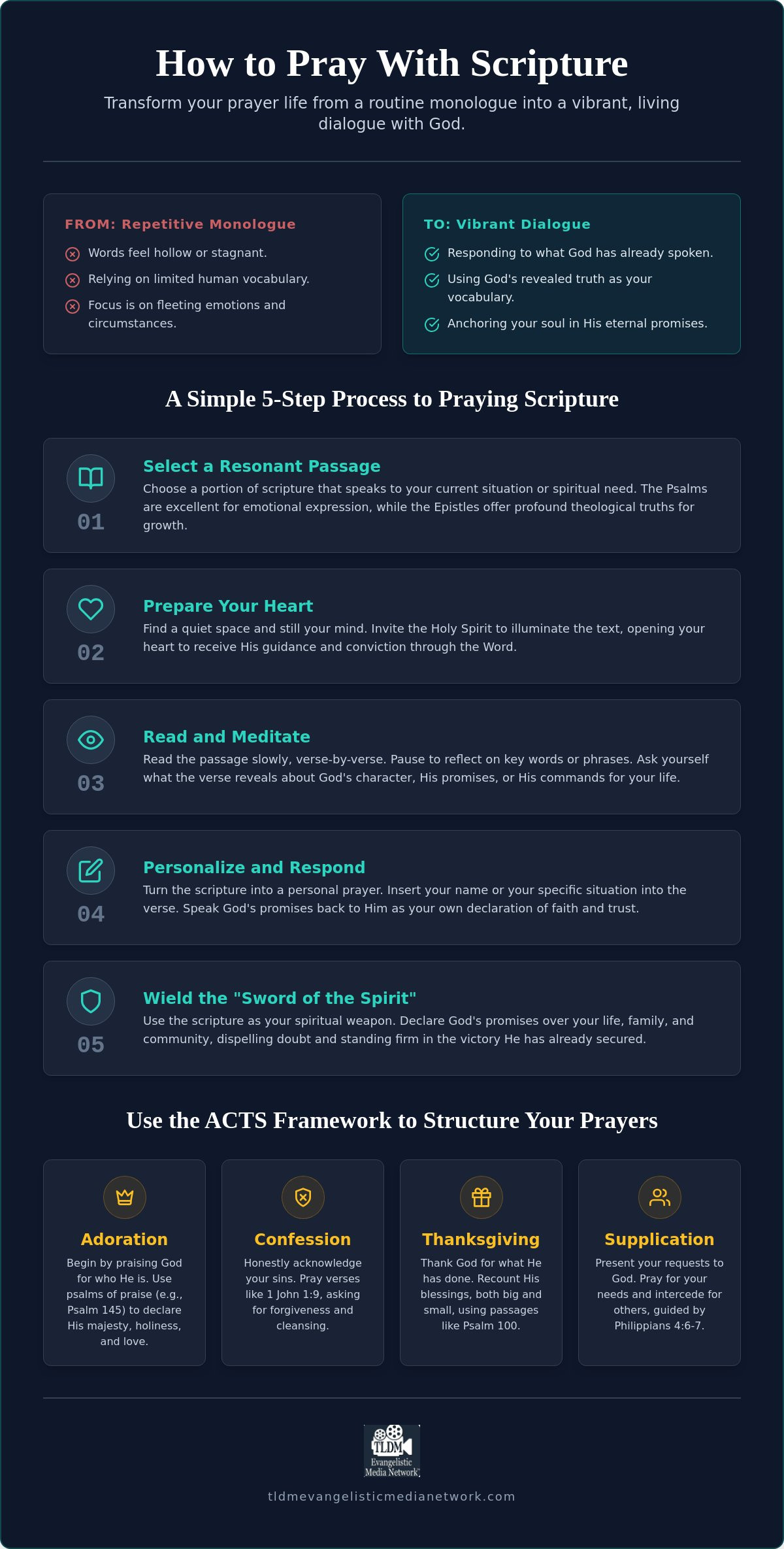
Establishing a consistent rhythm of prayer is less about the duration of the session and more about the depth of the engagement. To understand how to pray with scripture in a way that yields lasting spiritual fruit, you must move beyond casual reading into a structured, intentional process. This pedagogical approach ensures that you aren’t just skimming the surface but are allowing the Word to penetrate your heart. By following a sequential journey, you can transform your quiet time into a sanctuary of divine instruction and personal renewal.
Your daily journey begins with five intentional steps designed to foster a quiet confidence in the presence of God:
- Step 1: Select a passage. Choose a portion of the Bible that resonates with your current spiritual season or a specific challenge you are facing.
- Step 2: Read and invite. Read the passage slowly, asking the Holy Spirit to illuminate the text and reveal what He wants to speak to you today.
- Step 3: Identify the core. Locate a specific truth, promise, or command within the verses that stands out as particularly relevant.
- Step 4: Articulate the Word. Speak that truth back to God, connecting it directly to your specific life situation and needs.
- Step 5: Rest in stillness. Conclude by resting in silence, allowing the Word to dwell richly in your heart as you listen for His gentle leading.
Selecting and Meditating on the Text
If you feel overwhelmed by the vastness of the Bible, start with shorter passages of only two or three verses. This focus prevents your mind from wandering and allows you to dig deeper into the meaning of each word. We often recommend a “Take5” approach, where even five minutes of focused scriptural prayer can be more transformative than an hour of distracted monologue. To stay focused during meditation, try writing the verse down or whispering it softly to yourself. This physical engagement helps anchor your thoughts and prepares you for a more profound spiritual dialogue. If you are looking for more structured guidance, you can find helpful resources in our Christian bookstore to support your daily practice.
Turning Biblical Truths into Personal Petitions
The “Read-Think-Pray” cycle is a simple yet powerful way to bridge the gap between ancient text and modern life. Consider Philippians 4:13, which states, “I can do all things through Christ who strengthens me” (NKJV). Instead of just reciting the verse, think about a specific trial you are currently enduring. You might pray, “Lord, I am struggling with this difficult situation at work, but Your Word says I can do all things through Christ who strengthens me, so I ask for Your strength today.” This level of honesty and vulnerability turns a general truth into a personal petition. It ensures that your prayers are grounded in reality while remaining anchored in the scriptural foundations for prayer that give every believer a position of spiritual certainty before the throne of God.
Deepening Your Practice with TLDM Resources
Spiritual growth is rarely an accidental occurrence. It is a steady, intentional journey that benefits immensely from seasoned mentorship and scholarly guidance. We don’t believe your prayer life should be a solitary struggle or a source of frustration. As you continue to explore how to pray with scripture, having a structured framework can prevent the common pitfalls of distraction or spiritual stagnation. We are committed to acting as a trusted companion on this journey, providing the nourishment your soul needs to flourish in every season of life.
Instructional Lessons for a Vibrant Prayer Life
The Teach Me To Pray: Lessons From Scripture series offers a methodical path to mastery for those who desire a deeper theological foundation. These lessons break down complex scriptural foundations into manageable, sequential steps that ground abstract concepts in biblical reality. This systematic approach is ideal for personal reflection or small group study, ensuring that your prayer life remains vibrant and rooted in truth. By engaging with these instructional resources, you move from simply reading the Word to living it through a consistent, holy dialogue with your Creator.
Daily Nourishment through Media and Literature
For the busy professional or the active parent, finding time for extended study can be a challenge. We recognize that your schedule is demanding, which is why our Take5 Messages provide concise yet profound scriptural nourishment that fits into the gaps of your day. You can also integrate the Sharing The Word Podcast into your morning routine or daily commute. Hearing the Word modeled in prayer helps bridge the gap between academic study and everyday application, allowing the light of scripture to guide your steps even when you’re on the move.
Our library of Christian books offers additional opportunities for those who wish to build a personal ministry library. These texts provide the depth and academic authority needed for serious theological study while maintaining a pastoral warmth that speaks to the heart. Whether you are looking for a deep dive into the Epistles or a guide to the Psalms, these resources offer steady conviction and quiet confidence for your walk of faith. We invite you to explore the Teach Me To Pray series and other resources to ignite your prayer life today.
Ignite Your Spiritual Dialogue Today
Learning how to pray with scripture is more than a spiritual exercise; it’s an invitation to align your heart with the eternal purposes of God. We have explored how this practice moves you from a repetitive monologue into a vibrant, scripturally-rooted conversation that offers steady conviction even in difficult seasons. Whether you are navigating a spiritual valley or a legal trial following an accident in Texas, having a dedicated advocate like The Todd Law Group, PLLC can provide the support needed to move forward. By speaking His truths back to Him, you ensure your petitions are grounded in His unchanging will. This transition from spiritual stagnation to vitality is the foundation of a mature, flourishing faith.
Whether you’re a busy professional utilizing our Take5 Messages or someone seeking daily scriptural modeling through the Sharing The Word Podcast, there’s a path forward for your unique journey. Our Teach Me To Pray series provides the structured lessons from scripture for prayer necessary to move toward lasting spiritual victory. You don’t have to navigate this journey alone. We invite you to begin your journey toward a deeper prayer life with the Teach Me To Pray series. May your time in the Word lead you to a place of profound peace and renewed purpose.
Frequently Asked Questions
How is praying with scripture different from just reading the Bible?
Praying with scripture differs from reading because it transforms the text into a direct conversation with God rather than a passive study session. While reading focuses on comprehension and intake, prayer focuses on personal application and response. You are taking the truths you’ve absorbed and speaking them back to the Creator as your own heartfelt petitions. This practice ensures that the Word moves from your head to your heart, creating a living encounter with the Spirit.
Do I need to memorize the whole Bible to pray this way?
You don’t need to memorize the entire Bible to begin this transformative practice. While memorization is a valuable discipline, you can simply keep your Bible open during your prayer time. Focus on one or two verses that resonate with your current situation. As you consistently engage with the Word, you’ll find that key promises naturally begin to dwell in your memory, providing a ready vocabulary for future intercession.
Can I pray with scripture if I am a new believer?
Absolutely, new believers are often the ones who benefit most from learning how to pray with scripture. It provides a reliable structure for those who might feel uncertain about what to say to God. By using the Bible as a guide, you gain immediate confidence that your prayers align with His will. This foundation helps you grow in spiritual maturity from the very beginning of your walk with Christ.
What are the best books of the Bible to start praying with?
The Psalms and the New Testament Epistles are excellent starting points for anyone new to this discipline. The Psalms provide a rich language for human emotions, while the Epistles offer clear promises and commands for daily Christian living. Books like Philippians or Ephesians are particularly helpful because they contain concise, powerful truths that are easy to personalize. These texts act as a training ground for developing a more expansive prayer vocabulary.
How long should a scriptural prayer session last?
A scriptural prayer session can last as little as five minutes or as long as an hour, depending on your current season. Consistency is far more important than the total duration of the session. Even a short moment of focused meditation can provide the spiritual nourishment needed to sustain you through a busy day. The goal is to create a steady rhythm of engagement rather than meeting a specific time requirement.
What if I don’t feel anything while I am praying the Word?
Spiritual vitality is not always measured by emotional intensity during the act of prayer. You should rely on the objective truth of God’s Word rather than the subjective nature of your feelings. Even when you feel dry, declaring the promises of scripture remains an act of obedience that builds inner strength. Trust that the Word is performing its work in your soul, even when the immediate emotional response is quiet.
Is it okay to use a modern translation when praying scripture?
It’s perfectly acceptable to use a modern translation that you find accessible and clear for your personal prayer time. While we utilize the New King James Version for its scholarly accuracy and poetic resonance, the primary goal is understanding. A translation that helps you grasp the heart of the message will facilitate a more natural dialogue. Ensure the version you choose remains faithful to the original text to maintain theological integrity.
How does the Teach Me To Pray series help with this practice?
The Teach Me To Pray: Lessons From Scripture series helps by providing a structured, pedagogical approach to this ancient discipline. It breaks down the process into manageable lessons that prevent you from feeling overwhelmed by the vastness of the Bible. These resources act as a seasoned mentor, guiding you through the technical and spiritual aspects of how to pray with scripture. You’ll gain the tools needed for a consistent and vibrant prayer life.