

Imagine waking up without the heavy weight of a decades-old grudge pressing against your chest. You’ve likely spent nights wondering if peace is truly possible after such deep betrayal. If you find yourself searching for answers to what does the bible say about forgiveness, you aren’t just looking for a theological lecture. You’re seeking a way to breathe again. We agree that the path to letting go is often the most difficult journey a believer will ever take.
In this guide, you’ll discover the profound biblical truth about forgiveness and learn how to release the weight of resentment through the grace of Jesus Christ. We will explore the original Greek meanings that define this act as a debt cancellation and look at the life-changing model of the cross. Our study provides clarity on the distinction between forgiving and trusting, while offering practical tools to help you move forward in faith. Let’s begin this journey toward spiritual peace and clarity together.
Key Takeaways
- Understand that biblical forgiveness is the cancellation of a spiritual debt, rooted in the Greek concept of releasing or sending away a burden. Learn exactly what does the bible say about forgiveness to find freedom from the weight of the past.
- Discover how the sacrifice of Jesus Christ serves as the ultimate model for mercy and how repentance opens the door to receiving God’s grace.
- Explore the scriptural link between the mercy we show others and the mercy we receive, focusing on foundational commands found in Matthew and Ephesians.
- Learn to distinguish between the solo act of forgiveness and the shared process of reconciliation, which requires the cooperation and repentance of both parties.
- Gain practical, prayerful steps to identify specific hurts and commit to a lifestyle of spiritual victory through Christ-centered grace.
Understanding the Biblical Definition of Forgiveness
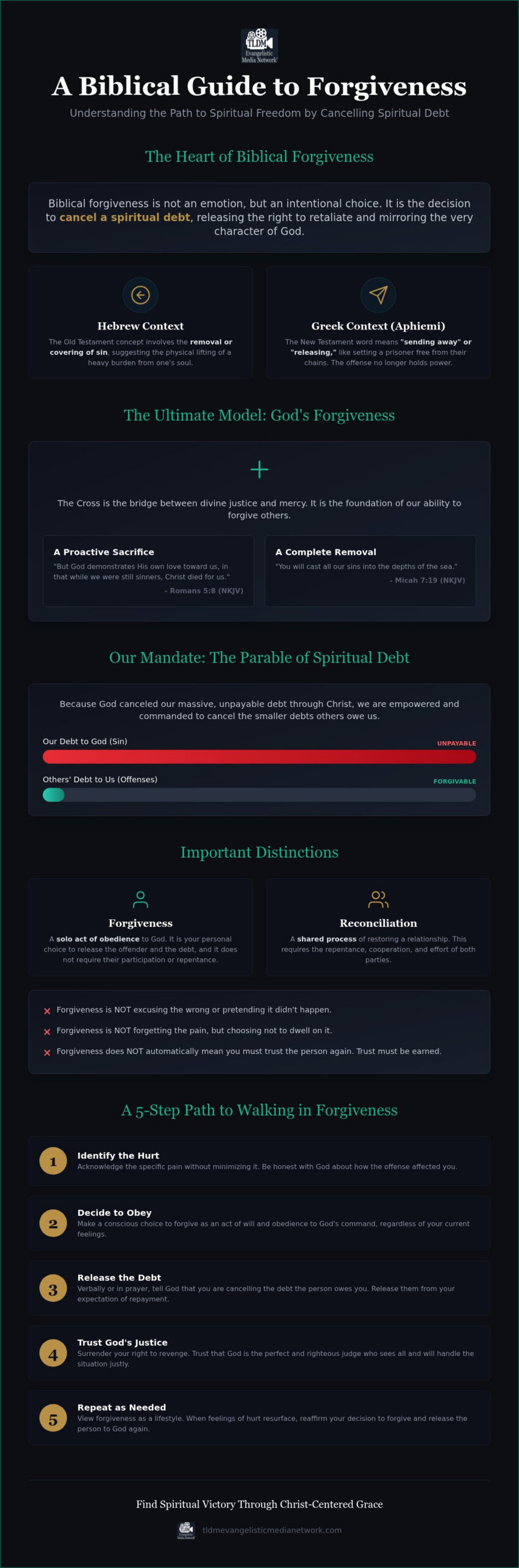
To truly grasp the heart of the Gospel, we must first ask, what does the bible say about forgiveness in its original language and context? Forgiveness is not merely a social courtesy or a psychological coping mechanism. It is an intentional choice of the will that mirrors the very character of God. While our emotions may lag behind our decisions, biblical forgiveness begins with a firm resolution to let go of the right to retaliate. It is the spiritual foundation upon which our inner peace is built.
This process is not about denying that a wrong occurred. Instead, it is about acknowledging the pain while choosing to surrender the offense to a higher authority. When we forgive, we align ourselves with the nature of a Creator who is “gracious and full of compassion, slow to anger and great in mercy.” This alignment is the first step toward spiritual victory and emotional restoration.
The Hebrew and Greek Context of Forgiving
In the Old Testament, the concept of forgiveness often involves the removal or covering of sin, suggesting a physical lifting of a heavy burden. The New Testament expands this through the Greek word aphiemi. This term translates to “sending away” or “releasing,” much like a prisoner being set free from their chains. It implies that the offense no longer holds power over the relationship or the individual’s soul. Biblical forgiveness is a deliberate release of resentment. By understanding this Biblical Definition of Forgiveness, we see it as a vertical act of obedience that leads to horizontal healing in our daily lives.
Forgiveness as a Spiritual Debt Cancellation
Jesus frequently used financial metaphors to explain how grace works in the kingdom of heaven. In His parables, sin is described as a debt that is impossible for a human to repay on their own. When we refuse to forgive, we are essentially acting as a spiritual debt collector, demanding payment for a hurt that only Christ can settle. What does the bible say about forgiveness regarding these debts? It teaches us that because God has canceled our massive debt through the sacrifice of Jesus, we are empowered to cancel the smaller debts others owe us.
This release brings a profound sense of freedom. You no longer need to wait for an apology or a repayment to find peace. Instead, you trust that God is the ultimate judge and sustainer. As Dr. Thomas L. Driver often emphasizes in his scholarly teachings, this transition from debt collector to grace giver is the key to spiritual victory. When you stop seeking repayment, you open your heart to the restorative power of the Holy Spirit.
God’s Forgiveness Toward Us: The Ultimate Model
Before we can extend grace to those who have wronged us, we must look upward to the source of all mercy. When we ask, God’s Forgiveness Toward Us: The Ultimate Model reveals a vertical relationship that must be established before horizontal healing can begin. This vertical dimension is not based on our merit or our ability to be good, but on the unwavering character of a holy God who chooses to love us despite our transgressions. If you have ever wondered, what does the bible say about forgiveness, the answer begins with God’s proactive reach toward humanity.
The Bible teaches that God’s forgiveness is both a promise and a finished work. In Micah 7:19, the scripture says, “He will again have compassion on us, and will subdue our iniquities. You will cast all our sins into the depths of the sea.” This beautiful imagery illustrates a total removal of guilt. When God forgives, He does not keep a record of our debts to use against us later. Instead, He provides a way for us to be reconciled to Him through the person of Jesus Christ. Understanding what does the bible say about forgiveness requires us to see that our own capacity to forgive is a direct overflow of the mercy we have already received.
The Significance of the Cross in Forgiveness
The cross is the ultimate bridge between divine justice and divine mercy. Because God is just, sin could not simply be ignored; it required a payment. Jesus Christ, being the perfect sacrifice, paid the debt that we could never settle on our own. Romans 5:8 declares, “But God demonstrates His own love toward us, in that while we were still sinners, Christ died for us.” This proactive love means that God didn’t wait for us to get our lives together before offering a way out. He took the initiative. For a deeper dive into these scriptural truths, you might enjoy listening to the Sharing The Word Podcast, which explores these themes of grace daily.
Receiving God’s Grace Personally
Many believers struggle with the weight of past mistakes, often finding it harder to forgive themselves than to forgive others. However, if God has cast your sins into the depths of the sea, who are you to try and fish them back out? Accepting this grace is an act of humility and trust. As Dr. Thomas L. Driver teaches throughout his ministry, our spiritual victory depends on believing that God’s work on the cross was sufficient. When you accept that you are truly forgiven, the anxiety of not being enough begins to fade, replaced by a steady conviction in Christ’s complete and total grace.
The Scriptural Mandate to Forgive Others
While many modern perspectives treat letting go as a tool for personal mental health, the scriptural view is far more binding. It is a divine mandate. When we ask, what does the bible say about forgiveness, we find that it is not presented as an optional suggestion for the exceptionally pious. Instead, it is a requirement for every believer. In Matthew 6:14,15, Jesus states clearly, “For if you forgive men their trespasses, your heavenly Father will also forgive you. But if you do not forgive men their trespasses, neither will your Father forgive your trespasses.” This teaching reveals that our willingness to extend mercy is a primary indicator of our own spiritual standing.
Obedience is the evidence of our faith. Ephesians 4:32 commands us to “be kind to one another, tenderhearted, forgiving one another, even as God in Christ forgave you.” This verse provides the ultimate standard. We don’t forgive because the other person deserves it or because the pain was minor. We forgive because we have been forgiven. This can be incredibly difficult when the wounds are deep, but the Lord provides the strength to obey His commands. He understands the weight of your pain and invites you to trade your bitterness for His peace.
Vertical Forgiveness Versus Horizontal Forgiveness
Our relationship with God is vertical, representing the grace that flows from heaven to our souls. Our relationships with others are horizontal, reflecting that same grace into the world around us. These two dimensions are inseparable in the Christian life. If we claim to have a healthy vertical relationship while harboring bitterness horizontally, we are in spiritual conflict. To help you navigate these complexities and find strength for the journey, the Sharing The Word Podcast offers daily encouragement and scriptural insights to strengthen your walk.
The Parable of the Unforgiving Servant
In Matthew 18, Jesus tells the story of a servant who was forgiven a massive, unpayable debt. Immediately after his release, that same servant refused to forgive a tiny debt owed to him by a fellow worker. The master’s reaction was severe, and the servant was handed over to the torturers. This parable warns us that receiving mercy but refusing to give it is a dangerous spiritual state. It highlights that a grateful heart is the fuel for forgiveness. When we remember the magnitude of the debt Christ paid for us, our perspective on the offenses of others begins to shift. We realize that we are all in need of the same mercy.
Addressing Misconceptions: What Forgiveness Is Not
Many people hesitate to extend grace because they fear it requires returning to a toxic or dangerous situation. However, what does the bible say about forgiveness regarding personal safety? Scripture distinguishes between the internal release of resentment and the external restoration of a relationship. Forgiveness is a solo act between you and God. It requires no participation from the offender. Reconciliation, conversely, is a bilateral process that demands mutual repentance and truth. You can forgive someone from a distance to protect your soul while acknowledging that some relationships cannot be restored without significant change from the other party.
Biblical love does not require you to remain a victim of ongoing abuse or manipulation. In fact, establishing godly boundaries is an act of stewardship over the life God has given you. It allows you to move forward without the weight of bitterness. This distinction is vital for those who feel trapped by the idea that forgiving means staying in harm’s way. By letting go of the offense, you are not condoning the sin; you are simply refusing to let it control your future any longer.
Forgiveness and the Restoration of Trust
A common myth suggests that if you truly forgive, you must immediately trust the person as if the offense never happened. This is not scriptural. Forgiveness is a gift given freely, but trust is a quality that must be earned over time through consistent, righteous behavior. You can release the debt of a lie without immediately handing over your heart to someone who hasn’t shown a change in character. Forgiveness cancels the debt, but wisdom determines the level of access you grant to others in your life. To grow in this area of discernment, you can find a wealth of resources in the TLDM Bookstore.
Does Forgiving Mean Forgetting?
We often hear the phrase “forgive and forget,” but human memory does not work like a computer’s delete key. When the Bible says God remembers our sins no more, it means He chooses not to hold them against us in a legal or spiritual sense. It is a covenantal promise, not divine amnesia. What does the bible say about forgiveness when the memories still sting? It teaches us that the memory can remain, but its power to poison our souls is removed through the grace of Christ.
Healing often involves remembering the event without the accompanying surge of anger or the desire for revenge. You are not failing in your faith because you still have memories of the hurt. You are succeeding when those memories lead you back to a state of gratitude for the grace that has set you free. This shift in perspective is the hallmark of spiritual victory. You can learn more about walking in this freedom by exploring our Christian books on spiritual growth and healing.
Practical Steps to Walking in Forgiveness Daily
Forgiveness is rarely a one-time event that happens in a single moment of clarity. It’s a daily discipline of the heart. When we ask, what does the bible say about forgiveness in our everyday lives, we find a call to a lifestyle of grace. This begins with identifying the specific hurt and bringing it before the Lord in prayer. Instead of burying the pain, we must name the offense and surrender our right to retaliate to the only One who judges righteously. This act of surrender is the foundation of spiritual victory.
Walking in freedom also requires a commitment to guard our speech. When we speak evil of those who have hurt us, we keep the wound fresh and the bitterness alive. By choosing to speak with grace or remain silent, we honor the Lord’s command to be tenderhearted. This practice doesn’t mean we ignore the truth, but it means we refuse to let the offense define our character or our conversations. We trade our desire for revenge for the peace that comes from trusting in God’s perfect justice.
Praying Through the Hurt
One of the most difficult yet transformative steps is praying for those who have caused us deep pain. Jesus didn’t just suggest this; He modeled it on the cross. In Matthew 5:44, the NKJV instructs us to “pray for those who spitefully use you and persecute you.” When we pray for our enemies, the primary change often happens within our own souls rather than theirs. Prayer softens the heart and breaks the chains of resentment that bind us to the past. It allows the Holy Spirit to replace your heavy burden with a spirit of peace and restoration.
Utilizing Media Resources for Spiritual Growth
Renewal of the mind is a key component of the healing process. You must replace thoughts of hurt with the truths of God’s Word. This requires consistent spiritual nourishment to keep your heart aligned with Christ. We recommend several resources to help you stay focused on your journey toward restoration:
- Daily Teaching: Listen to Take5 Messages for brief, scripturally-rooted insights that provide a steady pulse of encouragement for your day.
- Deeper Study: Visit the TLDM Bookstore to discover Christian books that explore the depths of prayer, faith, and what does the bible say about forgiveness.
- Visual Learning: Explore our online library of sermons for comprehensive teachings that bridge the gap between ancient texts and contemporary life.
By immersing yourself in these resources, you provide your soul with the vitality it needs to grow. Healing is a process of becoming. With the right tools and a heart set on obedience, you can move forward into the peace and purpose God has prepared for you.
Find Freedom Through Biblical Grace
Embracing the journey of forgiveness is one of the most transformative steps you can take in your walk with Christ. We have explored how biblical forgiveness serves as the cancellation of a spiritual debt, a solo act that releases you from bitterness even before reconciliation begins. By understanding what does the bible say about forgiveness, you can distinguish between the gift of grace and the restoration of trust, allowing you to set healthy boundaries while maintaining a tender heart. This vertical relationship with God provides the steady foundation you need for every horizontal relationship in your life.
As you move forward, remember that you don’t have to walk this path alone. You can find scholarly teaching from Dr. Thomas L. Driver and scripture-based messages for spiritual victory by joining our supportive digital community. Experience daily encouragement and scriptural truth on the Sharing The Word Podcast. Let the weight of resentment fall away as you immerse yourself in the profound peace of Jesus Christ. Your journey toward spiritual fulfillment and readiness for action begins today.
Frequently Asked Questions
What is the biblical definition of forgiveness?
In the Bible, forgiveness is the act of releasing someone from a debt or obligation they owe you due to an offense. It is modeled after the way God forgives us in Christ, where He sends our sins away and no longer holds them against us. It is a decision of the heart to let go of resentment and revenge. By understanding what does the bible say about forgiveness, we see it as a spiritual release that brings lasting peace.
How many times should we forgive according to the Bible?
Jesus addressed this directly in Matthew 18 when Peter asked if seven times was enough. Jesus replied that we should forgive seventy times seven. This number symbolizes a limitless spirit of grace rather than a literal count. It suggests that as long as an offense exists or a memory of hurt remains, the believer is called to maintain a posture of mercy. We focus on the quality of our heart rather than the quantity of the offenses.
Is forgiveness the same as reconciliation?
No, they are distinct concepts. Forgiveness is a vertical and internal decision you make before God to release an offender. It can happen even if the other person is deceased or unrepentant. Reconciliation, however, is a horizontal process that requires both parties to work toward restoring a relationship. While we are called to forgive everyone, reconciliation is only possible when there is mutual repentance and a rebuilding of trust. It requires a shared commitment to move forward in truth.
Does God forgive all sins?
The Bible teaches that God is faithful and just to forgive us our sins when we confess them and trust in the sacrifice of Jesus Christ. The only sin that remains unforgiven is the persistent and final rejection of the Holy Spirit’s work. When exploring what does the bible say about forgiveness, we find that no sin is too great for the blood of Jesus to cover. His mercy is always available to those with a heart of true repentance.
What happens if I do not forgive others?
Scripture provides a serious warning in Matthew 6:15, stating that if we do not forgive others, our heavenly Father will not forgive our trespasses. This doesn’t mean we lose our salvation every time we struggle with a grudge. Instead, it indicates that an unforgiving heart hinders our fellowship with God. Unforgiveness acts as a barrier to experiencing the fullness of God’s grace and peace in our daily lives. It blocks the flow of spiritual victory and joy.
Can I forgive myself for past mistakes?
While the phrase “forgive yourself” is not explicitly in the Bible, the concept is addressed through accepting God’s forgiveness. If the Creator of the universe has declared you forgiven through Christ, then refusing to forgive yourself is essentially disagreeing with God’s judgment. True peace comes from believing God’s Word more than your own feelings of guilt and resting in the finished work of the cross. You must trust that His grace is sufficient for every past mistake you have made.