
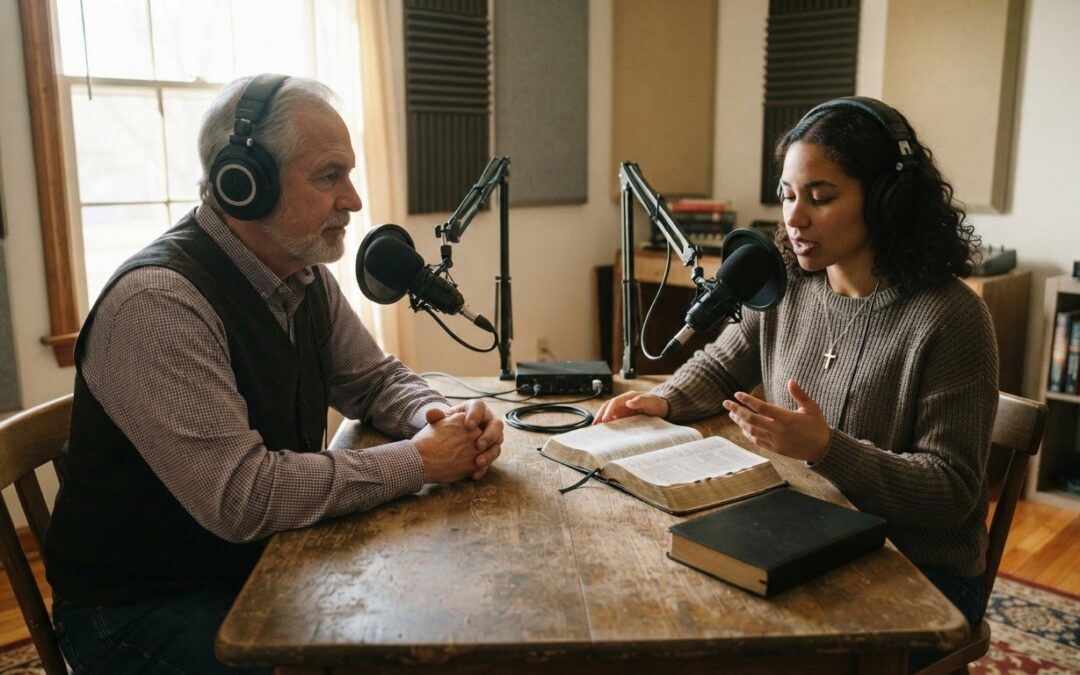
A Christian mentor encourages spiritual growth through faithful example, attentive listening, Scripture, and honest guidance, not by having every answer. These five christian mentorship guidelines focus on qualities that make guidance helpful: spiritual maturity, humility, consistency, care, and a willingness to point someone toward Christ.
It’s natural to want to help someone grow in faith while wondering how to guide them wisely. Christian mentoring is less about directing another person’s life and more about walking alongside them with patience, prayer, and truth spoken in love.
Here, you’ll learn what a Christian mentor does, which qualities support faithful guidance, and which open-ended questions can deepen conversations. Use these principles to encourage growth while keeping Christ at the center of the relationship.
Key Takeaways
- Begin by learning about the mentee’s spiritual life and needs before deciding what guidance may help.
- Prepare for mentoring by tending to your own spiritual, emotional, and relational health.
- Build trust through regular contact, clear commitments, and Scripture-centered time together.
- Use open-ended questions to help a mentee reflect on what God is teaching them and what steps they may take next.
- Lead with humility: share what you know, admit what you don’t, and help the mentee grow in studying Scripture independently.
1. A mentor’s role in encouraging and guiding a mentee
Paul’s relationship with Timothy offers a biblical picture of personal investment. In 2 Timothy 1:2, Paul addresses Timothy as his beloved son. A Christian mentor likewise supports, teaches, strengthens, and encourages a mentee’s growth. Accountability can help, but it isn’t the whole relationship. The aim is to help someone follow Christ with growing understanding, not to manage every decision for them.
Begin by learning the mentee’s story before planning how to mentor them. Ask what strengthens their faith, what feels difficult, and what they hope to understand. A new believer may want help reading a Gospel, while someone facing a decision may need space to consider Scripture and pray. Their answers can shape your next conversation and help you avoid offering a plan that doesn’t fit their needs.
Listen before trying to fix a problem. James 1:19 gives Christians a pattern of being quick to hear and slow to speak. Let the mentee finish, then reflect back the concern you heard. For example, say, “It sounds like prayer feels difficult during this season. Is that right?” That response invites clarification. It doesn’t assume you already understand the cause or know the right solution.
Prayer can guide the choice to mentor someone. In Luke 6:12, Jesus prayed before calling the twelve disciples. A potential mentor can follow that example by praying for wisdom, then considering whether they can offer patient, consistent support. Pray for the mentee’s growth as well. Romans 8:28–30 directs attention toward God’s purpose of conforming believers to Christ, rather than making the mentor responsible for producing change.
A local church can be a natural place to begin a mentoring relationship. Ask a pastor or ministry leader about opportunities to support someone seeking spiritual guidance. If you’re looking for a mentor, tell a trusted church leader what kind of growth you’re pursuing, such as learning to study Scripture. A thoughtful introduction gives both people a chance to discuss expectations, shared faith commitments, and whether regular conversations feel appropriate.
When offering guidance, speak truth with love, as Ephesians 4:15 teaches. Ask questions before giving advice, and make feedback specific, informative, and nonjudgmental. Instead of saying, “You need more faith,” discuss a concrete moment when fear shaped a decision. Share your interpretation humbly, since you may misunderstand the situation. If a question exceeds your knowledge, acknowledge that and help the mentee find a suitable resource.
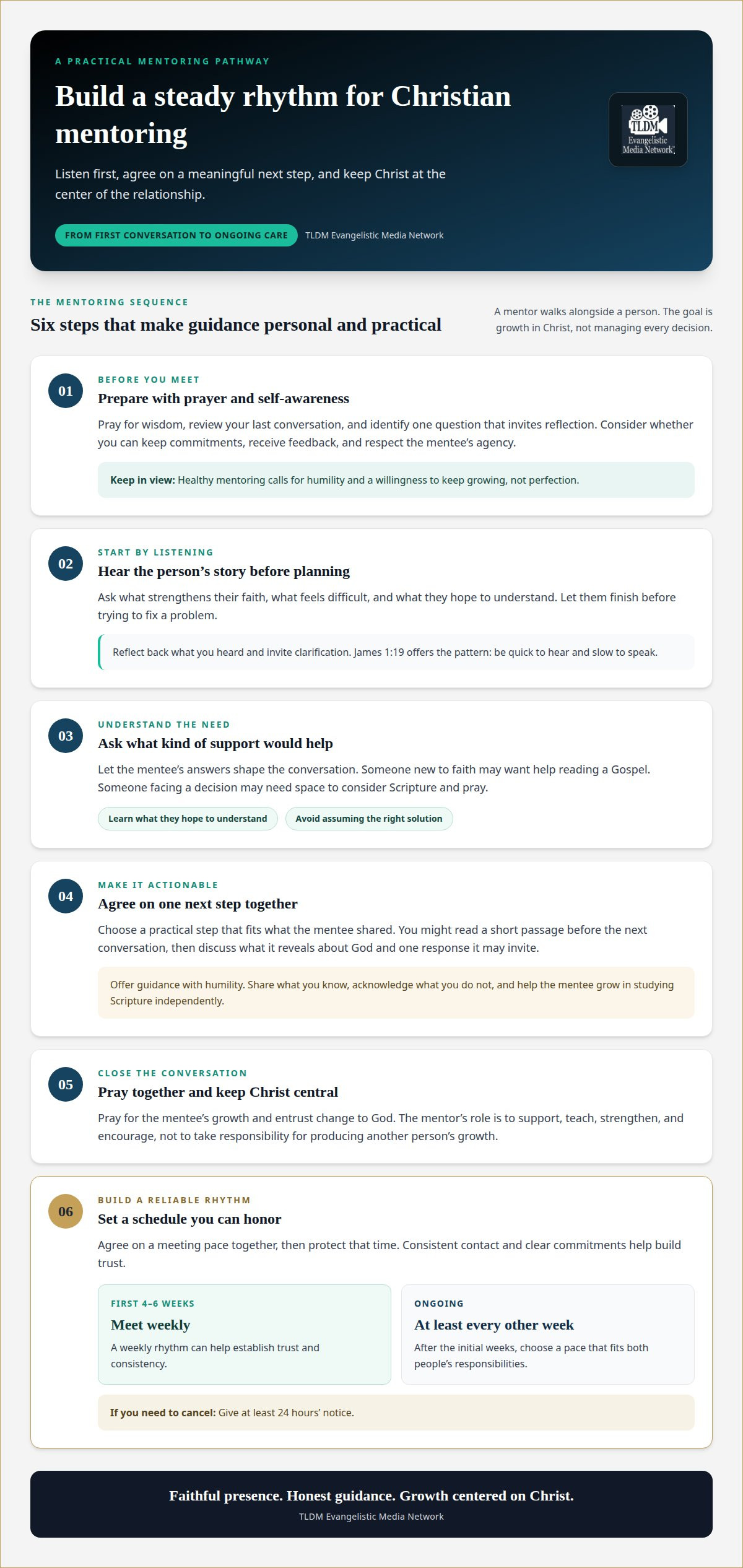
Use a simple sequence for your first meeting: hear the person’s story, ask what support would help, agree on a next step, and pray together. You might read a short passage before your next conversation. These christian mentorship guidelines keep encouragement practical and centered on Christ, while leaving the mentee room to reflect, grow, and take responsibility for their walk with God.
2. Why Learn How to Mentor Someone Spiritually?
Spiritual mentoring takes more than good intentions. A mentor’s emotional, relational, and spiritual health affects how they guide someone. Unresolved frustration, for example, can make a mentee’s honest question feel like a challenge. Self-awareness helps you notice that reaction and respond patiently. Healthy mentoring doesn’t require perfection, but it does call for humility, self-control, and a willingness to keep growing.
The mentoring relationship can shape how someone understands faith in everyday life. A mentee may bring questions about prayer, Scripture, conflict, or a difficult choice. The mentor’s response can model how to seek wisdom without pretending every answer is easy. In 2 Timothy 3:16–17, Scripture is described as useful for teaching, correction, and training in righteousness. That passage gives mentors a foundation for pointing beyond personal opinion.
Preparation begins with the mentor’s own walk with God. Set aside time to read Scripture and pray before meeting, rather than relying on spiritual language alone. John 15 offers a picture of abiding in Christ, a reminder that fruitful service grows from connection with Him. A mentor who brings a current struggle to God can speak with greater honesty and avoid presenting spiritual maturity as a flawless performance.
Preparation also means considering your emotional and relational readiness. Before agreeing to mentor, reflect on whether you can keep commitments, receive feedback, and respect the mentee’s agency. If a conversation touches on a tender subject, pause and ask what kind of support the person wants. This approach builds trust without making the mentor the center of the mentee’s decisions.
Spiritual formation is the gradual shaping of a believer’s character and practice toward Christ. It includes learning Scripture, responding to conviction, and putting faith into action. A mentor can support this process by opening a passage together, asking what it reveals about God, and discussing one practical response. After reading about forgiveness, for instance, you might consider what a truthful, gracious next step could look like.
Learning to mentor spiritually helps you offer thoughtful guidance rather than react in the moment. Use a brief preparation routine: pray for wisdom, review your last conversation, and identify one question that invites reflection. Afterward, consider whether your words encouraged dependence on Christ or on your approval. These practices connect your inner life with the care you offer, making spiritual growth a shared pursuit rather than a performance.
3. Faithfulness, availability, and initiative
Christian mentoring meetings should take place at least every other week. Meeting weekly during the first 4-6 weeks can help establish trust and rhythm. After that, mentor and mentee can choose a pace that fits their responsibilities. Agree on the schedule together, then protect that time. If you must cancel, give at least 24 hours’ notice and suggest another time.
Consistency also means staying connected between conversations. A brief message can ask how a specific prayer request or next step is going. Keep the attention on the mentee’s growth, not on reporting every detail to you. After the first meeting, consider agreeing to a 4-week Bible-study period. Choose a book or reading plan together, then discuss what each passage reveals about God and faithful living.
Let prayer and Scripture shape the relationship, rather than treating them as meeting decorations. Read a passage aloud, pause over its meaning, and ask how it speaks to the week ahead. Hebrews 4:12 describes God’s word as living and powerful. A mentor can help the mentee notice how Scripture challenges, comforts, or directs them, then pray together for wisdom to respond.
Personal stories can make spiritual lessons tangible. Share an experience of seeking God during uncertainty, including what you learned and where you still needed to grow. Keep the focus on God’s faithfulness, not on presenting yourself as a flawless example. Then invite the mentee to reflect: “What has helped you trust God in a difficult season?” This kind of exchange can deepen honesty and mutual understanding.
Faithfulness also calls for initiative beyond conversation. Ask what step of obedience the mentee wants to take, then revisit it at the next meeting. First Peter 1:2 connects Christian life with obedience and the work of the Spirit. A practical response might involve apologizing, returning to a neglected prayer practice, or serving someone through a local ministry. Discuss what support would make that step possible.
Mentoring becomes more grounded when both people practice faith together. They might serve a neighbor, join a church outreach, or encourage someone carrying a burden. Close each meeting with prayer, following the shared-prayer principle in Matthew 18:19-20. Set aside enough time for both people to name concerns and give thanks. A commitment for four to six months, followed by a thoughtful review, can help clarify progress and next steps.
4. Open-ended questions for mentoring conversations
Good questions invite reflection instead of demanding a quick, polished answer. In a mentoring conversation, ask about the mentee’s life with God, relationships, choices, and hopes. Topics can include Scripture, prayer, obedience, work, family, and challenges affecting faith. Let the mentee choose where to begin, then follow the concern they raise.
Start with a question that makes room for a personal answer. “What has God been teaching you through Scripture lately?” gives more space than “Did you read the Bible?” If the mentee mentions a passage, ask what they noticed about God, themselves, or a next step. Second Peter 1:4 can prompt reflection on God’s promises and how they shape daily choices.
- “What part of your faith feels strong right now, and what feels difficult?”
- “Where have you noticed God’s help during this season?”
- “What might practicing self-denial look like in a decision you face?”
- “Which promise of God are you relying on, and why?”
- “What step of obedience do you want to consider after this conversation?”
Questions about self-denial can connect daily choices with Jesus’ call in Luke 9:23. Keep the wording open and specific. For example, ask how the mentee might respond when serving others conflicts with personal convenience. Avoid suggesting the answer inside the question. “Wouldn’t serving be the right choice?” pressures agreement instead of helping the mentee examine motives and Scripture.
Listen closely after asking. James 1:19 offers a scriptural reminder to be quick to hear and slow to speak. Give the mentee time to finish, then reflect the key point in your own words. Ask, “Have I understood you?” This simple check can correct a mistaken impression before advice enters the conversation.
Probing questions should uncover what may lie beneath a first response, not interrogate or shame. If someone says, “I’m too busy to pray,” ask what their days look like and when they feel most distracted. Then explore what small change seems realistic. If their answer reveals grief, conflict, or fear, slow down and ask what support would help now.
Stay attentive to the Holy Spirit while asking questions with humility. You can ask, “What do you sense God may be inviting you to consider?” without claiming certainty about God’s direction. Questions should help the mentee engage with Scripture, examine their response, and take ownership of a next step. Close by summarizing what they want to remember and praying about that concern.
5. The role and qualifications of a Christian mentor
A Christian mentor points toward Christ through teaching, example, and honest encouragement. Paul’s instruction in 1 Corinthians 11:1 frames leadership as following his example as he followed Christ. Titus 2:3–4 also presents older believers guiding others in faithful living. The mentor’s goal isn’t to become the mentee’s authority on every decision. It’s to help them study Scripture, ask thoughtful questions, and grow in discernment.
That role doesn’t require flawless knowledge or a perfect history. A mentor can admit uncertainty, share lessons learned, and help a new believer explore questions raised by the Bible. Maturity matters more than age: a mentor may be any age when they’re sound in faith and shaped by life experience. First Timothy 4:12 reminds readers that age alone doesn’t determine whether someone can model godly conduct.
What are the responsibilities of a Christian mentor and mentee? The mentor offers faithful guidance, models Christian living, and helps the mentee consider and evaluate meaningful changes. The mentee participates honestly, reflects on Scripture, and takes responsibility for their own growth rather than treating the mentor as a decision-maker.
A mentor also needs humility and a responsive conscience. If Scripture or the Holy Spirit brings wrongdoing to mind, 1 John 1:9 points toward confession and forgiveness. When correction becomes necessary, Proverbs 27:6 supports the place of truthful words within a relationship of trust. Speak about a specific action and its effect, not the mentee’s worth. Then make room for repentance, repair, and renewed growth.
How can churches train and support Christian mentors? A church can set clear expectations, offer practice in listening and giving feedback, and create regular opportunities for mentors to reflect on progress. Leaders can highlight effective examples, help mentors review agreed-upon next steps, and provide support when a situation exceeds their experience. Just as structured approaches in modern coaching—frequently explored by organisations like Coordinate Sport—emphasise consistency and adaptability, ministry teams benefit from keeping their support methods organized and intentional.
Common risks include overconfidence, blurred boundaries, and using influence for personal gain. A mentor shouldn’t pressure a mentee to follow personal preferences or turn spiritual guidance into business or financial advantage. Christian Leaders Alliance says mentors and mentees should end the relationship immediately if either develops inappropriate or romantic feelings. Mentoring across genders calls for particular care to avoid behavior that could appear romantic or improper.
A wise leader understands both the value and the limits of mentoring. Agree on expectations, respect the mentee’s freedom, and bring concerns to appropriate church leadership. Christian Leaders Alliance also says a mentee isn’t obligated to continue a relationship that feels uncomfortable. Faithful guidance strengthens another person’s walk with Christ without demanding dependence on the mentor.
TLDM Evangelistic Media Network: Sharing The Word Podcast
TLDM Evangelistic Media Network offers the Sharing The Word Podcast for continued reflection on Christian faith. It can complement mentoring conversations when you want to revisit biblical themes between meetings or consider a topic before discussing it together. Take5 Messages, Teach Me To Pray: Lessons From Scripture, and online sermons provide additional ways to engage with Christian teaching and prayer. Use these resources to support personal study, not as a replacement for the trust, listening, and shared reflection that shape a mentoring relationship. Choose a message or sermon connected to a question you’re exploring, then bring your insights into your next conversation. Visit TLDM Evangelistic Media Network online to explore these resources.
Take Your Next Step in Faithful Guidance
Begin your next mentoring conversation with one intention: help another person take a faithful step toward Christ. Choose a Scripture passage, invite honest reflection, and agree on a practical action to revisit together. Growth takes shape through listening, learning, and lived faith. The christian mentorship guidelines you carry forward matter most when they become patient, consistent care in someone’s life.
For continued biblical encouragement, TLDM Evangelistic Media Network offers the Sharing The Word Podcast, Take5 Messages, and Teach Me To Pray: Lessons From Scripture. Explore these resources as you continue learning and serving. Contact TLDM Evangelistic Media Network today to take your next step. May your guidance help another person grow in faith, hope, and love.
Frequently Asked Questions
What Is a Christian Mentor?
A Christian mentor is a trusted believer who accompanies another person in a purposeful relationship focused on faith and growth. Unlike a classroom teacher, a mentor can connect biblical learning with everyday choices over time. Mentoring also differs from professional counseling, which addresses needs requiring specialized care. Clarifying the relationship’s purpose at the outset helps both people understand what to expect from their conversations.
What Does the Bible Say About Mentorship?
The Bible gives principles for believers to teach, encourage, and serve one another, but it doesn’t prescribe one modern mentoring format. Read each passage in context before applying it to a mentoring situation. Discuss what the text directly teaches, then distinguish that teaching from personal interpretation. This helps both people consider Scripture carefully without treating a mentor’s preference as a biblical command.
Why Learn How to Mentor Someone Spiritually?
Learning beforehand helps a mentor respond thoughtfully when a conversation becomes difficult or unfamiliar. A mentee might ask about a painful family disagreement, for instance. Preparation can help you avoid rushing to judgment, clarify what the person is seeking, and recognize when the issue needs additional support. It also helps you examine your assumptions so your guidance serves the mentee rather than simply reflecting your own preferences.
What are the biblical principles of Christian mentorship?
Christian mentorship should reflect integrity, patience, service, and respect for Scripture. A mentor can explain the biblical basis for advice, invite the mentee to examine the passage, and leave room for questions. If the passage doesn’t directly address a particular choice, say so and discuss relevant principles instead. This keeps personal judgment distinct from Scripture and helps the mentee develop discernment.
How do you find a qualified Christian mentor?
Look for a believer whose conduct aligns with the faith they profess, including how they treat people when they disagree. Before beginning, discuss the relationship’s purpose, preferred communication, and how either person can raise concerns. You might describe a real decision you’re facing and notice whether the prospective mentor listens carefully before sharing a view. Shared expectations and mutual comfort matter more than impressive titles.
What boundaries and confidentiality guidelines should Christian mentors follow?
Discuss privacy before sharing sensitive information. Agree on what stays between you and what may need to be shared for safety or to address wrongdoing. Christian Leaders Alliance says mentors and mentees should honor confidentiality, while ordained leaders should check local reporting requirements. Don’t promise absolute secrecy. Clear expectations help both people understand how sensitive disclosures will be handled before a difficult conversation arises.
How should Christian mentoring relationships handle conflicts or end?
In an ordinary disagreement, identify the specific misunderstanding and ask how the other person experienced it. Each person can explain their perspective and agree on a practical repair, such as clarifying a misunderstood commitment. If direct discussion stalls, a trusted church leader may help facilitate a conversation. Address concerns promptly and respectfully so unresolved tension doesn’t quietly affect later meetings.
What safeguards apply when mentoring minors in a church?
When mentoring a minor, follow the church’s established child-protection procedures and keep the appropriate guardians informed about the arrangement. Use transparent communication and meeting practices so responsible adults know when and where interactions occur. Never ask a young person to keep secrets about harm, threats, or unsafe behavior. Raise safety concerns promptly with the church’s designated safeguarding leader and follow applicable reporting requirements.