

Hardship doesn’t mean you’ve failed to trust God. Learning how to trust God when life is hard means bringing your fear, grief, and unanswered questions to Him while holding on to His character and promises. Faith can remain real even when your feelings shift and answers haven’t come.
If you’re struggling to feel comfort or peace, you’re not alone, and you don’t have to pretend your pain is small. Scripture makes room for honest sorrow and shows how trust can grow through it. This guide explores what trusting God means, how to find comfort in hardship, face difficult questions, confess doubt, and seek peace.
Explore five practical, Scripture-rooted ways to take your next step: remember God’s presence, lean on His promises rather than changing circumstances, bring your questions to Him, speak honestly about unbelief, and make space for peace through prayer and reflection.
Key Takeaways
- Find comfort in Scripture’s assurance of God’s presence, even when hardship and grief remain.
- Anchor your trust in God’s character rather than feelings or circumstances that can change.
- Bring unanswered questions honestly to God without assuming you must understand everything at once.
- Follow the example of asking Christ for help when faith feels mixed with doubt.
- Make room for peace through prayer, reflection, and steady attention to God’s promises.
1. Finding comfort during hardship
Christian traditions differ in how they explain suffering and God’s plan. Some emphasize God’s providence, while others give greater attention to human freedom, lament, or spiritual formation. These views need not make pain seem deserved or easy to understand.
Scripture offers comfort without calling suffering good. Psalm 34:18 describes the Lord as near to the brokenhearted, and Psalm 56:8 pictures God as mindful of sorrow and tears. Romans 8:28 speaks of God working for good, but it doesn’t say every painful event is good or explain why each one happens. Read these passages as reminders of God’s presence and purpose, not as reasons to silence grief.
David’s prayers in the Psalms show that trust can include honest sorrow. Job speaks from deep anguish, and Hannah pours out her distress before the Lord. Their examples make room for prayer that names pain plainly: “I feel afraid,” “I miss the person I lost,” or “I don’t understand what’s happening.” Your words can be an honest beginning to prayer; they don’t have to be polished first.
Finding purpose in hardship doesn’t require deciding that God sent a painful event to teach a lesson. Genesis 3 describes a broken world, while Romans 8:28 points toward God’s ability to bring good amid hardship. Purpose may take shape through a compassionate choice, a lesson in dependence, or the willingness to support someone facing a similar struggle. Ask, “What faithful step is possible today?” Then choose one concrete action, such as calling a trusted friend or completing a necessary task.
A church or faith community can support someone by listening without judgment, praying with them, and offering practical help. A specific offer, such as bringing a meal or accompanying someone to an appointment, can be easier to accept than a general promise to help.
Seek professional mental health support when distress makes daily responsibilities difficult, continues to weigh heavily, or raises concerns about personal safety. Spiritual practices and professional care can work alongside each other. Asking for help doesn’t mean a person lacks faith.
For a simple practice, read Psalm 34:18 slowly, name one source of pain, and ask God for help with one next step. That prayer may not resolve every question, but it gives sorrow an honest place before God and makes room for comfort, support, and renewed purpose.
Job expresses deep anguish amid grief and suffering, while Hannah loudly laments her childlessness. Their examples show that sorrow can be spoken plainly. When you need support, consider talking with someone; asking for company can be a meaningful next step.
Such hardship can be named honestly, alongside a request for support.
2. Trusting God rather than relying on changing feelings and circumstances
The Bible calls believers to trust God when hardship unsettles their plans. Proverbs 3:5-6 teaches wholehearted trust, humility about personal understanding, and submission to the Lord. Learning how to trust God when life is hard doesn’t require denying grief or pretending circumstances feel manageable. It means letting God’s character guide your next step, even while your emotions are still catching up.
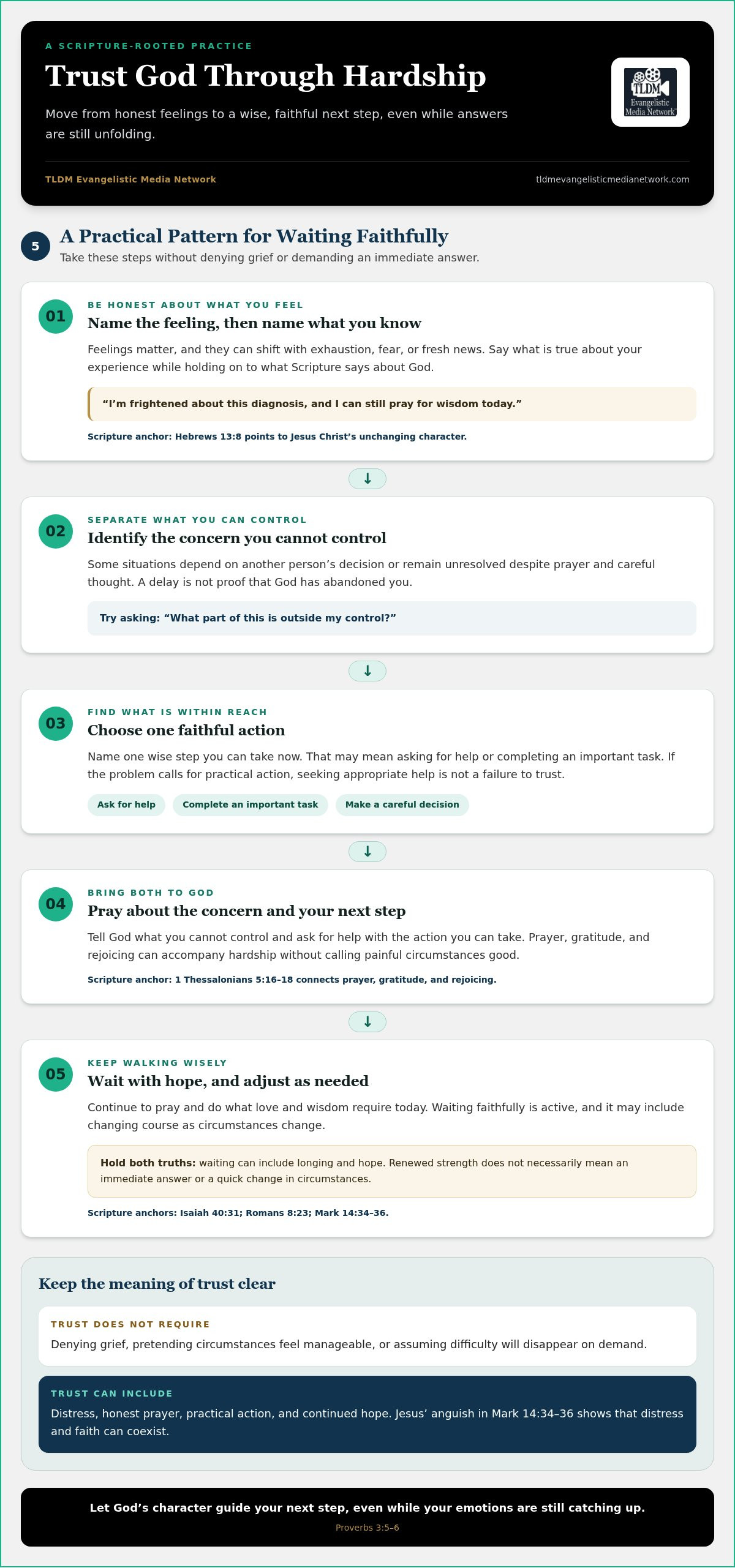
Feelings matter, but they can shift with exhaustion, fear, or fresh news. Hebrews 13:8 points to Jesus Christ’s unchanging character, offering a steadier foundation than a day’s circumstances. Try naming what you feel, then naming what you know from Scripture. For example: “I’m frightened about this diagnosis, and I can still pray for wisdom today.”
Trust also includes waiting for change without treating delay as proof that God has abandoned you. Romans 8:23 describes believers groaning as they await the redemption of their bodies. That image makes room for longing and hope together. Isaiah 40:31 connects waiting on the Lord with renewed strength, not necessarily an immediate answer or a quick change in circumstances.
Use a simple practice while you wait. First, identify the concern you can’t control, such as another person’s decision. Next, name one faithful action within reach, such as asking for help or completing an important task. Then pray about both. First Thessalonians 5:16-18 joins prayer, gratitude, and rejoicing, without requiring you to call painful circumstances good.
What does the Bible say about trusting God during hard times? Proverbs 3:5-6 calls for trust and submission, while 1 Thessalonians 5:16-18 encourages continued prayer and gratitude. These passages describe a way to live through hardship, not a promise that difficulty will disappear on demand.
When trust doesn’t make a problem go away, keep taking wise steps as you pray. Jesus faced anguish in Mark 14:34-36, asked the Father for another way, and submitted to the Father’s will. His example shows that distress and faith can coexist. If a problem requires practical action, seek appropriate help rather than treating action as a failure to trust.
Psalm 23:3 and Psalm 37:23 speak of God directing people’s paths. Consider them when choosing your next step, not as guarantees that every choice will feel clear. In practice, this can mean making a careful decision, continuing to pray, and adjusting when circumstances change. Waiting faithfully is active: it keeps your attention on God while you do what love and wisdom require today.
3. Accepting unanswered questions
Some questions remain open despite prayer, careful thought, and sincere faith. You may wonder why a loved one suffered, why a hoped-for change hasn’t come, or what to do next. Accepting uncertainty doesn’t mean calling pain good or giving up the search for understanding. It means admitting what you don’t know while continuing to seek God faithfully.
Genesis 3 presents human brokenness as part of the biblical account of suffering. John 3:16 points to God’s response through Jesus Christ, without explaining the reason behind every individual loss. These passages offer a larger Christian story, not a simple answer to each painful “why.” Avoid using them to blame yourself or to explain another person’s suffering.
Separate questions you can investigate from those you can’t currently resolve. You can ask a doctor about treatment choices, seek wise counsel about a difficult decision, or review the facts behind a misunderstanding. The reason a particular tragedy happened may remain beyond your understanding. Recognizing the difference helps you direct your energy toward a faithful next step.
John 14:26 describes the Holy Spirit as the Advocate who teaches and reminds Jesus’ followers of His words. In a difficult season, choose a passage you already know and reflect on what it reveals about Christ. This practice won’t supply every missing explanation, but it can keep a painful question from becoming the only voice shaping your faith.
John 8:32 connects truth with freedom from the expectation of earning salvation. That matters when unanswered prayer leads to thoughts such as, “God must be punishing me,” or, “I need to become good enough to deserve help.” Compare those conclusions with the passage’s teaching. Don’t treat hardship as proof that God has rejected you.
Philemon 1:6 links partnership in faith with deeper understanding of the good shared in Christ. Share your question with a mature Christian who can listen and think with you, rather than rushing to explain your pain. You might say, “I’m struggling to understand this loss. Can you sit with me and pray?” A trustworthy conversation can support reflection without forcing certainty.
Make room for the question in prayer without demanding an immediate resolution. Write it plainly, note what you know, and record one action you can take today. If you’re grieving and unsure how to continue, for instance, you might ask someone to accompany you through a difficult task. This honors the question while helping you keep daily life moving.
Faith doesn’t require pretending that every mystery has been solved. It can mean remaining open to truth, receiving support, and following Christ while some questions remain unanswered. John 14:26 directs attention to Jesus’ teaching; Philemon 1:6 reminds believers that understanding can deepen through shared faith. Let those commitments guide your next honest step.
4. Confessing unbelief
Faith doesn’t require hiding doubt from God. In Mark 9:24, a father brings his son to Jesus and says, “Lord, I believe; help my unbelief!” His prayer holds trust and struggle together. You can follow that example by telling God plainly what feels hard to believe, rather than forcing words that don’t match your heart.
Begin with a specific confession. Name the thought, such as “I’m afraid God has forgotten me,” or “I don’t understand why this happened.” Then ask for help with that particular fear. Honest prayer doesn’t excuse harmful choices or make every conclusion true. It brings your struggle to God, where Scripture and wise support can shape your response.
How can you trust God when you feel abandoned or doubt your faith? Bring the feeling and the doubt to God, as the father did in Mark 9:24. Then take one small step of faith, such as praying, reading a familiar passage, or asking a trusted Christian to sit with you.
Distinguish a feeling from a settled conclusion. “I feel alone today” describes an experience; “God has abandoned me” makes a claim about God. Write both sentences down, then consider what you know about Christ and what remains uncertain. This won’t erase emotion, but it can keep distress from becoming a final judgment about God’s character.
Confession can include asking for practical help. If anxiety makes prayer difficult, tell someone you trust, “I’m struggling to pray. Could we read a Psalm together?” If a painful event raises questions about your beliefs, share them without demanding an instant answer. A caring listener can make room for honesty as you consider Scripture thoughtfully.
Don’t confuse doubt with deliberate pretense. A person can have real questions and still seek God sincerely. Mark 9:24 shows a father asking Jesus for help, not presenting himself as certain. His words offer a simple pattern: say what you believe, admit where belief falters, and ask Christ for help with both.
After praying, choose an action that fits your situation. You might keep an appointment, accept a friend’s support, or return to a short Scripture passage tomorrow. These actions don’t prove every doubt has disappeared. They give faith a practical expression while questions remain, helping you respond honestly rather than with shame.
If words feel out of reach, use the father’s prayer from Mark 9:24 as your own. Read it slowly, pause at “help my unbelief,” and name the concern you’re carrying. Then allow your prayer to be unfinished. Confessing doubt isn’t a performance of certainty; it’s a truthful appeal to Jesus for help.
5. Experiencing rest and peace during hardship
Peace during hardship doesn’t always mean feeling calm or seeing trouble disappear. Jesus says in John 16:33 that his followers will face tribulation, while Matthew 28:20 assures them of his continuing presence. Together, these passages make room for both distress and hope. Rest can begin when you stop demanding that every circumstance change before you turn toward God.
Prayer gives fear and need an honest place before God. First Peter 5:7 invites believers to cast their anxiety on him because he cares for them. Name the concern directly, then ask for help with the next decision. For example, you might pray about an upcoming conversation, then write down what you need to communicate clearly.
How do prayer and meditation help you trust God? Prayer lets you speak honestly with God, while meditation gives you time to consider Scripture carefully. Read a passage slowly, notice what it says about God, and return to its words when worry pulls your attention elsewhere.
Try this simple practice with 1 Peter 5:7. Read the verse, name one anxiety, and express it in prayer. Then sit quietly and reflect on the words that describe God’s care. If your thoughts wander, gently return to the passage. This isn’t a test of concentration or a way to force an emotion. It’s a deliberate pause that directs attention toward God.
Build small pauses into an ordinary day. Before opening a difficult message, take a moment to pray for wisdom. After a stressful task, read a short Scripture passage before moving to the next demand. These habits won’t remove every pressure, but they can help keep fear from directing each response. Choose a practice you can return to consistently.
Christian hope also looks beyond present pain. Revelation 21:4 describes a future in which God wipes away every tear, and sickness, pain, and death are no more. This promise doesn’t minimize grief today. It gives sorrow a larger horizon, reminding believers that suffering isn’t the final word in the Christian story.
Rest can also mean receiving support instead of carrying every burden alone. Tell someone you trust what feels difficult and ask for specific help, such as company during a demanding appointment. Pair that conversation with prayer, not as a substitute for practical care, but as an expression of dependence on God. For today, choose one quiet pause, one honest prayer, and one next step.
TLDM Evangelistic Media Network: Sharing The Word Podcast
TLDM Evangelistic Media Network offers the Sharing The Word Podcast for listeners seeking continued biblical reflection during difficult seasons. Its messages can accompany personal prayer and Scripture reading as you consider how faith speaks to hardship. For focused encouragement, Take5 Messages offer another way to engage with Christian teaching, while Teach Me To Pray: Lessons From Scripture explores prayer through biblical lessons. Online Sermons provide further teaching for readers who want to reflect more deeply.
Choose the format that best fits your current need, whether you want a podcast, a brief message, or a Scripture-centered lesson on prayer. These resources can support ongoing reflection as you seek comfort and practice trust in God.
Visit tldmevangelisticmedianetwork.com to explore these offerings.
Take Your Next Faithful Step
Learning how to trust God when life is hard doesn’t require resolving every question before moving forward. Choose a steady practice you can return to, such as reading Scripture, writing an honest prayer, or asking someone you trust to pray with you. Let that practice meet you where you are today, and allow tomorrow’s next step to become clear in time.
For continued biblical reflection, TLDM Evangelistic Media Network offers the Sharing The Word Podcast, Take5 Messages, and Teach Me To Pray: Lessons From Scripture. These resources can help you keep engaging with Scripture and prayer as you walk through a difficult season. Explore TLDM Evangelistic Media Network’s resources, and keep taking your next step with patience and hope.
Frequently Asked Questions
What Does It Mean to Trust God?
Trusting God means relying on His character and wisdom even when you can’t predict an outcome. It doesn’t mean every choice will feel easy or every prayer will receive the answer you hoped for. Someone facing a job loss, for example, can trust God while updating a résumé, asking for help, and making careful decisions. Trust shapes your response; it doesn’t require certainty about what happens next.
What are practical steps to trust God during a crisis?
During a crisis, identify the most urgent decision first, then separate what you can influence from what you can’t. Write down the next practical action, such as calling a family member, gathering documents, or arranging needed care. Ask someone you trust to help you think clearly. Set aside a brief time for prayer, then return to the task. This approach joins spiritual reliance with responsible action.
Which Bible verses offer comfort when life is hard?
Psalm 34:17 reminds readers that the Lord hears cries for help. Hebrews 13:5 speaks of God’s promise not to leave or forsake believers, and John 16:33 acknowledges that followers of Jesus face trouble. Choose one passage that speaks to your present concern. Read it in context, write down the promise or truth it expresses, and return to it when you need a steady reminder.
How can Christians find meaning in suffering without blaming themselves?
Christians can seek meaning by asking what response reflects love, patience, or courage, rather than assuming hardship proves personal failure. Genesis 3 describes a broken world, but it doesn’t identify the cause of each person’s pain. If you’re struggling, consider what support or action would help now. A trusted friend, faith leader, or qualified counselor can help you examine guilt without treating suffering as evidence of wrongdoing.