

URL Slug: sermons-on-the-power-of-prayer-guide
Image Alt Text: A person studying the Bible to strengthen their prayer life.
What if the reason your prayer life feels stagnant isn’t a lack of faith, but a lack of scriptural vocabulary? Many believers struggle with the persistent feeling that their petitions aren’t “getting through,” leading to a sense of spiritual boredom or frustration. When you listen to sermons on the power of prayer, you’re not just consuming information. You’re gaining the scriptural fuel necessary to transform a quiet ritual into a life-changing dialogue with God.
We understand that your time is precious, and deep biblical study can often feel overwhelming. This guide is designed to help you move from passive listening to active intercession by leveraging sound teachings to ignite your personal devotion. We’ll explore how to clarify scriptural promises and provide practical tools for achieving spiritual victory in your daily walk.
Key Takeaways
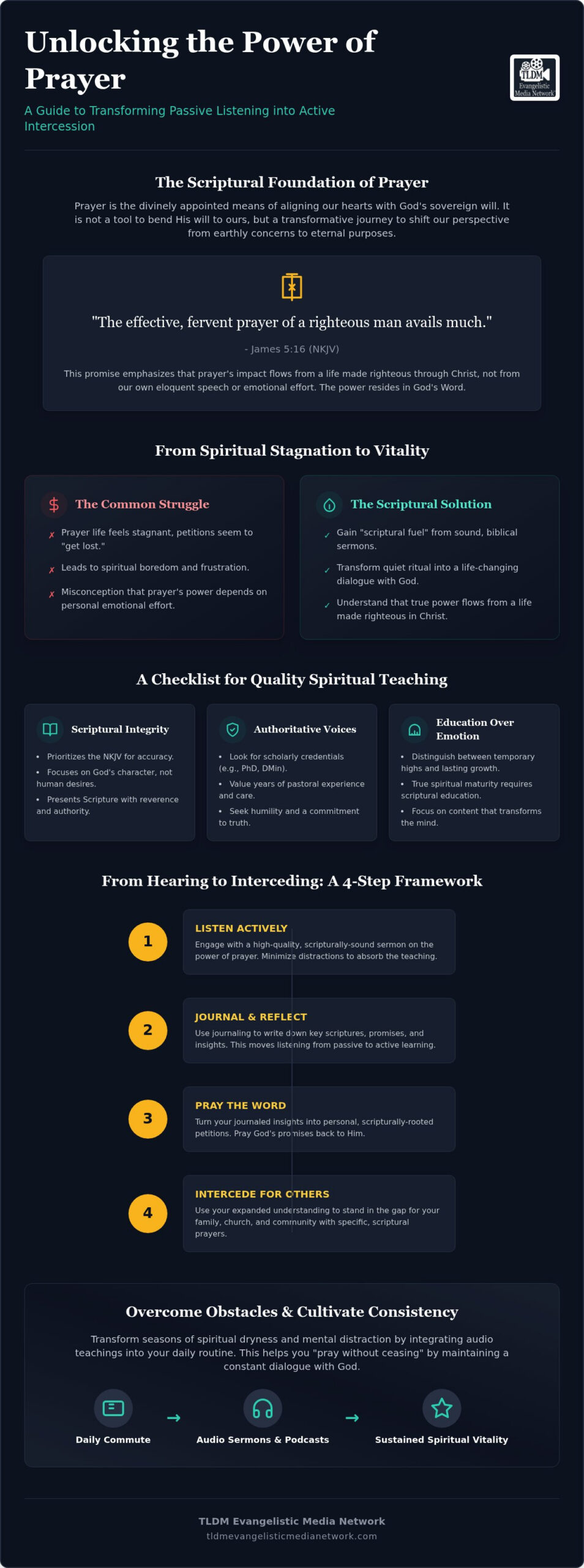
- Understand prayer as the divinely appointed means of aligning your heart with God’s will. We explain why the promise of James 5:16 serves as a vital foundation for effective intercession.
- Discover how to identify high-quality sermons on the power of prayer by prioritizing teachers who emphasize scriptural integrity and the New King James Version.
- Develop a practical framework for praying through the Word. This method uses journaling and reflection to turn passive listening into an active, scripturally-rooted conversation with God.
- Gain tools to overcome mental distractions and seasons of spiritual dryness. You can transform your daily commute into a time of growth by integrating audio teachings into your routine.
- Leverage specific resources like the Sharing The Word Podcast to cultivate spiritual maturity. These lessons bridge the gap between ancient texts and your contemporary life.
The Scriptural Foundation of the Power of Prayer
The power of prayer is often misunderstood as a spiritual tool used to bend God’s will to our own desires. In reality, it is the divinely appointed means of aligning the human heart with the sovereign will of the Creator. It’s a journey of transformation where our perspective shifts from earthly concerns to eternal purposes. When we pray, we aren’t just sending requests into the void. We’re engaging in a relationship that was designed to change us from the inside out.
Scripture provides the definitive blueprint for this dynamic relationship. James 5:16 in the NKJV reminds us that “The effective, fervent prayer of a righteous man avails much.” This verse emphasizes that the impact of our petitions isn’t found in eloquent speech or ritualistic repetition. Instead, it flows from a life made righteous through Christ and a heart that engages with God with holy intensity. True power resides in the Word itself, not in the person speaking it.
Many believers fall into the trap of thinking prayer depends on their own emotional effort or the length of their pleas. This misconception creates a heavy burden that God never intended us to carry. Listening to sermons on the power of prayer helps correct this view by grounding our practice in scriptural authority rather than human performance. These teachings act as a bridge, connecting the timeless truths of Christian Prayer Traditions to the specific spiritual challenges we face in our modern lives.
The Mandate for Persistent Prayer
The Bible instructs us to “pray without ceasing.” This describes a lifestyle of constant spiritual awareness rather than a 24-hour kneeling session. Audio messages and podcasts, such as the Sharing The Word Podcast, can be vital tools in sustaining this mindset during a busy workday. By filling our minds with truth while we commute or work, we cultivate spiritual vitality. This vitality is the direct result of a consistent, nourishing dialogue with our Creator that remains unbroken by the noise of the world.
The Role of Intercession in Spiritual Victory
Intercession is the act of standing in the gap for others, using the authority granted to us through the Word of God. Engaging with sermons on the power of prayer often expands our understanding of what to pray for our families, churches, and communities. It moves us beyond simple requests and toward specific, scripturally-rooted petitions that invite God’s intervention. Scriptural intercession is the humble exercise of spiritual authority to invite God’s kingdom into the lives of others, resulting in collective victory and transformation.
How to Evaluate Sermons for Scriptural Integrity and Depth
With countless digital resources available at your fingertips, discerning the quality of spiritual teaching has never been more vital. Not all sermons on the power of prayer are created equal. Some messages focus heavily on emotionalism or personal gain, while others ground the listener in the unchanging truth of the Word. To find nourishment that lasts, you must look for specific markers of scriptural integrity and depth.
A reliable teacher prioritizes the New King James Version (NKJV) for primary scriptural citations, demonstrating a respect for the precision of the biblical text. They present the Scripture with a sense of reverence, ensuring that the focus remains on the character of God rather than human desires. When a sermon centers on who God is, it naturally corrects the misconception that prayer is merely a way to get what we want. Instead, it becomes a way to become who He wants us to be.
Identifying Authoritative Pastoral Voices
Academic and spiritual credentials provide a necessary layer of trust when you are seeking a mentor. For example, Dr. Thomas L. Driver holds both a PhD and a DMin, reflecting a life dedicated to scholarly study and pastoral care. This combination of expertise and experience ensures that the teaching is both intellectually sound and spiritually applicable. Seek out seasoned spiritual mentors who value biblical accuracy over clickbait titles and who remain humble while unpacking profound theological truths.
The Difference Between Encouragement and Education
While emotional encouragement has its place, it often provides only a temporary high. True spiritual maturity requires long-term scriptural education that transforms the mind. While faith is our primary driver, even Scientific Perspectives on Prayer highlight the profound impact of intentional spiritual practices on the human experience, reinforcing the importance of depth over superficiality. When evaluating sermons on the power of prayer, look for these “meatier” qualities:
- Historical Context: Does the teacher explain the setting and audience of the passage?
- Original Language Insights: Are key Hebrew or Greek terms clarified to add depth?
- Theological Consistency: Does the message align with the whole counsel of God?
- Practical Application: Is there a clear, scripturally-rooted path for daily living?
By choosing resources that prioritize education over mere entertainment, you build a foundation that won’t crumble during seasons of trial. If you are ready to move deeper into the Word, you can explore the Sharing The Word Podcast for messages that balance scholarly rigor with pastoral warmth.
A Practical Framework for Praying Through the Word
Listening to a message is only the first step in a much deeper spiritual process. To truly benefit from sermons on the power of prayer, you must learn to move from passive hearing to active participation. This transition requires an intentional strategy that turns the truths you hear into the petitions you speak. By treating a sermon as a guided conversation with God, you invite the Holy Spirit to apply the Word directly to your specific circumstances.
Begin by selecting a teaching that focuses on a specific attribute of God, such as His holiness or His role as a Provider. Approach your listening session with a journal and a heart ready for reflection. As you listen, utilize the “Pause and Pray” technique. Whenever a scriptural truth resonates with you, stop the audio and immediately respond to God in prayer. This practice ensures that the teaching doesn’t just enter your mind but settles deep within your spirit.
Transform the main points of the sermon into specific petitions for your daily life. If the teaching highlights God’s sovereignty, use that truth to pray for your work challenges or your family’s future. Conclude your session by specifically thanking God for the new insights gained during the teaching. This habit of gratitude seals the lesson and prepares your heart for the next season of growth.
Turning Listening into Dialogue
You can use a podcast episode as a spiritual primer for deep, focused intercession. Instead of rushing through the content, allow the scriptural references to dictate the pace of your prayer time. Repeating a specific verse mentioned in the sermon as a meditative prayer helps ground your thoughts. For more detailed instruction on this method, you can explore our guide on how to pray with scripture to deepen your daily dialogue with the Lord.
The Power of Scriptural Vocabulary
One of the greatest benefits of sermons on the power of prayer is the gift of fresh biblical language. Many believers find themselves stuck in repetitive phrases that can lead to a sense of stagnation. Scriptural education provides a new vocabulary that shifts your psychological and physiological state from anxiety to peace. For example, a teaching on “The Peace of God” allows you to move beyond asking for “help” and instead declare that “the peace of God, which surpasses all understanding, will guard my heart and mind.” Scriptural education provides the essential fuel for a vibrant and enduring prayer life.
Overcoming Obstacles to a Consistent Prayer Life
Establishing a vibrant habit of intercession is rarely a smooth journey without resistance. We often find our minds wandering during a morning commute or feeling a sense of spiritual fatigue after a long day. When you engage with sermons on the power of prayer, you’re arming yourself with truth, but you must also address the practical barriers that hinder your progress. If you feel your prayers aren’t being answered according to your timing, remember that God’s silence is not His absence.
One significant danger in the digital age is information overload. It’s easy to consume hours of teaching without ever spending five minutes in actual dialogue with God. If you find yourself listening to message after message but failing to pray, you’ve turned a spiritual discipline into a mere intellectual exercise. True transformation happens when the knowledge you gain becomes the catalyst for your own petitions. Don’t let the study of prayer become a substitute for the act of praying itself.
Seasons of spiritual dryness are another common hurdle that every believer faces. During these times, prayer can feel like a chore rather than a source of joy. It’s important to remember that the effectiveness of your prayers doesn’t depend on your current emotional state but on the scriptural authority of the Word. By pushing through these dry seasons with discipline, you develop a spiritual maturity that isn’t shaken by changing feelings or circumstances. Discovering the right understanding biblical truth podcast can be a powerful catalyst for breaking through these dry seasons with renewed confidence in God’s Word.
Managing Time in a Busy Schedule
Integrating spiritual nourishment into “dead time” is a practical way to maintain consistency. Whether you’re doing household chores or traveling, audio resources can fill those gaps and keep your heart aligned with God’s will. For those with extremely limited schedules, Take5 Messages offer concise, scripturally-rooted insights that fit into any day. You might also consider the discipline of walking in light to ensure your mind remains fixed on eternal truths throughout the week.
Pushing Through Spiritual Resistance
Boredom and fatigue are often forms of spiritual resistance designed to pull you away from deep intercession. When these feelings arise, lean on authoritative sermons on the power of prayer to remind your soul of the victory already won in Christ. Consistency is far more valuable than occasional bursts of intensity when building a long-term habit. Start small, stay faithful, and watch how God honors your quiet commitment to seek His face daily.
If you’re ready to deepen your study and overcome these obstacles with sound biblical teaching, explore our full library of Sharing The Word Podcast episodes today.
Cultivating Spiritual Maturity with TLDM Media Resources
Cultivating spiritual maturity is a lifelong process that requires both sound instruction and a heart willing to be transformed. Throughout this guide, we’ve explored the foundation and application of effective intercession. Now, we invite you to anchor your growth in resources designed to provide consistency and depth. TLDM Evangelistic Media Network serves as a bridge between rigorous scholarly research and the daily needs of believers, ensuring that every message is both intellectually sound and pastorally warm.
The Sharing The Word Podcast stands as a cornerstone for those seeking biblical truth. Led by Dr. Thomas L. Driver, who brings the weight of both a PhD and a DMin to his teaching, these sermons on the power of prayer offer more than just inspiration. They provide a systematic exploration of Scripture that helps you move from spiritual stagnation to a place of quiet confidence in God’s promises. By engaging with these teachings regularly, you build a vocabulary for prayer that is rooted in the eternal authority of the Word.
Within our media library, the ‘Teach Me To Pray: Lessons From Scripture’ series offers a focused instructional approach. This series specifically addresses the “how-to” of spiritual dialogue, breaking down complex theological concepts into manageable, actionable steps. Like all our resources, these lessons are rooted in the New King James Version, providing a reliable and reverent presentation of God’s instructions for His people. As faith-based media continues to evolve, understanding how to identify a trustworthy understanding biblical truth podcast has become an essential skill for every serious believer seeking to discern sound doctrine in 2026.
A Journey Toward Spiritual Victory
The goal of TLDM is to act as a trusted companion on your journey toward spiritual victory. We don’t just offer audio content. We provide a comprehensive path toward maturity. You can supplement your listening by exploring the TLDM Bookstore, where you’ll find Christian books that expand on the themes of our broadcasts. These written resources allow for a deeper, more reflective study that reinforces the truths heard in our sermons on the power of prayer.
Next Steps for Your Prayer Life
Your next step toward a vibrant prayer habit begins with a simple commitment to consistency. Subscribe to the podcast today and begin implementing the ‘Pause and Pray’ routine we discussed earlier. As you find strength and clarity through these messages, consider sharing them with friends or family members who may be seeking their own spiritual breakthrough. Community growth often begins with a single person’s dedication to the Word.
May the Lord bless you as you seek His face with fervency and faith. We pray that your life becomes a living testimony to the transformative power of a consistent dialogue with the Creator. Remember that every petition offered in the authority of the Word has an everlasting impact on your heart and your community. Your journey of prayer is not just for your benefit, but for the glory of His kingdom.
Ignite Your Spiritual Journey Through Prayer
Moving from a life of passive listening to one of active intercession requires both sound scriptural teaching and personal discipline. We’ve explored how a firm foundation in the Word, particularly the promise of James 5:16, provides the authority needed for spiritual victory. By applying a practical “Pause and Pray” framework, you can transform your daily routine into a season of deep reflection and growth. Finding high-quality sermons on the power of prayer is the essential first step in replacing repetitive phrases with a vibrant, scripturally-rooted dialogue with God.
TLDM Evangelistic Media Network is a non-profit 501(c)(3) ministry dedicated to presenting biblical truth with reverence and clarity. Our resources feature the scholarly teaching of Dr. Thomas L. Driver, PhD, DMin, who provides practical lessons designed for your daily spiritual nourishment. You don’t have to navigate your walk with God alone when you have a trusted companion to help bridge the gap between ancient texts and modern life.
Subscribe to the Sharing The Word Podcast and begin your journey toward spiritual maturity today. Your commitment to seeking the Lord’s face will yield a harvest of inner strength and lasting peace. May you walk in the light of His Word every day.
Frequently Asked Questions
Can listening to a sermon replace my actual prayer time?
No, listening to a sermon provides the scriptural foundation for prayer but cannot replace the act itself. Think of a sermon as the map and prayer as the journey. While sermons on the power of prayer offer essential instruction and inspiration, you must still set aside dedicated time to speak directly with God. Use the truths you learn to fuel your personal dialogue rather than letting information become a substitute for intimacy.
How do I know if a sermon on prayer is doctrinally sound?
You can evaluate a sermon’s integrity by checking if it’s rooted in the New King James Version and focuses on God’s character. Sound teaching prioritizes biblical accuracy over emotional appeals or promises of material wealth. Look for authoritative voices, such as Dr. Thomas L. Driver, who hold respected academic and pastoral credentials. A trustworthy message will always align with the whole counsel of Scripture and encourage personal holiness.
What is the most effective way to take notes during an audio sermon?
The most effective method is the “Pause and Pray” technique where you stop the audio to record specific verses or personal reflections. Instead of transcribing every word, focus on the “meat” of the teaching and how it applies to your life. Write down specific scriptural promises mentioned by the teacher. This active engagement helps move the information from your mind to your heart, making it easier to recall during your personal prayer time.
Are there short sermons available for people with busy professional schedules?
Yes, TLDM offers Take5 Messages specifically for believers who have limited time but still desire deep spiritual nourishment. These five minute recordings provide a concentrated dose of scriptural truth that fits perfectly into a morning commute or a lunch break. They ensure that even on your busiest days, you can maintain a consistent connection to the Word. Short, focused messages are excellent tools for sustaining spiritual vitality throughout the work week.
How can I stay focused on a sermon when my mind starts to wander?
Staying focused often requires changing your listening environment or engaging in a physical activity like walking or driving. If your mind drifts, try listening in shorter segments or using headphones to block out external noise. Active note-taking or repeating key verses aloud can also help anchor your attention. Remember that consistency is a discipline that grows stronger over time as you prioritize your spiritual education and maturity.
Why is the New King James Version (NKJV) often recommended for scriptural study?
The NKJV is favored for its balance of scholarly accuracy and modern readability while preserving the traditional beauty of the biblical text. It provides a reliable foundation for studying sermons on the power of prayer because it remains faithful to the original Hebrew and Greek manuscripts. This precision is vital for building a prayer life based on the exact promises of God. It ensures that your petitions are grounded in a trustworthy translation.
What should I do if I feel like my prayers are not being answered?
When you feel your prayers are unheard, return to the Word to remind yourself of God’s character and His perfect timing. Scripture teaches that God’s silence isn’t a sign of His absence but an invitation to trust Him more deeply. Continue in persistent prayer and seek out authoritative teachings that address spiritual dry seasons. Aligning your will with God’s through study often brings the clarity and peace you need while you wait for His resolution.
How can I turn a biblical lesson into a specific prayer for my family?
You can turn a lesson into a prayer by taking a scriptural attribute of God and claiming it for your family members by name. If a sermon discusses God’s protection, you might pray, “Lord, be a hedge of protection around my children today according to Your Word.” This practice replaces vague requests with specific, authoritative declarations. It allows the truth of the sermon to become a living petition for the people you love most in your daily walk.