

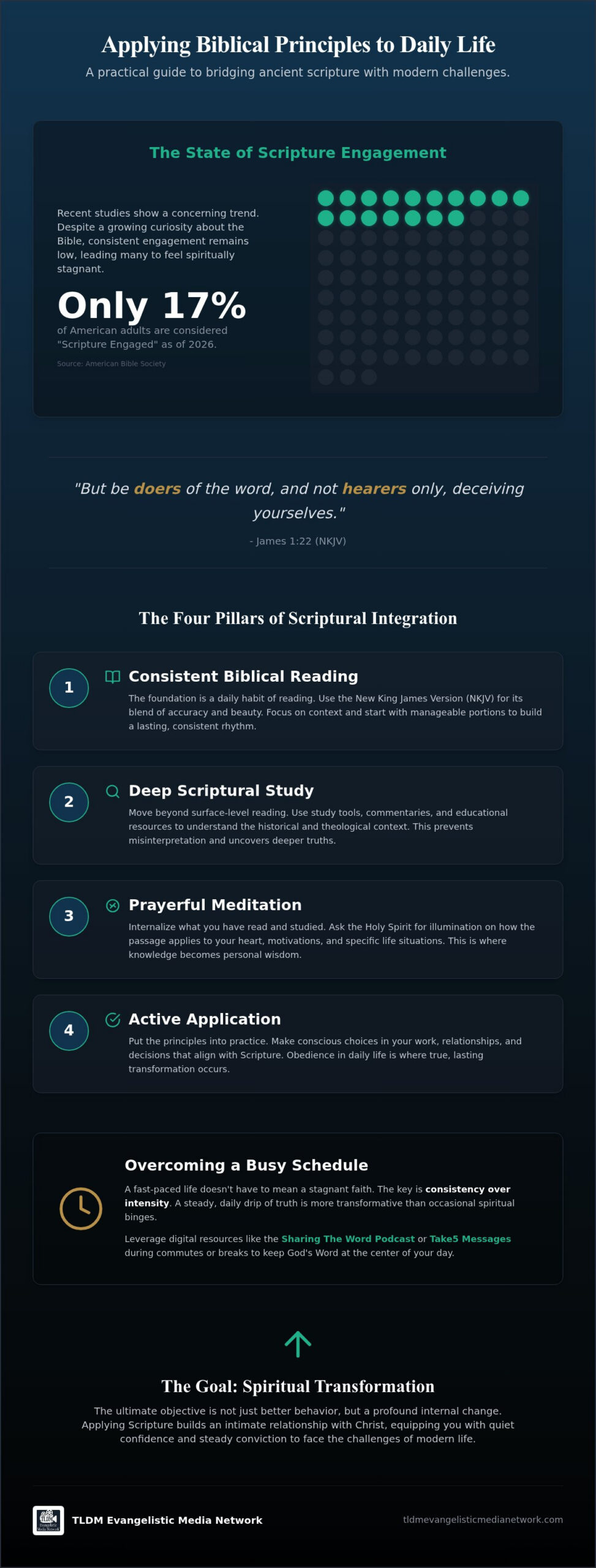
Recent research from the American Bible Society indicates that in 2026, only 17 percent of American adults are considered Scripture Engaged. This return to previous levels suggests that while many feel a growing curiosity about the Word, few have found a path to consistent integration. You likely understand the frustration of feeling spiritually stagnant despite your commitment to attending church. It’s often difficult to translate ancient commands into the digital complexities of a fast-paced schedule.
Applying biblical principles to daily life isn’t about adding more tasks to your burden. Instead, it’s the process of re-aligning your current actions with the timeless wisdom of the New King James Version. This guide provides practical, faith-based strategies to bridge the gap between ancient Scripture and your modern challenges. We’ll explore the pillars of scriptural integration, ways to overcome a busy schedule, and how to find spiritual victory in your work and relationships. By the end of this article, you’ll have clearer tools to keep God at the center of every decision.
Key Takeaways
- Understand that biblical principles are universal truths that act as a bridge between hearing God’s Word and actively living it out.
- Discover a systematic approach to spiritual growth through the Four Pillars of Scriptural Integration, focusing on steady consistency rather than occasional intensity.
- Learn how applying biblical principles to daily life can resolve the tension of a fast-paced 2026 schedule and help you overcome feelings of spiritual stagnation.
- Gain practical tools to transform your professional and personal relationships by grounding your interactions in character traits like humility and integrity.
- Identify modern resources, such as Take5 Messages and the Sharing The Word Podcast, to maintain a sustainable and vibrant walk with God during your daily commute or work breaks.
What Does it Mean to Apply Biblical Principles to Daily Life?
A biblical principle is a universal truth derived from Scripture that serves as a consistent guide for human conduct. Unlike a specific rule that might apply only to a particular cultural moment, a principle remains relevant across every generation and social context. When we speak about applying biblical principles to daily life, we are describing the vital bridge that connects hearing the Word with actively doing the Word. Without this bridge, our faith remains theoretical rather than transformative.
James 1:22 (NKJV) commands us: “But be doers of the word, and not hearers only, deceiving yourselves.” This verse highlights a critical spiritual reality. If we simply collect information without implementation, we risk a form of self-deception that prevents true growth. Internalizing a principle requires more than outward compliance. It involves a shift in our core motivations. While rules focus on what we do, principles address the why behind our actions, ensuring our behavior stems from a heart aligned with God’s character.
Effective application requires a solid foundation in the principles of biblical interpretation. We must first understand the original intent of a passage before we can accurately translate its wisdom into our modern environment. This careful study prevents us from taking verses out of context or misapplying them to situations they were never meant to address.
Moving Beyond Intellectual Knowledge
Academic study provides the framework, but living the Bible requires a dynamic interaction with the Holy Spirit. Knowledge alone can lead to pride. Application leads to humility. The Holy Spirit acts as the essential guide who illuminates ancient texts, showing us how a command written thousands of years ago applies to a modern digital workplace. He provides the strength to act on what we know is true.
Think of a biblical principle like a compass. A compass does not tell you every step to take or every obstacle you will face. Instead, it provides a steady, reliable heading. In a world of digital overload and shifting cultural values, these principles keep your life pointed toward Christ. They offer a sense of direction when the path forward seems unclear.
The Goal of Spiritual Transformation
The ultimate objective of this process is not merely better behavior but a profound internal change. Dr. Thomas L. Driver emphasizes that scholarly accuracy is the bedrock for personal growth and spiritual victory. When we correctly handle the Word of Truth, we experience a sense of peace that transcends our circumstances. We begin to see the world through the lens of eternity.
This journey leads to a more intimate relationship with Christ. Every time you choose to apply a scriptural truth in a difficult moment, you are walking in step with the Savior. This consistency builds inner strength. It prepares you for the challenges of modern life with quiet confidence and steady conviction. True transformation is a lifelong process of becoming more like Him.
The Four Pillars of Scriptural Integration
Building a life of faith requires a systematic approach that moves beyond occasional inspiration. By establishing a rhythmic routine, applying biblical principles to daily life becomes a natural extension of your identity rather than a forced obligation. This process relies on consistency over intensity. A steady, daily drip of truth is far more transformative than a flood of information followed by weeks of spiritual drought. These pillars support your walk with God by ensuring your mind is constantly renewed by His Spirit.
For those with demanding schedules, leveraging digital resources can help maintain this rhythm. Tools like the Sharing The Word Podcast allow you to engage with deep scriptural insights during your morning commute or while performing household tasks. This intentionality ensures that God’s Word remains at the center of your day, regardless of the pace of your environment.
Step 1. Consistent Biblical Reading
The first pillar is the habit of daily reading. We recommend using the New King James Version for its unique blend of scholarly accuracy and reverent beauty. When you read, focus on the surrounding context of each passage to ensure you grasp the author’s original intent. Start with short, manageable portions to avoid the overwhelm that often leads to spiritual burnout. Consistency in small steps builds a lasting foundation.
Step 2. Deep Scriptural Study and Education
Reading introduces you to the Word, but study allows you to own it. Study is a prayerful devotion to acquiring advanced knowledge of God’s character and His commands. This often requires moving beyond the surface level to understand historical backgrounds and theological themes. Engaging with Christian books written by seasoned scholars can provide the necessary depth for adult spiritual education. If you want to grow, you must be willing to be a student of the Word.
Step 3. Meditation and Memorization
Biblical meditation is the practice of “muttering” or thinking deeply on a specific verse throughout your day. It’s the process of chewing on a truth until it nourishes your soul. This is paired with memorization, which equips you with spiritual weapons for the moments you need them most. Psalm 119:11 (NKJV) says, “Your word I have hidden in my heart, That I might not sin against You.” By storing truth in your memory, you ensure that wisdom is always accessible for real-time decision-making.
As you implement these pillars, you might find that a structured approach to prayer further clarifies your study. Exploring resources like Teach Me To Pray can help you turn the truths you learn into a vibrant, ongoing conversation with God.
Overcoming the Hurdles of a Busy Modern Schedule
The pace of life in 2026 often feels relentless. Between constant digital connectivity and demanding professional roles, many believers feel they are running on empty. This exhaustion frequently leads to a sense of being “too busy” for God, which creates a cycle of spiritual fatigue. However, we must reframe our perspective on spiritual growth. It’s not just a morning ritual that ends when you leave the house. Instead, it is a continuous integration that happens in the middle of your daily responsibilities.
Spiritual stagnation often manifests as a lack of joy or a dwindling desire for the things of God. You might feel like you’re just going through the motions without any internal vitality. If you recognize these signs, it’s vital to implement specific strategies for overcoming spiritual stagnation. Start small. Dedicate just five minutes of focused reflection on a single verse before your first meeting or task. This small act of obedience can break the cycle of apathy and reignite your passion for the Word.
Integrating Faith into the Commute and Workplace
Your daily commute provides a unique opportunity for growth rather than frustration. By listening to the Sharing The Word Podcast, you can turn drive time into a sanctuary of learning. These sessions bridge the gap between ancient wisdom and your current professional challenges. They help you transition from the home to the office with a mind set on things above.
Maintaining a Christian witness in a secular environment doesn’t always require a formal sermon. It often looks like excellence, integrity, and patience under pressure. Short audio messages provide the necessary nourishment to sustain these character traits throughout your shift. When you are filled with the Word, your natural reactions begin to reflect the heart of Christ. This consistent presence of peace serves as a powerful testimony to those around you.
Transforming Your Relationships and Work Through Biblical Wisdom
The true measure of our spiritual growth is often found in the quality of our interactions with others. When we move beyond private study, applying biblical principles to daily life begins to reshape our professional reputations and our household dynamics. This transformation is not fueled by human effort alone. It is the natural result of a heart that has been nourished by the Word and is now bearing fruit in the form of patience, integrity, and humility. By viewing every relationship as a mission field, we find a path to spiritual victory in even the most challenging circumstances.
Biblical wisdom provides a robust framework for conflict resolution that secular methods often lack. It invites us to look inward at our own motivations before addressing the faults of others. This humble approach de-escalates tension and opens the door for genuine reconciliation. As we align our conduct with scriptural truths, we discover that peace is not merely the absence of conflict. It is the presence of God’s order in our daily affairs.
Biblical Integrity in the Professional World
The workplace is one of the most significant arenas for practicing our faith. Colossians 3:23 (NKJV) instructs us: “And whatever you do, do it heartily, as to the Lord and not to men.” This principle shifts our focus from seeking the approval of supervisors to seeking the approval of God. When we work “as to the Lord,” our professional excellence becomes a powerful form of silent evangelism. Honesty in our dealings and quality in our output reflect the character of the Creator we serve.
To maintain this standard, consider this checklist for biblical decision-making at work:
- Is this decision consistent with the character of Christ?
- Does this action demonstrate professional excellence and honesty?
- Am I prioritizing the needs of others above my own personal ambition?
Fostering Grace in Family and Friendships
In our modern digital context, the ancient command to be “slow to speak” is more relevant than ever. This principle applies directly to our digital communications, where a reactive reply can cause lasting damage to a relationship. Practicing a “holy pause” before sending an email or posting a comment allows the Holy Spirit to temper our words with grace. This intentionality preserves the bond of peace and prevents unnecessary division within our circles of influence.
Forgiveness must also become a daily rhythm rather than a rare event. We are called to forgive as we have been forgiven, which requires a constant reliance on God’s strength. You may find that learning to pray with Scripture provides the specific language needed to heal deep-seated wounds in your family or friendships. Turning a verse into a personal petition invites God into the healing process, transforming your dialogue from one of frustration to one of hope.
If you are ready to deepen your understanding of these truths, you can find further guidance in our collection of Christian books which offer scholarly insights for practical living.
Cultivating a Sustainable Daily Walk with God
The transition from intellectual belief to an active lifestyle is the most significant step in your spiritual journey. It is the moment where theology becomes biography. While academic understanding provides the necessary foundation, it is the daily application of truth that builds lasting character. You must view spiritual maturity as a lifelong pursuit rather than a destination to be reached quickly. Steady, intentional growth is far more sustainable than erratic bursts of religious activity.
To begin this journey, you don’t need a complex theological degree or hours of uninterrupted silence. You simply need a willing heart and a few practical steps. Start your day by identifying one specific truth from the NKJV to guide your actions. By applying biblical principles to daily life in small, manageable ways, you create a momentum that carries you through the most difficult seasons. Consistency in the quiet moments prepares you for victory in the public ones.
If you are ready to begin, follow this achievable "start today" plan:
- Select one biblical principle, such as integrity or patience, to focus on for the next twenty-four hours.
- Commit to five minutes of focused Scripture reading before checking your digital devices.
- Use your commute or lunch break to listen to a brief teaching that reinforces your chosen principle.
The Power of Scriptural Prayer
Prayer is the vital breath of the believer’s life. However, many struggle to know what to say or how to maintain a meaningful dialogue with God. Our “Teach Me To Pray: Lessons From Scripture” series offers a structured approach to this essential discipline. By learning to pray the Word, you ensure that your petitions align with God’s perfect will. This practice transforms prayer from a list of requests into a rhythmic conversation that continues throughout your day. It grounds your spirit in truth while keeping your heart open to the leading of the Holy Spirit.
Choosing the Right Resources for Your Journey
Sustaining a daily walk requires a steady diet of scholarly yet encouraging teaching. You need resources that challenge your intellect while nourishing your soul. Our online library of sermons provides weekly encouragement to keep you focused on the eternal. For those who prefer to go deeper during their commute or quiet time, we offer a variety of Christian audiobooks and paperbacks that unpack complex theological concepts with pastoral warmth. These tools are designed to support your growth and provide the clarity needed for a life of spiritual victory. Your journey toward maturity is a process of becoming, and you don’t have to walk it alone.
Stepping Into a Life of Spiritual Victory
The journey toward spiritual maturity is a deliberate process of moving beyond intellectual belief into a vibrant, active lifestyle. By establishing the four pillars of integration and prioritizing consistency over intensity, you can overcome the hurdles of even the most demanding schedule. Transforming your workplace and family life happens as you allow the Holy Spirit to guide your character through patience and integrity. Ultimately, applying biblical principles to daily life ensures that your heart remains anchored in peace regardless of external pressures.
You don’t have to navigate this path alone. Dr. Thomas L. Driver provides scholarly teaching that’s both accessible and deeply reverent. Whether you need the quick reset of Take5 Messages during a busy shift or a deep dive through our comprehensive Christian bookstore, resources are available to support your growth. We invite you to listen to the Sharing The Word Podcast for daily biblical encouragement as you continue your journey. May you find strength and joy as you walk in step with the Savior today and every day.
Frequently Asked Questions
How can I find time for the Bible when my schedule is full?
Finding time begins with identifying small gaps in your day rather than waiting for a perfect hour of silence. You can utilize resources like Take5 Messages to receive concentrated scriptural insights during a lunch break or between meetings. Integrating these brief moments of reflection ensures that God’s Word remains a priority without overwhelming your calendar. Consistency in these short intervals often leads to a more sustainable habit than occasional, long study sessions.
Which Bible translation is best for daily application?
We recommend the New King James Version (NKJV) for its exceptional balance of scholarly accuracy and reverent readability. It preserves the poetic beauty of the traditional text while ensuring the language is accessible for modern readers. This clarity is essential when you are trying to understand how ancient truths translate into your current circumstances. A reliable translation serves as a steady foundation for both intellectual study and personal spiritual reflection throughout your busy week.
What is the difference between a biblical command and a principle?
A biblical command is a specific instruction intended for a particular action, such as “do not steal.” In contrast, a principle is a universal truth that underpins those commands and guides your general conduct across various situations. While a command tells you what to do, a principle explains the character of God behind the requirement. Understanding these underlying truths allows you to make wise, faith-based decisions even in complex modern scenarios not explicitly mentioned in Scripture.
How do I know if I am applying Scripture correctly or just picking what I like?
Correctly applying biblical principles to daily life requires you to study verses within their original historical and literary context. You should avoid isolating single sentences to support your own preferences. Instead, compare your conclusions with the broader themes of the entire Bible and seek scholarly guidance from trusted teachers. Prayerfully asking the Holy Spirit for discernment helps ensure your application aligns with God’s intent rather than your personal desires or cultural trends.
Can listening to a podcast count as my daily spiritual nourishment?
Listening to a resource like the Sharing The Word Podcast is an excellent way to supplement your spiritual growth, especially during a commute. It provides scholarly insights and pastoral encouragement that can keep your mind set on Christ throughout the day. While audio teaching is a powerful tool for learning, it’s most effective when paired with your own personal reading of the NKJV. This combination ensures you are both receiving expert instruction and hearing from God directly.
What should I do when I feel like I am not growing spiritually?
Spiritual stagnation is a common challenge that often signals a need to simplify your approach. Instead of striving for complex achievements, return to the basic disciplines of prayer and short, focused Scripture reading. Don’t allow guilt to push you further away. Instead, acknowledge your current state to God and ask for a renewed desire for His Word. Small, honest steps toward Him are often the catalyst for a significant season of renewed vitality and inner peace.
How do biblical principles apply to modern technology and social media?
Biblical principles are timeless and remain fully relevant when applying biblical principles to daily life in a digital age. Traits such as being slow to speak and showing grace apply directly to how you post comments or respond to emails. Technology is simply a new medium for practicing ancient virtues like integrity, kindness, and humility. By viewing your digital interactions through the lens of Scripture, you can maintain a consistent Christian witness in every virtual environment.
Is it necessary to memorize Scripture to live it out?
Memorization is a vital discipline because it stores God’s truth in your heart for immediate use during trials or temptations. When you have verses hidden in your mind, you don’t need to reach for a physical book to find guidance in a stressful moment. This practice makes the Word an accessible weapon for spiritual victory. While you can live faithfully without it, memorization significantly strengthens your ability to make real-time decisions that honor the Lord.