

What if the first faithful step through burnout isn’t pushing yourself to pray harder, but receiving care at a pace you can manage? When exhaustion makes Scripture, prayer, and familiar responsibilities feel difficult, even well-meant encouragement can seem out of reach. The right christian resources for burnout should offer hope without adding shame or pressure.
You may know that faith matters and still feel depleted, unsure what kind of help would meet you where you are. Start by identifying what feels most difficult right now. This guide can help you choose a manageable next step, whether you need a brief passage of Scripture, a listening resource, space to reflect, or support beyond self-guided materials.
We’ll look at how to match resources to your current energy, including Scripture, Christian books, sermons, and audio options such as the Sharing The Word Podcast. We’ll also consider how trusted people and qualified professional care may fit into a wise path forward. These resources can accompany reflection, but they don’t replace rest or needed care.
Key Takeaways
- Exhaustion isn’t proof of spiritual failure. Begin by naming what feels hardest, without adding shame.
- Choose christian resources for burnout based on the support you need and the energy you have right now.
- Scripture can offer hope alongside practical care, without turning recovery into a test of faith.
- Compare reading, listening, and watching formats, then choose one resource that fits naturally into your routine.
- Use a modest rhythm and reassess as you go. If you need more support, consider reaching out to a qualified professional.
Christian Resources for Burnout: Recognize What You Need First
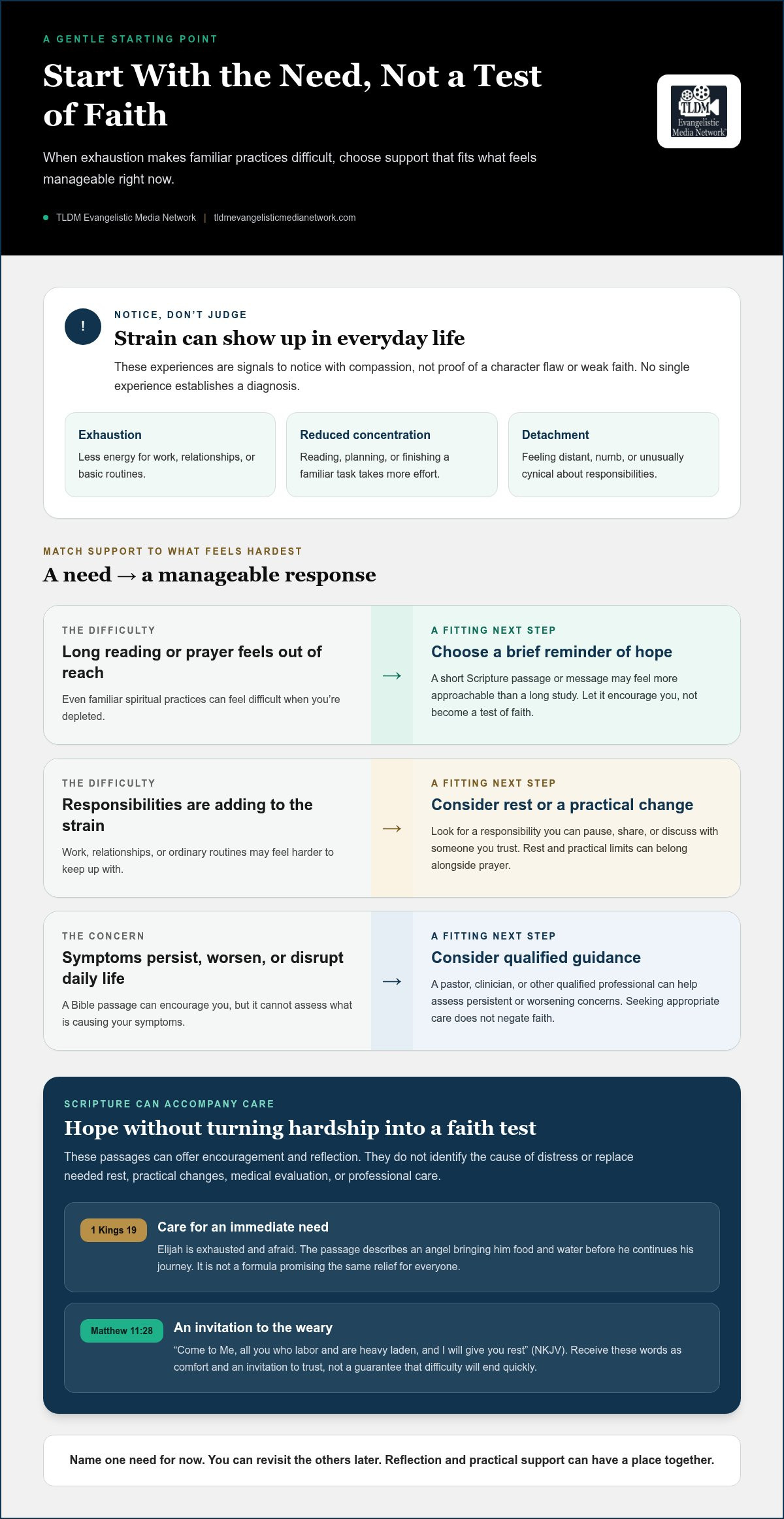
If you’re exhausted, struggling to concentrate, or finding ordinary responsibilities unusually hard, you don’t need to add shame to the weight you’re carrying. Difficulty praying or reading Scripture isn’t proof that your faith is weak. Treat these experiences as signals to notice with compassion, not reasons to judge yourself.
A helpful definition: Burnout is a common term for deep exhaustion and strain, often connected to work. This article uses the term to guide resource choices, not to diagnose or treat a condition.
There’s an important distinction: the World Health Organization describes burnout as an occupational phenomenon related to chronic workplace stress, not a medical condition. People also use the word more broadly in everyday conversation. The Occupational Burnout overview provides context for the workplace-specific term, but neither a webpage nor this article can determine what is causing your symptoms.
Notice what you’re experiencing without deciding what it means about you spiritually. A pastor, clinician, or other qualified professional can help assess persistent or worsening concerns. A Bible passage can offer encouragement, but it isn’t a clinical assessment.
What might burnout feel like in everyday life?
People describe strain in different ways. You might feel drained even after routine tasks, lose your train of thought during a conversation, or feel detached from work and responsibilities that once mattered. You may also find it harder to keep up with meals, household tasks, or commitments. No single experience establishes a diagnosis, and similar difficulties can have different causes.
- Exhaustion: You have less energy for work, relationships, or basic routines.
- Reduced concentration: Reading, planning, or finishing a familiar task takes more effort.
- Detachment: You feel distant, numb, or unusually cynical about responsibilities.
These observations describe what you notice, not a verdict about your character or faith. Biblical reflection may help you bring weariness honestly before God, while clinical assessment addresses health concerns through a different kind of expertise. Both forms of care can have a place.
What kind of help are you looking for right now?
Before exploring christian resources for burnout, pause and name one need. You might want a reminder of hope, a chance to rest, a practical change to your workload, or guidance from a qualified professional. You don’t need to explain your situation to anyone just to make this private choice.
- Encouragement: Would a short Scripture passage or message feel more approachable than a long study?
- Rest or practical change: Is there a responsibility you can pause, share, or discuss with someone you trust?
- Professional guidance: Are symptoms persistent, worsening, or interfering with daily life?
Choose one need for now. You can revisit the others later. A clear starting point is often more useful than gathering a stack of resources when you’re already depleted.
How Scripture Offers Hope Without Turning Burnout into a Faith Test
Scripture can give language to weariness, remind readers of God’s care, and shape wise next steps. It doesn’t replace sleep, changes to harmful demands, medical evaluation, or professional mental health care when those are needed. Faithful reflection and practical support can belong together.
Seeking appropriate care does not negate faith; it can be one wise way of responding to human needs and limits. This matters especially for people in ministry, whose responsibilities may include caring for others while carrying their own strain. Boston University explores pressures faced by religious leaders in its discussion of Burnout in Religious Leaders.
How can biblical passages encourage without adding guilt?
In 1 Kings 19, the prophet Elijah flees after Queen Jezebel threatens his life. Exhausted and afraid, he lies down in the wilderness. The passage describes an angel bringing him food and water and urging him to eat. It presents care for Elijah’s immediate physical need before he continues his journey. It isn’t a formula promising that every exhausted person will receive the same kind of relief or that one meal resolves deep distress.
Jesus’ invitation in Matthew 11:28 reads, “Come to Me, all you who labor and are heavy laden, and I will give you rest” (NKJV). In the surrounding passage, Jesus speaks of coming to Him and taking His yoke, an image of relationship and discipleship. Christians may receive the invitation as comfort and a call to trust Him, but it shouldn’t be turned into a guarantee that a difficult situation will end quickly or that continued struggle reflects deficient faith.
Read these passages as Scripture first, then consider their application with humility. Elijah’s story shows God’s care in that moment; Jesus’ words invite the weary to come to Him. Neither passage alone identifies the cause of someone’s distress or determines what kind of care they need.
Why are rest and human limits part of a faithful response?
Rest isn’t a prize for completing every task or proving your devotion. Scripture gives rest a meaningful place in human life, and practical limits matter too. Protecting time to sleep, eat, pause, or step back from a responsibility can help preserve capacity for work, relationships, and service. These choices don’t have to compete with prayer.
Burnout or severe strain shouldn’t automatically be explained as sin, poor priorities, or too little prayer. Work conditions, caregiving demands, health concerns, grief, and other pressures may affect people in different ways. Spiritual reflection can help someone discern what is sustainable, while a qualified professional can assess health concerns and discuss care options.
If listening helps you reflect, explore the Sharing The Word Podcast as one Scripture-based companion. Let it support reflection, not stand in for rest or needed professional care.
Compare Christian Resources for Burnout by the Support You Need
The most useful resource isn’t necessarily the longest or most comprehensive. Match its format to what you can manage and the kind of support you’re seeking. A short message may offer one point for reflection; sustained teaching may help you study an idea in depth. Neither format can assess your health or resolve every source of strain.
Use this comparison as a starting point, not a scorecard. Your choice can change with your energy, attention, and circumstances.
| Your need | Resource format | Realistic use | Limitations |
|---|---|---|---|
| Reflect on a specific passage | Personal Scripture reading | Read a few verses slowly, or revisit a familiar passage. | Reading may feel demanding when concentration is low; Scripture reading isn’t clinical care. |
| Receive biblical teaching while doing a routine task | Podcast | Listen when audio fits your day better than sitting down with a book. | Listening may not suit every setting or attention level, and a podcast can’t assess your needs. |
| Engage with a brief reflection | Short message | Use a concise message as one manageable point to consider. | Its brevity may not provide the context or depth you’re looking for. |
| Follow a fuller teaching | Online sermon | Watch when you have space to stay with a topic and reflect. | A sermon offers teaching, not individualized guidance or treatment. |
| Explore a subject at your own pace | Christian book | Read a section, take notes, or return to a passage later. | A book may ask for more focus than you have right now and can’t replace professional assessment. |
| Address persistent or serious distress | Qualified professional care | Discuss symptoms and possible next steps with an appropriately qualified professional. | Professional care isn’t the same as devotional teaching, though both can have a place. |
Which faith-based format may fit your energy and attention?
If focused reading feels difficult, audio lets you receive teaching without following a page. A short message may feel easier to approach, while a sermon or Christian book may suit you when you want sustained reflection. These are format differences, not measures of spiritual maturity. Choose the form you’re most likely to engage with today, and let that be enough for now.
When should Christian resources sit alongside professional care?
Consider seeking qualified professional guidance if distress persists, becomes severe, worsens, or interferes with daily life. You don’t need to settle on a label before asking for help. A professional can assess health concerns in ways a devotional resource cannot.
Christian resources for burnout can support prayer, reflection, and learning, but they don’t diagnose or treat health conditions. Seeking professional care can coexist with prayer and connection to a Christian community. Let each kind of support serve its purpose: spiritual resources can encourage faith, while qualified care can address concerns that call for clinical assessment.
Build a Manageable Plan for Using Christian Burnout Resources
A helpful resource should meet you where you are, not become another obligation to perform perfectly. Keep the process simple: identify what you need, choose one resource, fit it into a routine you already have, and check whether it still serves you. This leaves room to adjust as your circumstances change.
- Name the need. Ask yourself what would help most today: encouragement, time to reflect, a practical change to your responsibilities, or outside support. You can keep your answer private. Naming one need can make the next decision clearer.
- Select one resource. Match the format to your present capacity. If sitting down to read feels difficult, consider an audio message during a routine task. If you want to reflect quietly, choose a brief Scripture passage rather than starting a demanding study plan.
- Set a modest rhythm. Connect the resource to a natural point in your day, such as a quiet moment before work or while preparing for bed. Keep the rhythm flexible. Return to it when it fits and pause when you need to.
- Reassess. Notice whether the resource remains accessible and offers a helpful point for reflection. If it adds pressure or doesn’t address your need, choose another format or seek another kind of support.
How do you choose one first step when you feel depleted?
Start smaller than your ideal routine. You might read a short passage once, listen to one message, or write a private sentence about a change you need to consider. Don’t require yourself to feel better immediately or maintain a fixed schedule. A first step is simply a way to begin, not a test you must pass.
Reduce friction by choosing something that fits your habits. If audio fits more easily into your day than reading, an audiobook resource may be one format to explore. Rest, boundaries, and trusted support can also be part of a practical response. None guarantees a particular outcome, but each may help you consider what care or change is needed.
How can you review whether a resource is helping?
After engaging with it, pause and ask: “Did this feel accessible, truthful, and useful for reflection, or did it leave me feeling more pressured?” There’s no need to rate yourself. If the resource isn’t a fit, adjust the format or set it aside. If the burden feels too difficult to carry alone, consider telling someone you trust or seeking qualified professional guidance.
Christian resources for burnout can support reflection, but a resource plan shouldn’t stand in for practical changes or needed care. Let your next step respond to the need you named, and give yourself permission to revise it.
Find Scripture-Based Encouragement Through TLDM Media and Books
TLDM Evangelistic Media Network offers several ways to engage with biblical teaching, including audio, short messages, online sermons, and Christian books. These resources can support learning and reflection, but they aren’t designed to diagnose or treat burnout. Choose by format and capacity, not by pressure to consume more or an expectation that one resource will resolve every difficulty.
There’s no single right way to receive encouragement. On a day when reading feels demanding, listening may feel more accessible. At another time, you may want to pause over a passage or spend longer with a book. Let your current needs guide the choice.
When might a Christian podcast or short message be a useful companion?
The Sharing The Word Podcast offers an audio option for people who prefer listening to reading. Choose a time that already includes audio, such as a quiet break or a routine task, and leave space to consider a biblical idea. The podcast supports Scripture-centered reflection, not a substitute for rest or professional care.
Take5 Messages offer a short-form option if you want a concise message rather than a longer teaching. A brief message can give you one thought to carry into the day without requiring a demanding study routine. Its shorter format has limits, though. It may not provide the depth, personal guidance, or health assessment that a particular situation calls for.
How can sermons and Christian books support deeper reflection?
Online sermons may suit you when you want to follow biblical teaching in a media format and have enough attention for a fuller message. You can listen or watch, then pause to reflect on a point that speaks to your present circumstances. A sermon offers general teaching, not a personal assessment of what you’re experiencing.
As you consider christian resources for burnout, keep the purpose clear: these offerings can encourage biblical learning, but they don’t promise a specific outcome or provide treatment. TLDM’s Teach Me To Pray: Lessons From Scripture is another option for exploring prayer through Scripture. Choose one resource that fits your capacity today, engage with it gently, and take one manageable next step.
Take One Gentle Step Toward Support
You don’t have to solve everything today. Let your next step be small enough to meet you where you are, whether that means making space to rest, sharing what you’re carrying with someone you trust, or choosing a moment for biblical reflection. Needing more support doesn’t make your faith less sincere.
The right christian resources for burnout can offer encouragement as you consider what care and change may be needed. Keep your expectations gentle: a Scripture-focused resource can accompany reflection, while persistent or serious distress may call for qualified professional guidance. You can honor both your spiritual life and your well-being.
If listening feels like a manageable next step, explore the Sharing The Word Podcast as a companion for biblical reflection. Choose what feels accessible today, and give yourself permission to move forward one step at a time.
Frequently Asked Questions
Can Christian resources help with burnout?
Yes. Christian resources can offer biblical perspective, encouragement, and language for reflection, but they can’t determine the cause of exhaustion or replace needed care. For example, a journal note after a sermon might help you identify a work pressure to discuss with someone you trust. Use christian resources for burnout to support reflection while addressing practical needs and seeking professional guidance when distress persists or worsens.
What does the Bible say about feeling exhausted and overwhelmed?
The Bible gives room for honest expressions of sorrow, fear, and weariness, rather than requiring people to hide them. Many Psalms include prayers that bring distress directly before God. These passages can help readers find words for their experience, but they don’t explain every cause of exhaustion or promise a quick solution. Read them in context, and consider what comfort or wisdom they offer without treating them as a diagnosis.
How can I tell whether I need spiritual encouragement or professional help?
You may benefit from both. Spiritual encouragement can help you reflect on faith and meaning, while a qualified health professional can assess symptoms and discuss care. Consider seeking professional guidance if exhaustion or distress interferes with sleep, work, relationships, or basic responsibilities, or if it keeps getting worse. If you feel at risk of harming yourself or someone else, seek urgent help through local emergency or crisis services.
Can listening to a Christian podcast help when I feel too tired to read?
Yes. Listening can be an accessible way to engage with biblical teaching when following text feels difficult. Choose a setting where you can pay attention safely, such as a quiet break, rather than adding audio to a task that requires focus. You can pause or stop whenever you need to. A podcast may offer reflection, but it can’t assess health concerns or replace professional care.
Is burnout a sign that my faith is weak?
No. Feeling exhausted, discouraged, or unable to concentrate doesn’t by itself reveal the strength of your faith. People experience strain for many reasons, including work pressure, caregiving, grief, and health concerns. Instead of judging yourself, describe what has changed in daily life and what support might help. Faith can be part of how you respond, without making symptoms a measure of spiritual worth.
What should I do if rest and prayer do not seem to ease my exhaustion?
Consider taking the next step beyond self-guided practices. Make an appointment with a qualified health professional to discuss how long you’ve felt this way, what has changed, and how it affects daily life. If possible, write down questions beforehand or invite someone you trust to help you prepare. Continuing to pray or draw on Christian community can accompany this process, but you don’t have to wait for prayer to resolve everything before seeking care.
How can I support a Christian friend experiencing burnout without pressuring them?
Offer steady presence and a specific, low-pressure form of help. You might say, “Would it help if I brought dinner?” or “Would you like company, or would you prefer quiet?” Listen without correcting their feelings or assuming they need more prayer, even if prayer matters to both of you. Respect their answer, check in later, and encourage professional support if they’re struggling to manage daily life.