

Imagine standing before the Creator of the universe, wanting to pour out your heart, but finding that your own words simply fail to meet the moment. Many believers feel that their prayer life has become a repetitive chore, leaving them struggling to express deep pain or exuberant joy without the fear of using unbiblical language. If you find yourself in this cycle of spiritual stagnation, learning the art of praying the psalms for beginners will provide you with a divinely inspired vocabulary to bridge the gap between your heart and God’s throne.
You likely desire a consistent and vibrant daily prayer habit that goes beyond surface-level requests. The Psalms offer a perfect school of prayer because they are both God’s Word to us and our words back to Him, ensuring our petitions align with His holy character. By adopting this ancient practice, you can find a specific scriptural response for every emotional state you encounter in 2026. This guide will help you transform your spiritual walk from a sense of duty into a journey of profound discovery.
In the following sections, we will explore how to categorize the 150 Psalms to match your specific heart needs and master a practical five-step method for daily reflection. We will also address how to navigate the difficult or confusing passages of the Psalter with confidence. Finally, we will discuss how to deepen your walk through sound scriptural education and the support of a growing community of believers.
Key Takeaways
- Learn why the Psalms serve as the ultimate school of prayer by providing a scriptural vocabulary that aligns your heart with God’s character.
- Master the essentials of praying the psalms for beginners through a simple five-step method designed to move you from reading to active conversation with the Father.
- Discover how to categorize the 150 Psalms by genre so you can find the perfect words for grief, fear, or spiritual battle.
- Gain clarity on navigating difficult passages, such as imprecatory psalms, by understanding them as expressions of trust in God’s ultimate justice.
- Explore professional tools like the Teach Me To Pray series and the Sharing The Word Podcast to sustain a consistent and vibrant daily prayer habit.
Why the Psalms are the Perfect School of Prayer for Beginners
Praying the Psalms is the transformative practice of turning ancient scriptural poetry into a personal, living conversation with the Creator. For many, prayer feels like a one-way street where words often run dry. By engaging with the Book of Psalms, you aren’t just reading history. You’re adopting a divinely inspired language that ensures your petitions align with God’s perfect will and character. This sacred collection serves as a mirror for the soul, reflecting every human emotion from the deepest pits of despair to the highest peaks of praise.
As you begin this journey, your “prayer vocabulary” will naturally expand. Instead of searching for the right words, you’ll find them waiting for you in the text. This is why praying the psalms for beginners is such a vital discipline for those seeking spiritual growth in 2026. It provides a structured yet flexible framework. It allows your heart to speak truths you might not have known how to express on your own. You’re essentially learning to speak to God using the very words He inspired.
Moving Beyond Repetitive Prayer Habits
Many believers struggle with the “rut” of saying the same old things about the same old things every single morning. This repetition can make your spiritual life feel like a chore rather than a connection. The Psalms provide fresh language and vibrant perspectives for your daily needs, whether you’re seeking protection, guidance, or simply a way to express gratitude. Even the most revered saints in history used the Psalter to jumpstart their spiritual lives when their own words failed. They recognized that these hymns offer a rhythmic vitality that keeps the heart engaged and the mind focused on the majesty of God.
The Biblical Foundation for Using the Psalms
We follow a rich and holy tradition when we use these texts. Jesus and the Apostles frequently quoted the Psalms in their own prayers and teachings, demonstrating their central role in the life of faith. The Psalms are unique because they are both God’s Word to us and our words back to Him. They teach us how to approach the throne of grace with reverence and confidence. Consider the words of David in Psalm 19:14: “Let the words of my mouth and the meditation of my heart be acceptable in Your sight, O Lord, my strength and my Redeemer.” When we pray these words, we align our spirits with the eternal truths of the Gospel.
Categorizing the Psalms to Match Your Heart’s Needs
The 150 poems within the Psalter are not merely random verses. They are organized into specific genres that mirror the complexities of life. Understanding these categories is essential for praying the psalms for beginners because it allows you to select a text that resonates with your current spiritual climate. Whether you are walking through a valley of shadows or standing on a mountain of victory, there is a Psalm specifically designed to give voice to your heart. This intentional structure transforms the Bible into a functional prayer book for any situation.
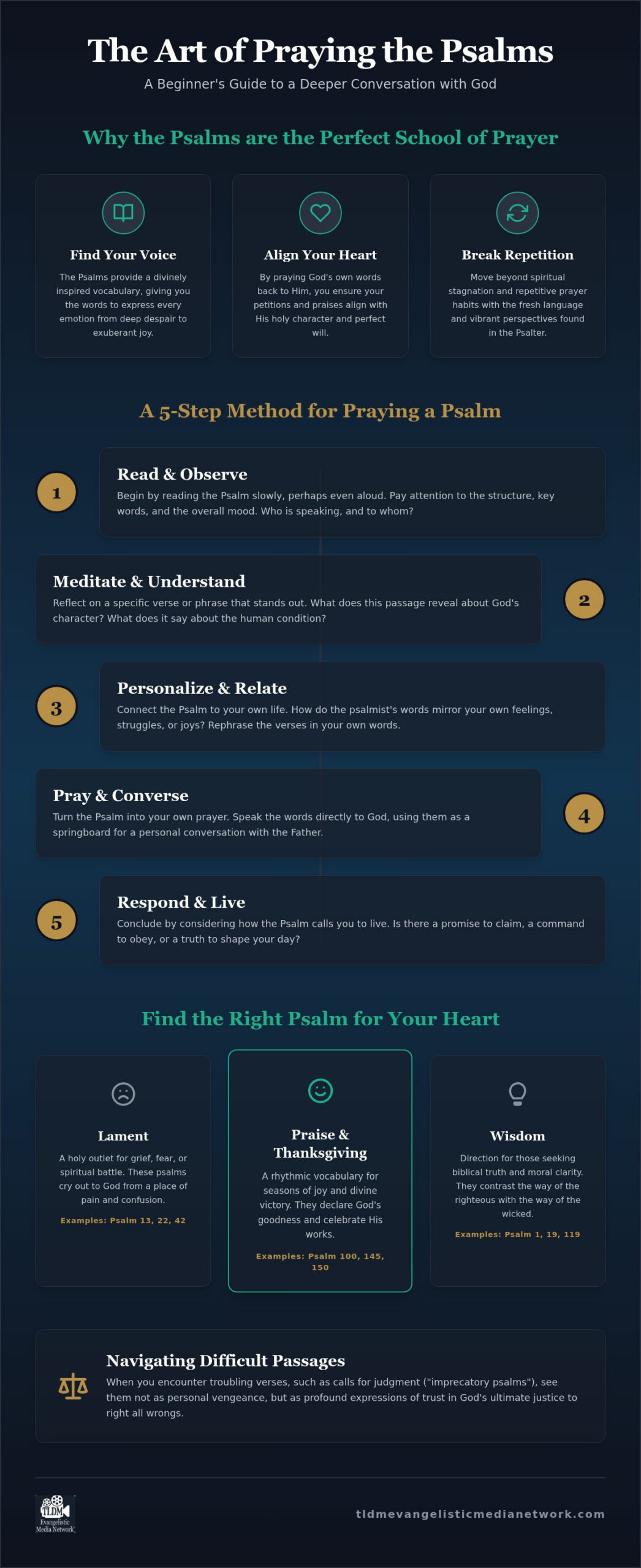
Scholars often categorize these into several primary movements that reflect the human experience. Lament Psalms, such as Psalm 13 or Psalm 22, provide a holy outlet for grief, fear, or spiritual battle. Praise and Thanksgiving Psalms, like Psalm 100 and Psalm 145, offer a rhythmic vocabulary for seasons of joy and divine victory. Finally, Wisdom Psalms provide direction for those seeking biblical truth and moral clarity. For a deeper look at these structures, you can consult A Practical Guide to Praying the Psalms to see how these ancient genres apply to modern life. Mastering these categories is a key step in praying the psalms for beginners effectively.
Psalms for Times of Spiritual Stagnation
Spiritual dry spells are a common experience for every believer. During these times, our hearts can feel cold and our prayers repetitive. Psalms like Psalm 42 and Psalm 63 act as a divine spark to reignite your passion for God. They express a deep thirst for the presence of the Lord that mirrors our own internal longing. If you find yourself in a season of drought, you may find additional encouragement in our guide on Overcoming Spiritual Stagnation. These verses remind us that God is near even when we do not feel His presence.
Psalms for Guidance and Decision Making
Seeking God’s direction requires a focused mind and a submissive heart. Wisdom Psalms like Psalm 1, Psalm 19, and the expansive Psalm 119 serve as foundations for those at a crossroads. They remind us that true success comes from meditating on the Word day and night. Psalm 119:105 declares, “Your word is a lamp to my feet and a light to my path.” This NKJV promise highlights that God provides enough light for the step we are currently taking. Using these texts during morning reflection helps set a godly pace for the day ahead. For daily encouragement in your walk, consider listening to the Sharing The Word Podcast as a way to stay grounded in Scripture.
A Practical Five Step Method for Praying through a Psalm
While understanding the genres of the Psalter provides a helpful map, the true transformation occurs when you step into the text itself. For those new to this discipline, having a structured approach prevents the feeling of being overwhelmed by the depth of the poetry. Developing a habit of Praying the Psalms Daily allows ancient words to become your own modern petitions. This intentional process bridges the gap between reading about God and speaking directly to Him. If you are praying the psalms for beginners, follow these five simple steps to deepen your spiritual vitality.
- Step 1. Select: Choose a Psalm that reflects your current emotional state or follow a daily reading plan. If you feel joyful, look for a Psalm of praise. If you are struggling, find a Psalm of lament.
- Step 2. Read: Speak the words aloud slowly. Hearing the text helps your heart absorb the rhythm and weight of the poetry. This isn’t a race to finish a chapter but an invitation to listen.
- Step 3. Identify: Pause when a specific verse resonates with your current situation. This is often the Holy Spirit highlighting a truth that your soul needs to hear today.
- Step 4. Personalize: Turn that verse into a direct prayer. Add specific names, dates, or circumstances from your life to make the biblical language your own.
- Step 5. Rest: Spend a minute in silence. Allow the peace of the Scripture to settle into your spirit before you conclude your session.
The Read-Reflect-Respond Technique
This technique turns your Bible study into a dynamic dialogue. It allows you to read a single verse and then immediately talk to God about what you just read. For example, consider the opening of Psalm 23:1: “The Lord is my shepherd; I shall not want.” (NKJV). Instead of rushing to the next line, you might respond by saying, “Lord, I thank You for being my shepherd. I have been worried about my finances, but I trust that because You guide me, I will not lack anything I truly need.” This simple act of personalization makes the “Good Shepherd” imagery a reality in your daily life. You don’t need to finish the whole Psalm in one sitting to find spiritual fulfillment.
Setting a Consistent Rhythm for Prayer
Consistency builds spiritual maturity far more effectively than occasional bursts of intense study. Aim for a five-minute window each morning or evening to practice this method. If your schedule is particularly demanding, you can utilize Take5 Messages to integrate short, biblical truths into your commute or lunch break. These brief moments of focus keep your mind stayed on Christ throughout the day. Long-term growth is the result of small, faithful steps taken daily. By establishing a steady pulse of prayer, you ensure that your spiritual life remains vibrant and resilient throughout 2026.
Navigating the Difficult Parts of the Psalter as a New Believer
As you grow in the habit of praying the psalms for beginners, you will eventually encounter verses that seem to clash with the message of love and grace. These are the imprecatory psalms. In these passages, the writer asks God to judge or even destroy their enemies. For a new believer, this language can feel violent or unchristian. However, these prayers are not an invitation to personal hatred. They are a profound expression of trust in God’s ultimate justice.
Instead of taking revenge into our own hands, we follow the psalmist’s example by handing our grievances over to the Lord. We recognize that He is the only righteous Judge. Psalm 7:11 reminds us, “God is a just judge, and God is angry with the wicked every day.” (NKJV). This practice protects our hearts from bitterness and keeps our focus on divine sovereignty. If you find archaic imagery or cultural references confusing, remember that it’s perfectly acceptable to ask God for clarity. He welcomes your honest questions as you seek to understand His Word more deeply.
Understanding Biblical Justice in Prayer
Crying out for justice is a holy response to a broken world. When we see oppression or evil, our spirits naturally recoil. The Psalms give us a safe, God-ward direction for those intense emotions. These verses help us process anger in a healthy way by acknowledging that God sees every injustice. By using these prayers, we align ourselves with the character of a God who loves righteousness and hates iniquity. Equip yourself for spiritual victory by visiting our Christian Books store to find guides on biblical prayer and growth.
When Your Feelings Don’t Match the Psalm
There will be days when your internal state feels disconnected from the text on the page. You might be grieving while the Psalm is shouting for joy, or you might be happy while the writer is lamenting in the pit. This is an opportunity to practice “praying the truth until your heart believes it.” We don’t pray based on how we feel. We pray based on who God is. This discipline ensures that praying the psalms for beginners becomes a gateway to a mature faith rooted in the unchanging Word.
Praying a Psalm of praise during a season of sadness builds spiritual resilience. It reminds your soul of eternal realities that exist beyond your current circumstances. Conversely, praying a lament during a time of victory keeps you humble and empathetic toward the suffering of others. This steady rhythm matures your character and stabilizes your walk with Christ. To hear how these principles are applied to daily challenges, listen to the Sharing The Word Podcast.
Deepening Your Spiritual Walk with Scriptural Education
Personal prayer is a powerful discipline, but it reaches new depths when you pair it with sound scriptural education. The journey of praying the psalms for beginners often begins with a single verse, but it matures through consistent study and reflection. Utilizing tools like the Sharing The Word Podcast provides a daily opportunity to hear the Word explained with clarity and conviction. This auditory resource helps you internalize biblical truths while you go about your daily routine, ensuring your mind stays stayed on Christ.
For those who desire a more structured curriculum, the Teach Me To Pray: Lessons From Scripture series offers a comprehensive path forward. It moves beyond simple reading into a deeper understanding of how the Bible instructs us to communicate with our Father. Combining your personal prayer time with scholarly teaching creates a balanced faith that is both intellectually sound and spiritually vibrant. You can find these and other transformative materials at the TLDM Bookstore to support your ongoing growth.
The Role of Sound Teaching in Prayer
Understanding the historical and theological context of a Psalm makes your prayer more meaningful and grounded. Dr. Thomas L. Driver brings decades of academic and pastoral experience to every lesson, providing a blend of biblical accuracy and pastoral warmth. This level of scriptural education protects you against common theological errors that can occur when verses are isolated from their original intent. It ensures that your petitions align with the unchanging character of God as revealed in His Word. When you understand the “why” behind the poetry, your “how” becomes much more effective.
Finding Your Community in the Word
The Psalms are inherently corporate, connecting you to the global body of believers who have prayed these same words for millennia. You are never alone in your spiritual journey when you adopt the vocabulary of the Psalter. We invite you to join the TLDM community through our various digital media platforms to share in this growth together. As you transition from a beginner to a seasoned pray-er, the power of the Word will continue to refine your soul and strengthen your walk. Victory is found in the consistent application of Scripture to every area of your life, leading to a state of spiritual fulfillment and readiness for action.
Step Into a Season of Spiritual Victory
We’ve explored how the Psalter provides a divine vocabulary for every human emotion and learned a practical five-step method to turn these ancient poems into personal petitions. By categorizing the Psalms to match your heart’s needs and navigating difficult passages with wisdom, you can transform a repetitive habit into a vibrant daily connection with the Father. Master the art of praying the psalms for beginners to ensure your spiritual walk remains resilient and grounded in truth throughout 2026. The Word is ready. You don’t have to walk this path alone.
Explore the Teach Me To Pray series in our bookstore to deepen your spiritual journey today. This biblically grounded teaching from Dr. Thomas L. Driver provides the structured curriculum you need for lasting growth. You can also access the Sharing The Word Podcast for daily encouragement. These resources are available in both paperback and audiobook formats for your convenience. May you find profound peace and purpose as you allow the Word of God to shape the language of your soul.
Frequently Asked Questions
Is it okay to skip verses in a Psalm that I don’t understand?
Yes, it’s entirely acceptable to move past verses that feel confusing as you develop a rhythm. When you encounter a difficult passage, simply pause and ask the Holy Spirit for clarity or move to a verse that speaks more clearly to your heart. The goal is connection rather than perfect comprehension on the first read. You can always return to those verses later as your understanding of biblical context grows through study.
Which Psalm should I start with if I am a total beginner?
Psalm 23 is the ideal starting point because its imagery of the Good Shepherd is deeply comforting and familiar. It provides a gentle entry into the practice of turning Scripture into personal petition. Psalm 1 is another excellent choice because it establishes the foundation of a blessed life rooted in the Word. Both are perfect for anyone starting the journey of praying the psalms for beginners because they focus on God’s character and guidance.
Can I pray the Psalms even if I don’t feel religious or spiritual right now?
You certainly can pray the Psalms regardless of your current emotional or spiritual state. These ancient texts were written by people who experienced doubt, anger, and distance from God. By speaking these words, you are utilizing a borrowed vocabulary that can help reignite your spirit even when your own heart feels cold. The Psalms don’t require you to be in a perfect state; they meet you exactly where you are today.
How long should I spend praying a Psalm each day?
Consistency is far more important than the length of time you spend in prayer. Spending just five minutes each day with a single Psalm can lead to significant spiritual vitality over time. If you have a busy schedule, resources like Take5 Messages can help you integrate short biblical truths into your routine. Start with a manageable pace that you can maintain daily rather than attempting long sessions that feel like a chore.
Do I need a special Bible version like the NKJV to pray the Psalms effectively?
You can pray the Psalms effectively using any faithful translation, though we recommend the New King James Version (NKJV) for its poetic beauty and reverent tone. This version maintains the rhythmic flow of the original Hebrew hymns, which makes them easier to memorize and pray aloud. Using a consistent version helps the language sink deeper into your heart, but the most important factor is that you are engaging with the Word of God daily.
What should I do if I feel like I am just reading and not actually praying?
If you feel like you are merely reading, try the read-reflect-respond technique mentioned earlier in this guide. Read one verse slowly and then immediately talk to God about that specific truth. This shifts the experience from a passive activity to an active dialogue. You might also try reading the Psalm aloud, as hearing the words can help engage your mind and spirit more fully than silent reading alone.
Are the Psalms only for people going through hard times?
The Psalms cover the entire spectrum of human experience, including seasons of great victory and exuberant joy. While many people turn to the Lament Psalms during trials, the Praise and Thanksgiving Psalms are essential for celebrating God’s goodness. There are also Wisdom Psalms that provide moral clarity for everyday decisions. No matter your current situation, there is a Psalm that reflects your heart and helps you give glory to God in every season.
How can I help my children or family start praying the Psalms?
Starting a family tradition of praying the Psalms is as simple as reading a few verses aloud during a meal or before bed. Choose Psalms with vivid imagery, like Psalm 100 or Psalm 121, to capture their imagination. You can also play the Sharing The Word Podcast during car rides to let them hear the Word explained with pastoral warmth. Leading by example shows your family that prayer is a natural and vital part of life.