

A naturally calm or dependable temperament isn’t the same as spiritual fruit. Sermons on the fruit of the Spirit explore the nine qualities in Galatians 5:22-23: love, joy, peace, patience, kindness, goodness, faithfulness, gentleness, and self-control. These qualities are not simply personality strengths; they are evidence of the Spirit’s work in a believer’s life.
It’s easy to assume that people who are patient, gentle, or self-controlled have these qualities by nature. Personality can shape how someone expresses them, but Scripture points to a deeper source: a life shaped by the Holy Spirit and kept in step with Him.
This article explains what Paul means by the fruit of the Spirit, how it differs from temperament, and why qualities such as self-control, faithfulness, and perseverance grow through spiritual formation. We’ll explore the passage in Galatians and consider how its teaching applies to everyday Christian life, including seasons when growth feels slow.
Key Takeaways
- Read Galatians 5 in context to see how spiritual fruit relates to a life shaped by the Spirit.
- Consider whether a quality reflects natural temperament, spiritual formation, or a combination of both.
- Notice how self-control can guide choices without depending on a naturally restrained personality.
- Explore how faithfulness and perseverance are formed through trust in God during changing circumstances.
- Use Scripture-centered teaching to reflect on where spiritual growth is taking root in everyday life.
What is the Fruit of the Spirit?
Galatians 5:22-23 describes the fruit of the Spirit as qualities formed in people who live by God’s Spirit. Christ’s love and the gospel give this growth its foundation, turning faith into a life shaped by love.
Love as the Foundation of Spiritual Fruit
Love is the first fruit Paul names, and it gives the other qualities their direction. Joy, patience, kindness, and self-control serve others when love guides their expression. Jesus commands his followers to love one another as he loved them in John 13:34. That command helps readers assess spiritual growth by its effect on their hearts and neighbors, not by temperament alone.
The gospel grounds this love in Christ’s action, not personal achievement. John 15:5 connects fruitfulness with abiding in Jesus, who says his followers bear fruit through their relationship with him. A pastor teaching this passage can help listeners see spiritual maturity as a response to Christ’s presence, rather than a project of self-improvement.
Sacrificial Love as Evidence of Faith
Sacrificial love chooses another person’s good through practical action, even when that choice costs time or comfort. John 15:13 points to laying down one’s life for friends as the greatest expression of love. In daily life, that principle might mean listening patiently to a struggling friend or making space for someone who feels overlooked.
Love also makes faith visible in relationships. Romans 13:10 teaches that love does no harm to a neighbor, while Galatians 5:14 summarizes the law through loving one’s neighbor as oneself. These passages give believers a concrete way to examine their conduct: does a choice protect, serve, and honor another person?
Christian traditions share Galatians 5:22-23 as a passage about the Spirit’s work, while theological traditions may emphasize different aspects of sanctification and spiritual formation. Across those differences, the list points readers toward character shaped by God rather than personality alone.
Pastors teach the fruit of the Spirit through individual messages or a series on Galatians 5. Look for sermons that explain the passage in context and connect its teaching with Christian life, rather than relying on a preacher’s name alone.
Christians can cultivate this fruit by abiding in Jesus, reflecting on Scripture, praying for the Spirit’s guidance, and practicing love in specific relationships. For example, a believer might choose a patient response in a tense conversation rather than react in anger.
Yes, a pastor can organize a series around one fruit per week, using Galatians 5:22-23 as the framework. Each message can connect one quality with a biblical example and a practical response for the week.
The fruit of the Spirit in Galatians
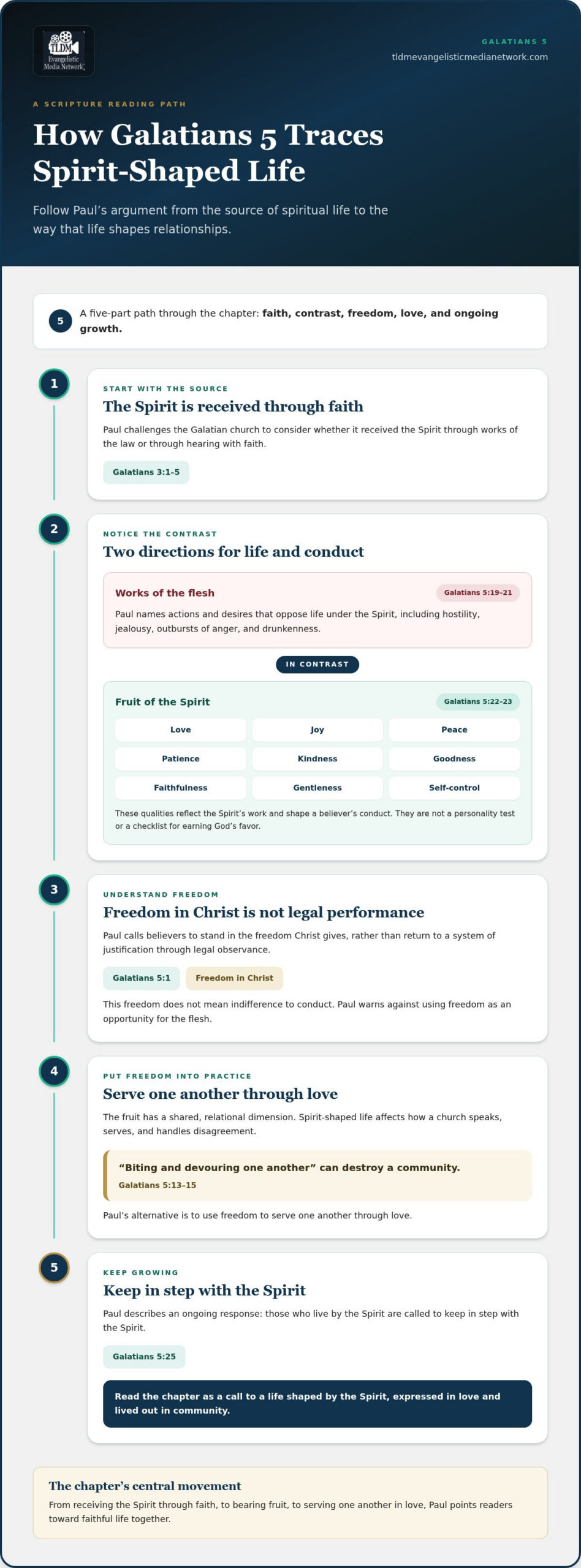
Galatians 5 places spiritual fruit within Paul’s response to a church tempted to treat religious performance as the basis for belonging to God. The passage contrasts life directed by the Spirit with the works of the flesh, showing how the gospel reshapes both character and relationships.
In Galatians 5:22-23, Paul names love, joy, peace, patience, kindness, goodness, faithfulness, gentleness, and self-control. These qualities describe a life taking shape under the Spirit’s influence. Kindness, for example, can change how believers address conflict, while patience can help them listen before responding. The list is not a personality test or a checklist for earning God’s favor.
The chapter’s context matters. In Galatians 3:1-5, Paul challenges the church to consider whether it received the Spirit through works of the law or through hearing with faith. His concern is that believers might rely on law-keeping as the source of spiritual standing and growth. Galatians 5:1 calls them to stand in the freedom Christ gives, rather than returning to a system of justification through legal observance.
That freedom does not mean indifference to conduct. Paul warns against using freedom as an opportunity for the flesh and instead calls believers to serve one another through love. Galatians 5:15 also cautions that biting and devouring one another can destroy a community. The fruit therefore has a shared, relational dimension: Spirit-shaped life affects how a church speaks, serves, and handles disagreement.
Paul’s contrast offers a helpful way to read the chapter:
- Works of the flesh: actions and desires that oppose life under the Spirit, described in Galatians 5:19-21.
- Fruit of the Spirit: qualities that reflect the Spirit’s work and shape a believer’s conduct, described in Galatians 5:22-23.
- Ongoing response: believers who live by the Spirit are called to keep in step with the Spirit, as Galatians 5:25 says.
Isaiah 5:1-7 uses a vineyard to picture God’s people and the fruit their lives produce. Read alongside Galatians, the image invites reflection on what a community’s actions reveal. A church can consider whether its teaching encourages faith in Christ and whether its relationships show patience, kindness, and peace. Those questions direct attention away from spiritual scorekeeping and toward faithful life together.
For a Scripture-centered exploration of these themes, online sermons can help connect Galatians’ teaching with daily Christian practice.
Self-control
Galatians 5 presents self-control as Spirit-shaped freedom, not mere willpower or a naturally restrained temperament. Paul contrasts the works of the flesh with the fruit of the Spirit, showing two different directions for human desire and action.
In Galatians 5:19-21, Paul names works of the flesh, including hostility, jealousy, outbursts of anger, and drunkenness. He warns that those who live in these practices will not inherit God’s kingdom. By contrast, self-control in Galatians 5:22-23 describes conduct directed toward what honors God and serves others. This isn’t a call to deny every feeling. It’s a call to respond faithfully instead of letting an impulse take command.
Galatians 5:16 gives the pattern: walk by the Spirit, and you will not fulfill the desires of the flesh. The Greek word translated “desire” is epithumia, meaning “inordinate craving.” Galatians 5:24 adds that those who belong to Christ have crucified the flesh with its passions and desires. Paul’s point is not that believers never face temptation, but that they need not obey every craving.
A practical pause can help a believer choose a Spirit-led response. Before sending an angry message, stop, name the impulse, and consider what love and truth require. Instead of assuming a sharp reply will bring relief, ask whether it could damage trust. That pause makes room for prayerful judgment and a response that seeks the other person’s good.
Gentleness shows how self-control works in relationships. It is strength governed by care, not weakness or silence. In Galatians 6:1, Paul tells believers to restore someone caught in wrongdoing with a spirit of gentleness. Proverbs 15:1 links a soft answer with turning away wrath. Jesus models this strength in Matthew 12:20, where he treats the vulnerable with compassion.
The phrase “the Spirit is love” reminds readers that self-control serves loving purposes, not pride or self-display. In a tense conversation, gentleness may mean speaking honestly without humiliating someone. In a moment of frustration, restraint can protect a relationship and bless both people.
Self-control also differs from simply suppressing emotion. A believer can acknowledge anger, disappointment, or desire, then bring that feeling under the Spirit’s guidance. Galatians 5:25 calls those who live by the Spirit to keep in step with him. Each deliberate choice, such as refusing retaliation or keeping a promise, gives that teaching practical shape.
Faithfulness and spiritual perseverance
Faithfulness in Galatians 5:22 describes trustworthiness shaped by the Holy Spirit. It appears in ordinary commitments, such as keeping a promise, completing an assigned task, or telling the truth when honesty carries a cost. These actions offer evidence of steady devotion, not a claim that believers never fail. Spiritual perseverance is the continued response of trust when obedience feels difficult or growth takes time.
Psalm 33:4 connects God’s word with uprightness and his work with faithfulness. That divine character gives believers a firm ground for their own reliability. Christian faithfulness doesn’t mean carrying every burden alone. It means depending on God while honoring commitments, serving others, and returning to the path after a setback. A person who misses a commitment can acknowledge it, make amends, and follow through next time.
James 1:2 links trials with the testing of faith and the development of patience. The passage doesn’t call hardship pleasant; it urges believers to see how tested faith can form endurance. For example, someone caring for a family member through a difficult season may keep showing up with practical help, while praying for strength and receiving support from others. Perseverance grows through faithful responses in real circumstances.
Jesus provides the central model. Hebrews 12:2 describes him enduring the cross for the joy set before him. Isaiah 53 also presents the suffering servant, a passage Christians understand as pointing to Christ’s suffering. His faithfulness was not a fleeting feeling. It was steadfast obedience through suffering, grounded in his purpose and trust in the Father.
This example helps distinguish faithfulness from a naturally dependable personality. A reliable temperament may make punctuality or follow-through easier, but spiritual faithfulness also asks what guides those habits. Is a person walking in love, keeping their word, and serving God without recognition? The Holy Spirit forms these motives as well as outward actions.
Faithfulness also differs from stubbornly pursuing every desire. Galatians 5:25 calls believers who live by the Spirit to keep in step with the Spirit. That image suggests attentive movement, not self-directed persistence at any cost. A believer may need to change a plan, seek wise counsel, or rest, while remaining committed to God’s purposes. Perseverance means continuing in trust, not refusing every adjustment.
In practice, choose one commitment that matters today. Keep a promise, finish a responsibility, or return to prayer after a period of neglect. Matthew 5:37 teaches that a person’s yes should be yes and no should be no. Such dependable choices, sustained by faith in God, let spiritual faithfulness take shape in daily life.
Personality traits versus spiritual fruit
A person’s temperament can shape how they express kindness, patience, or joy, but it doesn’t explain their spiritual source. Galatians 5:22-23 presents these qualities as fruit of the Spirit, formed through life with God rather than personality alone. The difference matters when a natural strength fades under pressure or a believer grows in an area that once felt difficult.
Consider two people who respond calmly during a disagreement. One may naturally avoid confrontation; the other may choose a measured response because the gospel calls for love and truth. Their outward behavior looks similar, but their motives and direction differ. Spiritual fruit begins to show as a person seeks what honors God and serves a neighbor, even when that choice feels unnatural.
Personality can make some expressions easier. An outgoing person may find conversation comfortable, while a reserved person may show kindness through careful listening. Neither temperament proves spiritual maturity. A quiet believer can act with courage, and a naturally patient person can still struggle with frustration. The key question is not simply, “What comes easily?” but, “How is my character being shaped?”
The word fruit points to growth that becomes visible over time. A gardener doesn’t mistake a tree’s natural shape for its harvest; fruit appears through the life within it. In the same way, goodness is more than a pleasant disposition. It means choosing what is right in a real situation, such as telling the truth when a convenient excuse would protect your image.
Being filled with the Holy Spirit doesn’t erase individuality or make everyone’s personality the same. Instead, the Spirit works through each person’s distinct way of speaking, serving, and relating. Patience might mean giving a child time to explain a mistake or hearing a colleague’s concern before answering. The same spiritual quality can take different forms while reflecting Christlike character.
How does the fruit of the Spirit differ from spiritual gifts? The fruit describes qualities of Christian character, while spiritual gifts are abilities given for service and the good of others. A person may have a gift for teaching, for example, yet still need to grow in patience and kindness toward listeners.
To reflect on the difference, examine a recent interaction. Identify your response, what motivated it, and how it affected another person. Then consider what a Spirit-shaped response might look like next time. This isn’t a test to earn God’s approval; it’s a way to notice where growth is needed and bring that area before God.
For further Scripture-centered reflection on Christian character, explore online sermons that connect biblical teaching with daily life.
TLDM Evangelistic Media Network: Sharing The Word Podcast
TLDM Evangelistic Media Network’s Sharing The Word Podcast offers a way to continue engaging with Christian teaching. It can complement personal study when you want to revisit biblical themes and reflect on their application beyond a single reading.
For different ways to continue learning, explore Take5 Messages, Teach Me To Pray: Lessons From Scripture, or Online Sermons. Choose the format that fits your focus, whether you’re reflecting on a passage, strengthening your prayer life, or studying Christian character through Scripture.
Return to Galatians 5 as you listen or study, and note one quality to practice in a relationship this week. Visit tldmevangelisticmedianetwork.com to explore these resources.
Let Spiritual Growth Shape Your Next Step
Spiritual growth becomes visible in the choices you make after the sermon ends. As you reflect on sermons on the fruit of the Spirit, choose one relationship or daily responsibility where you can respond with greater patience, faithfulness, or self-control. Bring that intention into prayer, return to Scripture, and notice how your response serves others.
Growth doesn’t mean measuring yourself against a perfect standard every day. It means returning to Christ, receiving the gospel’s guidance, and allowing the Holy Spirit to shape your character over time. When a response falls short, acknowledge it, seek forgiveness where needed, and begin again with humility.
For further Scripture-centered encouragement, contact TLDM Evangelistic Media Network. Keep learning with an open heart, and let faith shape the way you live and love.
Frequently Asked Questions
What does the Bible say about the fruit of the Spirit in Galatians 5:22-23?
Galatians 5:22-23 describes the fruit as qualities that become visible in a life shaped by the Holy Spirit. Paul places this passage within a wider contrast between life directed by the flesh and life directed by the Spirit. Read the surrounding verses, too: Galatians 5:25 calls believers to keep in step with the Spirit, connecting the passage to ongoing conduct rather than a single moment of feeling.
What are the nine fruits of the Spirit, and what does each mean?
Galatians names love, joy, peace, patience, kindness, goodness, faithfulness, gentleness, and self-control. Love seeks another’s good; joy rests in God amid changing circumstances; peace reflects trust in God. Patience bears difficulty without retaliation, kindness treats others with care, and goodness chooses what is right. Faithfulness keeps trust and commitments, gentleness responds with humility, and self-control governs impulses. Consider one quality to practice in a specific relationship this week.
What are the best sermons on the fruit of the Spirit?
The most useful sermons are those that explain Galatians 5 in context, distinguish spiritual growth from personality, and apply Scripture to daily relationships. Sermons on the fruit of the Spirit may study the whole passage or focus on one quality, such as patience in conflict. Compare teachings by asking whether they explain the biblical text clearly and offer a practical response, rather than treating the passage as a checklist for earning God’s favor.
Where can I watch or listen to free sermons on the fruit of the Spirit?
TLDM Evangelistic Media Network provides access to Online Sermons and the Sharing The Word Podcast through its digital platform. Use Online Sermons for sermon-style teaching or choose the podcast for audio content. To study Galatians 5, read the passage alongside a message and note how its teaching applies to a situation you’re facing. This approach keeps Scripture central as you listen and reflect.
What are the best sermon outlines on the fruit of the Spirit?
A helpful outline follows the passage’s movement and keeps its application clear. Begin with Galatians 5:16-21 to establish the contrast Paul draws, then examine Galatians 5:22-23 and the qualities named there. Close with Galatians 5:25 and a concrete reflection, such as how a believer might respond to tension at home or work. This structure keeps the sermon rooted in Scripture and connected to everyday discipleship.
How do different Christian denominations interpret the fruit of the Spirit?
Christian traditions share Galatians 5:22-23 as a passage about the Spirit’s work, though they may emphasize different aspects of sanctification and spiritual formation.